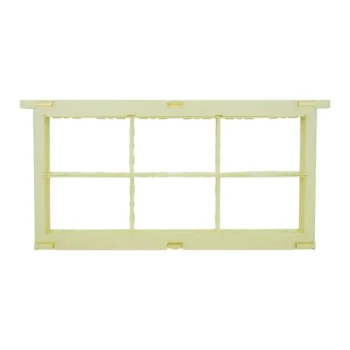
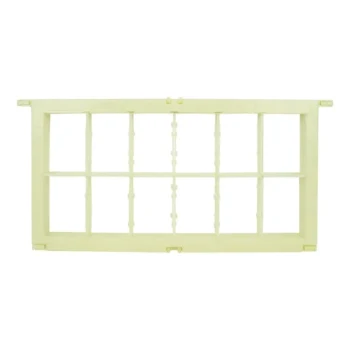
The primary technical advantage of modern frame hives lies in their modular, removable architecture. Unlike traditional bamboo hives, which often require the partial or total destruction of the nest to extract resources, modern frame systems allow for non-destructive harvesting and precise, daily colony management. This structural difference directly translates to significantly higher yields and operational efficiency.
The Core Insight Traditional bamboo hives limit production because harvesting destroys the bee's infrastructure. Modern frame hives solve this by decoupling extraction from hive structure, allowing bees to focus their energy on honey production rather than constantly rebuilding their home.
The Mechanics of Production Efficiency
Non-Destructive Harvesting
The most critical innovation in modern hives is the removable frame. In traditional bamboo setups, the honeycomb is often fixed to the walls, necessitating the destruction of the comb structure to harvest honey.
Modern systems allow beekeepers to extract mature honey without damaging the colony or the brood. This ensures the structural integrity of the hive is preserved during every harvest cycle.
Energy Conservation and Yield Volume
Because the honeycomb remains intact, bees can immediately resume storing honey without wasting energy and time rebuilding wax combs. This biological efficiency creates a massive disparity in output.
Research indicates that modern box hives can achieve an average annual yield of 24.4 kg per hive, compared to just 5.6 kg per hive in traditional systems. By removing the burden of reconstruction, the colony's production potential is maximized.
Improving Honey Purity
The removable frame design facilitates a clear separation between honey stores and the brood (larvae) area. This separation allows for the extraction of honey without contaminating it with crushed bees or larval matter.
This results in higher honey purity, a critical factor for producers aiming to meet commercial market standards.
Optimizing Colony Health and Longevity
Precision Inspection and Management
Primary references highlight that modern hives facilitate precise daily management. The standardized structure allows beekeepers to open the hive and visually inspect larval health and adult bee mortality rates without disrupting the colony's workflow.
In contrast, the fixed nature of bamboo hives makes internal inspection difficult or impossible without breaking the hive open, often leaving diseases undetected until it is too late.
Pest and Disease Mitigation
The ability to remove frames provides a distinct sanitary advantage. Beekeepers can easily identify and remove contaminated old frames or replace wax foundations to break the life cycle of pests.
This is particularly effective against threats like wax moths, improving the overall hygiene of the colony and preventing the colony losses frequently associated with the trauma of traditional harvesting.
Understanding the Trade-offs
Standardization vs. Accessibility
While modern hives offer superior technical performance, they require standardized manufacturing. Traditional bamboo hives utilize readily available local materials that cost little to nothing.
Operational Complexity
Modern frames require a higher level of technical knowledge to manage effectively. The beekeeper must understand how to manipulate frames, check for pests, and maintain the "hardware" of the hive, whereas traditional methods are often more "hands-off" until harvest time.
Making the Right Choice for Your Goal
To determine the best approach for your apiary, assess your specific objectives:
- If your primary focus is Commercial Scalability: Prioritize modern frame hives to maximize yield (approx. 24kg/year) and ensure the consistent honey purity required for market sales.
- If your primary focus is Low-Cost Subsistence: You may opt for traditional bamboo hives if capital investment is zero, accepting that honey yields will be significantly lower and harvesting will be destructive.
Ultimately, moving to modern frame hives is the essential technical leap required to transition from casual beekeeping to a sustainable, high-output production model.
Summary Table:
| Feature | Traditional Bamboo Hives | Modern Frame Hives |
|---|---|---|
| Annual Yield | ~5.6 kg per hive | ~24.4 kg per hive |
| Harvest Method | Destructive (comb breakage) | Non-destructive (removable frames) |
| Honey Purity | Risk of larval contamination | High purity (separated brood/honey) |
| Colony Management | Difficult/No internal inspection | Precise daily monitoring |
| Pest Control | Reactive / Hard to detect | Proactive frame replacement |
| Startup Cost | Minimal (local materials) | Moderate (standardized hardware) |
Scale Your Honey Production with HONESTBEE
Ready to transition from traditional methods to a high-yield commercial model? HONESTBEE empowers commercial apiaries and distributors with the professional-grade tools needed for modern beekeeping.
Our comprehensive wholesale range includes:
- Precision Machinery: Hive-making and honey-filling machines to automate your workflow.
- Advanced Hardware: Durable, standardized frame systems and high-performance beekeeping tools.
- Industry Consumables: A full spectrum of essential supplies for colony health.
- Cultural Merchandise: Unique honey-themed products to expand your market reach.
Maximize your apiary’s potential and ensure sustainable growth. Contact HONESTBEE today to access premium wholesale equipment and expert solutions tailored for large-scale success.
References
- Thokchom Biren Singh, A. K. Singh. The Beehives of Stingless Bees in Manipur, India and Their Ecological and Economic Impact to Farmers. DOI: 10.36948/ijfmr.2024.v06i05.29825
This article is also based on technical information from HonestBee Knowledge Base .
Related Products
- Automatic Heat Preservation 6 Frame Pro Nuc Box for Honey Bee Queen Mating
- Professional 500g Sectional Comb Honey Frame System for Beekeeping
- Stainless Steel 9 Frame Hive Spacer Durable Precise for Commercial Beekeeping
- Professional Stainless Steel Pry-Bar Hive Tool
- Professional Sectional Comb Honey Frame with 250g Cassette System for Beekeeping
People Also Ask
- What are the options for adding frames to a nuc after taking two frames from the parent colony?
- How are nuc boxes used in queen rearing? The Essential Tool for Reliable Queen Mating
- What steps are involved in transferring frames from the nuc box to the hive? A Guide for a Smooth, Low-Stress Colony Move
- What is the process for managing a new bee colony started in a nuc box? Expert Tips for Hive Success
- How long can bees be kept in a nuc box? Expert Timeline for Hive Transfer