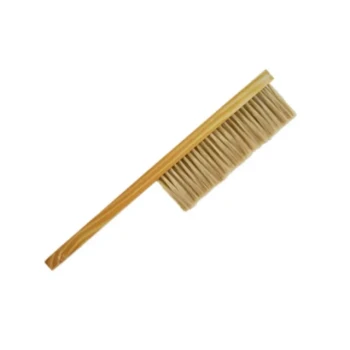
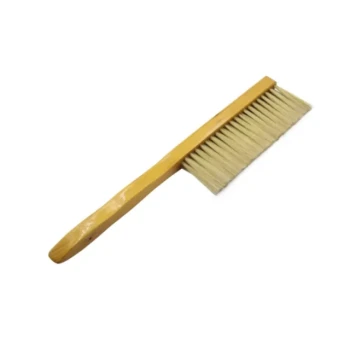
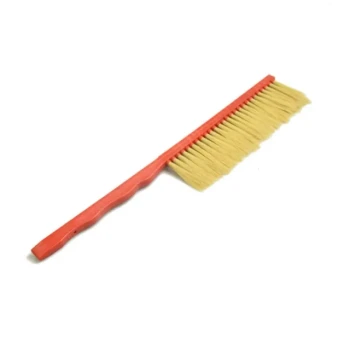
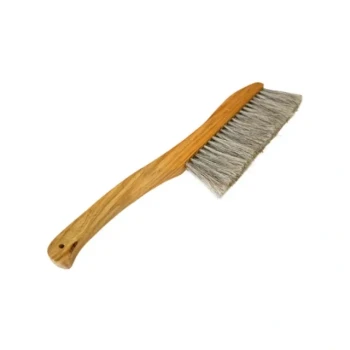
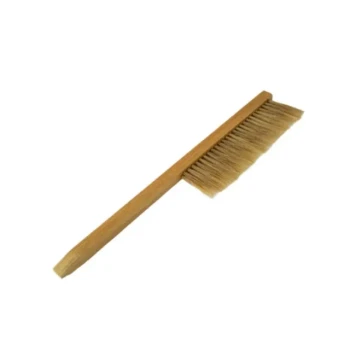
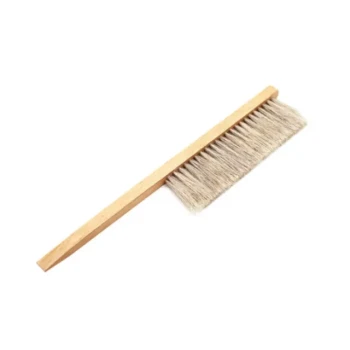
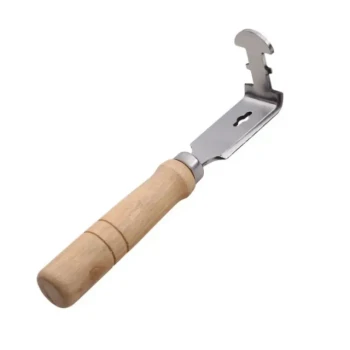
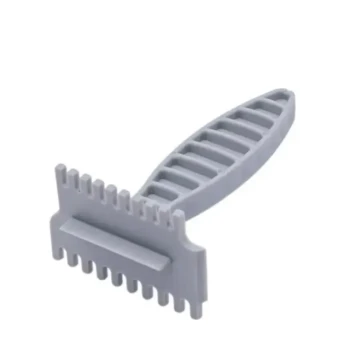
The technical advantages of using nylon brushes for solid beeswax post-treatment center on the material's specific physical properties, which allow for the effective removal of surface contaminants without compromising the wax's inherent quality. This method leverages the balance of hardness and toughness found in nylon to mechanically strip fine impurities and residual particles—particularly those deposited at the bottom of the block—using only running water.
By replacing chemical solvents with precise mechanical action, nylon brushing preserves the natural color and chemical integrity of the beeswax while ensuring the surface remains undamaged during the cleaning process.
The Mechanics of Contaminant Removal
Exploiting Material Properties
The core efficacy of this method relies on the appropriate hardness and toughness of nylon.
Unlike softer materials that might glide over impurities, or harder materials that could gouge the wax, nylon provides the necessary resistance to mechanically strip away attachments.
Targeted Sediment Elimination
This process is specifically effective for addressing fine impurities and residual particles.
These contaminants frequently settle and deposit at the bottom of solid beeswax blocks during cooling, requiring focused mechanical agitation to remove completely.
Preserving Material Integrity
Eliminating Chemical Variables
A major technical benefit is the avoidance of chemical solvents.
By relying on physical abrasion and running water, you eliminate the risk of introducing foreign chemical agents that could alter the beeswax's composition or purity.
Maintaining Natural Characteristics
Because the process is purely mechanical, the natural color of the beeswax is preserved.
Furthermore, the chemical quality of the wax remains intact, ensuring the final product retains the specific properties required for its end use.
Surface Protection and Quality Control
Non-Destructive Cleaning
Despite its ability to strip impurities, nylon brushing is non-destructive to the integrity of the wax block surface.
The toughness of the nylon allows it to be effective, but its specific hardness prevents it from damaging the valuable wax underneath the sediment layer.
The Role of Running Water
This method operates in conjunction with running water.
The water acts as a carrier to flush away the loosened particles immediately, preventing re-deposition and reducing friction that could otherwise heat or mar the wax surface.
Understanding the Trade-offs
Process Dependencies
While chemically neutral, this method is strictly mechanical.
It requires physical access to the surface; therefore, it is effective for post-treatment of solid blocks but cannot address impurities trapped deep within the core of the wax block once it has solidified.
Resource Requirements
The reliance on running water is a critical component of the technical success of this method.
Without a continuous flow to flush the stripped particles, the abrasive action of the brush would be significantly less effective and could lead to surface smearing.
Making the Right Choice for Your Goal
To determine if nylon brushing is the correct protocol for your beeswax processing, consider your specific quality targets:
- If your primary focus is Purity and Aesthetics: This method is ideal as it removes visible bottom sediments while strictly preserving the wax's natural color and surface finish.
- If your primary focus is Chemical Stability: This approach is superior because it completely eliminates the variables and risks associated with solvent-based cleaning agents.
Mastering this mechanical post-treatment ensures you deliver a refined product that honors the natural properties of the raw material.
Summary Table:
| Technical Feature | Benefit for Beeswax Processing | Why It Matters |
|---|---|---|
| Material Toughness | Mechanical stripping of bottom sediments | Removes impurities without damaging the wax surface. |
| Solvent-Free Process | No chemical agents required | Preserves natural beeswax color and chemical purity. |
| Running Water Support | Immediate particle flushing | Prevents re-deposition and friction-induced surface marring. |
| Targeted Agitation | Removal of fine residual particles | Ensures a refined aesthetic and professional-grade finish. |
Elevate Your Beekeeping Operation with HONESTBEE
At HONESTBEE, we specialize in empowering commercial apiaries and distributors with high-performance tools and machinery. Whether you need specialized honey-filling machines, hive-making hardware, or professional-grade processing consumables, our comprehensive wholesale portfolio is designed to enhance your production efficiency and product quality.
Why partner with HONESTBEE?
- Expert Equipment: Access the full spectrum of beekeeping tools and machinery.
- Wholesale Scale: Reliable supply chains for essential industry consumables.
- Cultural Merchandise: Expand your brand with our unique honey-themed merchandise.
Ready to scale your business with the industry's most trusted equipment provider? Contact us today to discuss your wholesale needs!
References
- Gleydson Luiz de Oliveira Neto, Rodrigo Diniz Silveira. Alternative wax recovery from Apis mellifera: Different combs size effect. DOI: 10.33448/rsd-v10i8.17313
This article is also based on technical information from HonestBee Knowledge Base .
Related Products
- Double Row Artificial Fiber Bee Brush for Beekeeping
- Wooden Bee Brush with Triple Row Artificial Fiber for Beekeeping
- Plastic Handle Single Row Artificial Fiber Bee Brush
- Conical Nylon Honey Strainer Filter Bag for Beekeeping and Honey Filtration
- Premium Triple-Row Horsehair Bee Brush
People Also Ask
- What specific function does a professional beekeeping brush serve during the honey harvesting process? Enhance Hive Health
- What are the key features of a popular bee brush? Essential Design for Bee Safety and Hive Hygiene
- Why is a bee brush necessary when extracting honeybee hive frames that contain larvae? Protect Your Brood and Colony
- What is the correct way to use a bee brush and what actions should be avoided? Master Gentle Hive Management
- What is a bee brush and what is it used for? Master Precision Bee Removal with Gentle Sweeping Techniques