The primary technical advantage of using mold casting in candle manufacturing is the achievement of rigorous standardization in product dimensions. Unlike traditional hand-dipping, which inevitably introduces variation, mold casting ensures that every unit produced adheres to precise size and shape specifications.
Mold casting shifts production from variable artisanal methods to precise technical standardization, ensuring that every candle physically fits its intended fixture and performs with predictable consistency.
Engineering Physical Consistency
Achieving Dimensional Accuracy
The fundamental benefit of mold casting is the elimination of geometric variance. By pouring wax into a fixed form, manufacturers can replicate exact dimensions repeatedly.
This stands in sharp contrast to traditional hand-dipping methods, where the final size is influenced by process variables and manual technique.
Ensuring Hardware Compatibility
Technical precision is often a requirement, not just a preference. Many candles are designed to interface with specific lighting fixtures.
Mold casting guarantees the perfect compatibility necessary for these systems. It ensures the candle sits correctly within the holder, which is critical for both safety and aesthetic alignment.
Stabilizing Performance Metrics
Regulating Combustion Duration
Physical consistency directly impacts chemical performance. Because the shape and volume of the wax are standardized, the fuel load is identical for every unit.
This precision results in stable combustion times. Users can predict exactly how long the product will last, removing the guesswork associated with irregularly shaped dipped candles.
Uniformity of Light Output
The geometry of a candle influences how it burns and how light is emitted. Variations in shape can lead to flickering or uneven burning.
Molded candles provide uniform light output. The standardized shape ensures the flame burns consistently, providing a steady and reliable source of illumination.
Understanding the Trade-offs
Precision vs. Variation
While the primary reference highlights the superiority of molds for standardization, it is important to understand what is being replaced.
The move to mold casting eliminates the unique variations of hand-dipping.
While this is a technical benefit for performance, it removes the "organic" irregularities that define the traditional aesthetic. If the goal is high-precision engineering and reliability, however, the variability of hand-dipping is a distinct disadvantage.
Making the Right Choice for Your Manufacturing Goals
To leverage the benefits of mold casting effectively, consider your specific end-user requirements:
- If your primary focus is hardware integration: Utilize mold casting to ensure your candles are perfectly compatible with specific lighting fixtures.
- If your primary focus is performance reliability: Choose molding to guarantee stable combustion times and uniform light output across your entire inventory.
By prioritizing technical precision over artisanal variation, mold casting delivers a product that is mechanically and functionally superior.
Summary Table:
| Technical Aspect | Mold Casting Advantage | Impact on Quality |
|---|---|---|
| Dimensional Accuracy | Eliminates geometric variance | Guaranteed fit for fixtures and holders |
| Burn Consistency | Standardized fuel load/volume | Predictable and stable combustion times |
| Light Output | Uniform candle geometry | Steady, reliable, and flicker-free illumination |
| Production Scale | High-precision replication | Reliable quality control for large-scale inventory |
Partner with HONESTBEE for Professional-Grade Beekeeping & Candle Manufacturing Solutions
Are you looking to scale your production with high-precision equipment? HONESTBEE specializes in supporting commercial apiaries and distributors with a robust selection of beekeeping tools and industrial machinery. Whether you need advanced candle-making molds, high-efficiency honey-filling machines, or specialized hive-making hardware, we provide the technical expertise and wholesale supply chain to grow your business.
Maximize your operational efficiency and product quality today. Contact our expert team to explore our comprehensive range of machinery and industry consumables tailored for the professional market.
References
- Angeliki Liveri. Die biene und ihre produkte in der kunst und im alltagsleben (Fruhchristliche und byzantinische Zeit). DOI: 10.2298/zrvi1047009l
This article is also based on technical information from HonestBee Knowledge Base .
Related Products
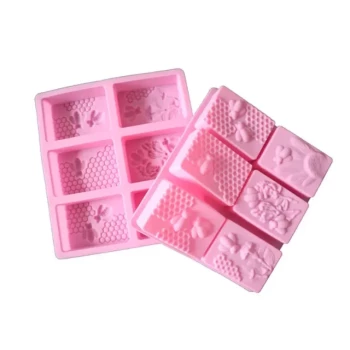
- 3D Square Honeycomb Pillar Silicone Candle Molds for Making Beeswax Candles
- Honeycomb Hexagonal Pillar Silicone Candle Mold for Candle Making
- 3D Beehive Silicone Skep Wax Candle Molds for Candles
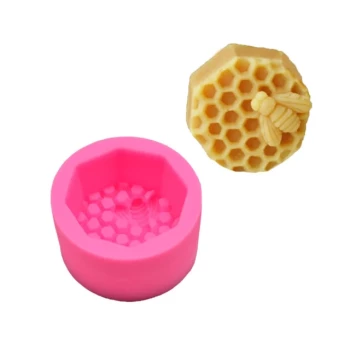
- Round Honeycomb Pillar Silicone Candle Molds for Candles
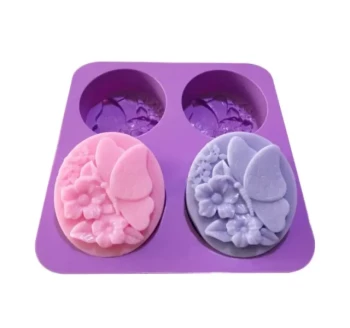
- Bee Floral Relief Silicone Mold for Artisan Soap Candle Making
People Also Ask
- Is spray release necessary when using silicone molds for candle making? Master the Art of Flawless Demolding
- Why are silicone molds preferred over tin or plastic molds for beeswax candles? Boost Efficiency & Quality
- What is the first tip for pouring beeswax into a silicone mold? Ensure a Perfect Release
- Which specific shapes and designs are commonly available for beeswax candle molds? Choose the Best Molds for Production
- How do you secure a silicone mold for candle making? Prevent Leaks and Achieve Perfect Candles