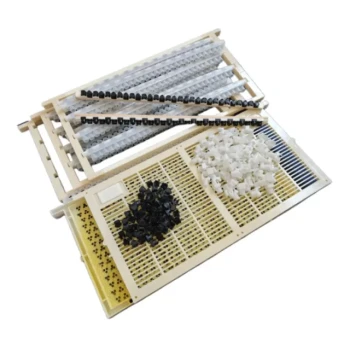
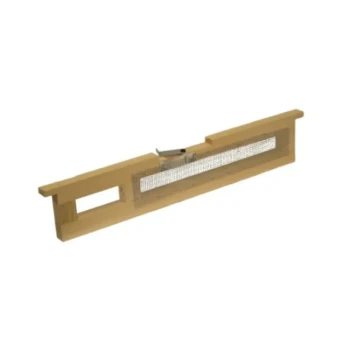
The primary challenge in artificial colony splitting is the accelerated risk of vertical disease transmission caused by human intervention and contaminated materials. While splitting colonies increases reproductive efficiency, the process creates a vector for pathogens to move rapidly from parent colonies to new splits if equipment hygiene is neglected. specifically, the use of low-quality or contaminated hive consumables—such as queen cell cups—can trigger an exponential spread of disease across an entire apiary.
Core Takeaway Artificial expansion acts as a biological amplifier; while it boosts colony numbers, it also accelerates the "vertical transmission" of diseases if sanitary protocols fail. The purity of your consumables—specifically queen cell cups and rearing hardware—is the single most critical factor in preventing apiary-wide contamination.
The Mechanics of Transmission
Vertical Disease Spread
In natural settings, disease transmission is often limited by the colony's isolation. Artificial splitting disrupts this barrier.
By dividing a colony, you effectively clone the biological environment of the parent hive. If the parent carries a latent pathogen, improper management ensures it is passed directly to the offspring colony, doubling the infection count immediately.
The Vulnerability of Consumables
The equipment used to rear queens acts as a direct interface between the beekeeper and the brood.
Contaminated hive consumables are a primary culprit in this process. If the materials introduced to the hive harbor pathogens, the reproductive efficiency of the splitting process works against the beekeeper, scaling the disease rather than the stock.
The Role of Human Intervention
Tools like grafting needles and artificial cell cups are essential for systematic production. However, they introduce a human vector into a closed system.
Every time a tool touches a larva or a cell cup is transferred, there is a risk of cross-contamination. This turns routine management into a potential superspreader event if tools are not sterile.
The Critical Role of Equipment Purity
High-Purity Queen Cell Cups
The quality of the starting material dictates the health of the resulting queen and colony.
Using high-purity artificial queen cell cups is a proven method to interrupt the disease cycle. These sterile inputs ensure that the new queen begins her development in a pathogen-free environment, shielding the developing larva from residual hive contaminants.
Uncontaminated Hive Hardware
Beyond the cell cups, the broader hive equipment plays a vital role.
Uncontaminated queen rearing hive equipment must be utilized during the expansion phase. Introducing a clean split into a dirty or previously infected box negates the benefits of using sterile grafting tools.
Reducing Exponential Spread
The goal of using clean equipment is to stop the "multiplier effect."
By strictly controlling the inputs, you reduce the likelihood of exponential spread within the apiary. This containment strategy allows for aggressive expansion without the parallel expansion of disease loads.
Understanding the Trade-offs
Efficiency vs. Biosecurity
There is an inherent tension between the speed of artificial rearing and the diligence required for biosecurity.
Artificial tools allow for planned colony division and timely queen replacement, which are essential for production stability. However, prioritizing speed over sanitation often leads to a collapse in colony health, rendering the efficiency gains useless.
Selective Breeding Risks
Beekeepers use these tools to select for traits like high egg-laying capacity and gentleness.
However, you cannot breed for performance if the underlying stock is diseased. Focusing solely on genetic traits while ignoring the "hygiene status" of the rearing equipment will result in high-performance genetics that fail due to poor health resilience.
Making the Right Choice for Your Goal
To balance high-production splitting with robust disease control, consider your primary objective:
- If your primary focus is Rapid Apiary Expansion: Prioritize the use of virgin, high-purity queen cell cups to ensure that your new colony numbers are not matched by an equal rise in pathogen load.
- If your primary focus is Genetic Improvement: Ensure all grafting tools and rearing equipment are sterilized between hives to protect your valuable breeder queens from cross-contamination during the selection process.
Successful colony splitting requires treating your equipment with the same level of scrutiny as your genetics.
Summary Table:
| Challenge Factor | Impact on Apiary Health | Prevention Strategy |
|---|---|---|
| Vertical Transmission | Direct cloning of pathogens from parent to offspring hive. | Strict sanitary protocols during colony division. |
| Equipment Hygiene | Contaminated cell cups act as primary disease vectors. | Use high-purity, sterile queen cell cups. |
| Human Intervention | Tools like grafting needles cause cross-contamination. | Sterilize hardware between every hive interaction. |
| Exponential Spread | Rapid scaling of disease alongside colony numbers. | Focus on uncontaminated hardware to stop the multiplier effect. |
Secure Your Apiary’s Growth with HONESTBEE
Don't let disease scaling undermine your production. HONESTBEE provides commercial apiaries and distributors with the high-purity beekeeping tools and machinery needed to maintain rigorous biosecurity. From sterile queen rearing hardware to advanced honey-filling machines, our comprehensive wholesale offering ensures your expansion is healthy and efficient.
Ready to elevate your beekeeping standards? Contact our specialists today to source professional-grade equipment that protects your investment.
References
- Robert Owen. Role of Human Action in the Spread of Honey Bee (Hymenoptera: Apidae) Pathogens. DOI: 10.1093/jee/tox075
This article is also based on technical information from HonestBee Knowledge Base .
Related Products
- Retractable Chinese Queen Rearing Grafting Tools Equipment
- No Grafting Queen Rearing Kit: System for Royal Jelly Production and Queen Rearing
- Premium Nicot Style Queen Rearing Kit with Hair Roller Bee Cages
- Nicot Queen Rearing Kit for Beekeeping and Grafting in Nicot System
- Plastic Chinese Queen Grafting Tool for Bee Queen Rearing
People Also Ask
- Which specialized tools are necessary for implementing standardized queen rearing? Scale Your High-Yield Apiary
- Why are specialized queen rearing tools necessary to mitigate winter hive losses? Boost Apiary Survival and Recovery
- What operational workflows and queen rearing tools are required for implementing instrumental insemination and isolated mating in commercial queen breeding programs?
- How do queen-rearing tools facilitate the sustainability and expansion of a commercial apiary? Drive Scalable Growth
- In what ways do modern queen rearing equipment and grafting tools improve competitiveness? Boost Breeding Success Rate