The impact of a queen excluder on honey yield is not a fixed rule. It relies heavily on the specific behavior and genetics of your colony. While some colonies view the excluder as a physical barrier and refuse to store honey above it—decreasing yield—others require the restriction to stop the queen from filling potential honey stores with brood, thereby increasing the harvestable amount.
The decision comes down to a trade-off between hive organization and forager access. Some strains of bees will naturally maintain a compact brood nest, rendering an excluder unnecessary, while prolific breeders may require one to ensure they prioritize honey storage over brood expansion.
The Role of Bee Genetics
The most significant determinant of whether an excluder helps or hurts production is the genetic lineage of your bees.
Natural Brood Nest Management
Certain strains of bees are bred to maintain compact brood nests.
These colonies naturally limit the queen to the lower chambers and readily store honey in the upper supers without physical intervention.
For these bees, an excluder is often unnecessary and may only serve to slow down the workers.
Prolific Breeders and Wild Strains
Conversely, some colonies—particularly wild-caught swarms or specific vigorous strains—have a tendency to "overproduce" brood.
Without an excluder, the queen in these colonies will move upward, laying eggs in every available cell.
This consumes resources that should have been stored as surplus honey, making the excluder essential for forcing the colony to prioritize storage in the upper boxes.
The Behavioral Barrier
Beyond genetics, the immediate behavior of the colony determines the excluder's impact on daily production.
Reluctance to Cross
A common cause of decreased honey production is reluctance.
Some colonies perceive the metal or plastic grid as a barrier rather than a doorway.
If the workers are hesitant to squeeze through the gaps, they will crowd the brood nest below and refuse to draw out comb or store nectar in the supers above.
The "Honey Barrier" Effect
When bees refuse to pass through the excluder, the upper supers remain empty while the lower chamber becomes honey-bound.
This congestion can trigger swarming impulses or simply halt production, resulting in a significantly lower yield compared to a hive where workers have free access to the supers.
Understanding the Trade-offs
To make an informed decision, you must weigh the potential for reduced volume against the benefits of purity and management speed.
Purity vs. Volume
The primary function of the excluder is to utilize the size difference between workers and queens to enforce zoning.
Using one guarantees that your honey supers contain only pure honey and pollen, with no larvae or pupae.
If you remove the excluder to increase volume, you risk the queen laying eggs in your extraction frames, which complicates the harvest and contaminates the honey.
Commercial Efficiency vs. Individual Yield
For commercial operations, the excluder is often a non-negotiable tool regardless of minor yield variations.
It simplifies the extraction process by ensuring a clear separation of brood and honey.
Commercial beekeepers often find that the time saved during harvest outweighs the risk of a single colony being reluctant to cross the barrier.
Making the Right Choice for Your Goal
Whether you should use an excluder depends on what you value most in your apiary management.
- If your primary focus is Maximum Honey Purity: Use an excluder to guarantee the queen cannot enter the supers, ensuring your harvest is free of larvae and impurities.
- If your primary focus is Maximizing Volume in Reluctant Colonies: Remove the excluder if you notice bees are ignoring the supers, as this removes the barrier and encourages them to expand upward.
- If your primary focus is Controlling Prolific Breeders: Use an excluder for wild-caught or aggressive brood-rearing strains to prevent them from consuming your honey crop for brood production.
Ultimately, you must observe your specific colony's behavior to determine if the excluder is acting as a helpful boundary or a hindrance to production.
Summary Table:
| Factor | Effect on Production | Key Characteristic |
|---|---|---|
| Bee Genetics | Variable | Compact nesters don't need excluders; prolific breeders require them to save honey. |
| Colony Behavior | Potential Decrease | "Reluctant" bees see the grid as a barrier, leading to honey-bound brood nests. |
| Hive Zoning | Increase (Purity) | Guarantees honey supers remain free of larvae and brood for cleaner harvests. |
| Management Style | Efficiency Gain | Essential for commercial operations to speed up extraction and simplify sorting. |
Maximize Your Honey Yield with HONESTBEE
Choosing the right tools is critical to the success of your apiary. At HONESTBEE, we specialize in supporting commercial apiaries and distributors with high-quality, professional-grade beekeeping equipment. From precision-engineered queen excluders to advanced honey-filling machines and specialized hive-making hardware, we provide the full spectrum of tools and consumables needed to scale your operations.
Ready to enhance your production efficiency? Contact us today to discuss our wholesale offerings and discover how our industry expertise can help your business thrive.
Related Products
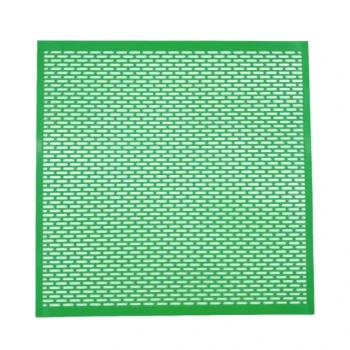
- High Performance Plastic Queen Excluder for Beekeeping and Apiary Management
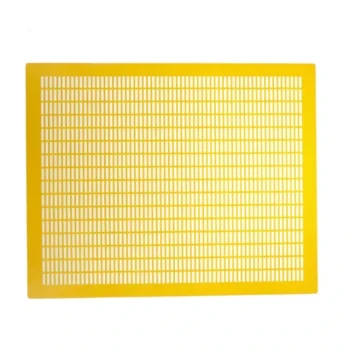
- Professional Plastic Queen Excluder for Modern Beekeeping
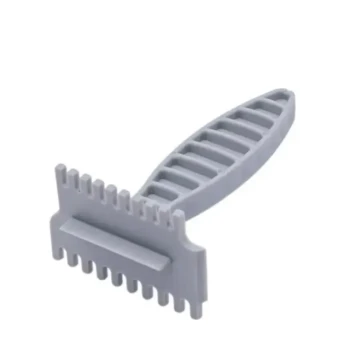
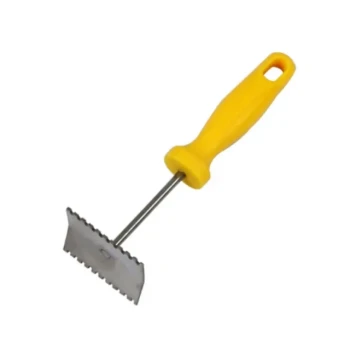
- Lightweight Durable Plastic Queen Excluder Scraper for Beekeeping
- Metal Queen Bee Excluder for Beekeeping
- Premium Wood Framed Metal Wire Queen Bee Excluder
People Also Ask
- What are the characteristics of a plastic queen excluder? Key Benefits for Cost-Effective Beekeeping
- What are the operational and cost advantages of using plastic queen excluders over metal or wire excluders in commercial hive management? Discover how they reduce labor, prevent wing damage, and lower total costs.
- What types of queen excluders are available for beekeepers? Choose the Right Tool for Your Hive
- Why are standardized hive frames and queen excluders essential for maintaining honey purity and quality? Scale Your Purity
- Do plastic queen excluders work? A Cost-Effective Solution for Modern Apiaries