Large-scale migratory beekeeping depends on three capabilities: standardized hive equipment, secure and ventilated transportation, and disciplined operational planning. Commercial operators need durable stackable hive bodies, strong frames, heavy-duty straps, ventilated migration components, loading machinery, suitable transport vehicles, and recovery equipment for difficult apiary sites. These assets must work together to protect colonies from vibration, overheating, shifting loads, and delays during repeated seasonal relocations.
The core requirement is controlled movement: standardize the hives, secure every stack, provide continuous airflow, mechanize loading wherever possible, and plan routes and recovery procedures before the truck leaves.
Build a Transport-Ready Hive System
Use standardized, stackable hive components
Large operations should use hive bodies, frames, covers, and bottom boards with consistent dimensions. Standardization allows equipment to be interchanged, stacks to remain stable, and mechanical loading systems to handle large quantities efficiently.
Hive boxes must also withstand repeated loading, unloading, vibration, and exposure to changing climates. Strong construction and secure corner joints help prevent shifting, splitting, or structural failure during transport.
Select frames that protect the colony and comb
Frames should fit securely within standardized hive bodies and resist movement during transit. Poorly supported frames can swing, damage comb, and increase colony stress when trucks encounter rough roads.
Durable frame components are particularly important when colonies are moved several times per year. Repeated transport magnifies small weaknesses in boxes, joints, fasteners, and frame supports.
Use heavy-duty hive fasteners and straps
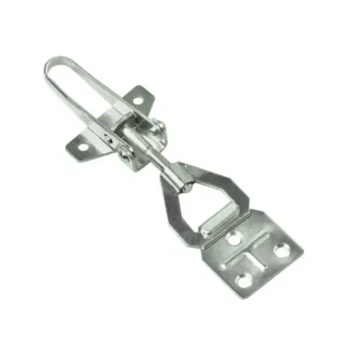
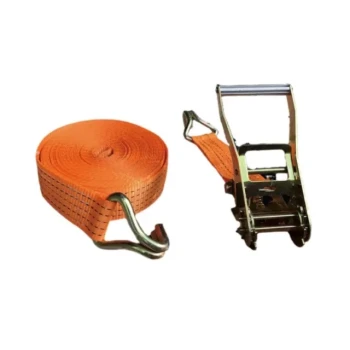
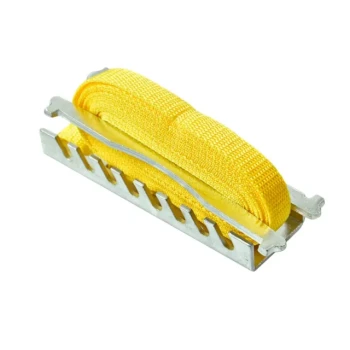
Commercial operators require straps or fastening systems capable of holding stacked hive components together under vibration and sudden vehicle movement. Each stack should be secured as a complete transport unit rather than relying only on the weight of the boxes.
Fasteners should be selected for repeated use, simple operation, and resistance to outdoor conditions. A fastening system that is strong but slow to apply can create loading delays and inconsistent securing practices at scale.
Control Ventilation and Temperature During Transit
Install ventilated migratory bottom boards
Ventilated migratory bottom boards provide airflow while supporting the hive during transport. They are a central component of a system designed to reduce overheating and prevent colonies from being deprived of air.
Ventilation equipment must remain unobstructed by adjacent hives, coverings, cargo, or debris. Airflow should be checked before departure and again after loading.
Use ventilated covers or migration screens
Migration covers and screens help maintain airflow while preventing the bees from escaping during transit. They should fit securely and remain compatible with the hive bodies and fastening system.
Ventilation is especially important when hives are tightly stacked or transported in warm conditions. However, airflow components must be integrated with load security; an open or poorly fitted screen is not a substitute for a properly secured hive.
Treat ventilation as an operating procedure
Adequate ventilation cannot be achieved by purchasing a ventilated component alone. Crews must inspect screens, bottom boards, openings, and clearances before movement begins.
Operators should also account for weather, travel duration, vehicle loading density, and the conditions at temporary stops. The objective is to maintain airflow without exposing colonies to unnecessary instability or environmental stress.
Mechanize Loading and Unloading
Use loaders and forklifts for high-volume handling
Large-scale operations benefit from specialized loaders, forklifts, or comparable hive-handling machinery. Mechanization reduces manual lifting, improves loading speed, and makes stack placement more consistent.
Equipment should be matched to the hive configuration, stack dimensions, vehicle deck, and site terrain. Compatibility matters as much as lifting capacity: machinery that cannot approach or position stacks accurately will slow the operation and increase handling risk.
Design the vehicle for stable hive transport
Flatbed trucks and other suitable commercial transport platforms must provide sufficient deck space, load capacity, and access for mechanical handling. The load should be distributed to avoid excessive movement or unsafe weight concentration.
Hives should be positioned so that straps can be applied, ventilation remains open, and crews can inspect the load. The most efficient arrangement is not necessarily the one with the highest packing density.
Standardize loading and unloading sequences
A repeatable sequence helps crews place, secure, inspect, and remove stacks consistently. It also simplifies training and makes it easier to identify whether a problem arose during loading, transit, or unloading.
Before departure, crews should verify stack alignment, strap tension, ventilation clearance, vehicle condition, and the security of all equipment. The same checks should be repeated after arrival before hives are moved into the apiary.
Prepare for Rough and Remote Apiary Sites
Carry recovery and towing equipment
Migratory operations often use muddy, uneven, or remote access roads. Heavy-duty winches, towing equipment, and vehicle recovery hardware provide a way to extract trucks or handling machinery when traction is lost.
Recovery equipment should be selected for the operating vehicle and expected terrain. It must also be maintained, accessible, and supported by a crew that understands how to use it safely.
Plan routes around site conditions
Route planning should consider road quality, gradients, turning areas, weather exposure, and access to the destination apiary. A route that is acceptable for a passenger vehicle may be unsuitable for a loaded bee truck.
Operators should identify difficult sections before dispatch and establish alternatives where practical. This reduces the chance that a minor access problem becomes a prolonged delay with colonies confined on the vehicle.
Prepare the destination before arrival
The receiving site should have adequate space for vehicle access, unloading, stack placement, and equipment movement. Poor site preparation can eliminate the efficiency gained through mechanized loading.
A prepared site also reduces the time colonies remain on the transport vehicle. This supports better control of ventilation, temperature, and handling conditions.
Build an Operational Strategy Around Seasonal Movement
Coordinate transport with floral timing
The commercial purpose of migration is to reach seasonal nectar flows or pollination sites at the right time. Transport planning should therefore be linked to crop schedules, regional forage conditions, and the expected sequence of moves.
Delays can reduce the value of a pollination contract or shorten the productive period at a floral source. Dispatch planning, vehicle availability, loading capacity, and destination readiness must be coordinated rather than managed independently.
Plan for repeated long-distance moves
Colonies may travel hundreds or thousands of kilometers and be relocated multiple times in a year. Equipment selection should therefore prioritize durability, repairability, interchangeability, and resistance to repeated handling.
A low-cost component that fails frequently can create higher total costs through replacement, labor, damaged comb, delayed movement, or colony stress. Lifecycle performance is more important than purchase price alone.
Use night transport when appropriate
Migratory operators often move colonies at night because bees are generally inside the hive and road temperatures may be more favorable. Night movement still requires adequate lighting, trained crews, secure staging areas, and compliance with applicable transport and road-safety requirements.
The timing decision should account for weather, route length, driver management, ventilation, and arrival conditions. Night transport is a logistical option, not a substitute for proper preparation.
Maintain a movement and inspection system
Large apiaries should track which colonies are loaded, where they are placed on the vehicle, their destination, and their arrival status. This improves accountability when thousands of hives are moved across multiple sites.
Inspection checkpoints should cover hive integrity, straps, ventilation, frames, vehicle condition, and recovery equipment. A documented process helps identify recurring failures and supports timely corrective action.
Understanding the Trade-offs
Maximum density versus airflow and access
Packing more hives onto a vehicle can improve transport efficiency, but excessive density may restrict ventilation and make inspection or unloading more difficult. The correct loading pattern balances capacity with airflow, stability, and handling access.
Manual labor versus mechanization
Manual handling may require less initial investment, but it becomes inefficient and physically demanding at commercial scale. Loaders and forklifts improve throughput and consistency, although they require capital, maintenance, suitable site access, and trained operators.
Lightweight equipment versus durability
Lightweight, shock-resistant equipment can reduce handling effort and loading time. However, it must still withstand repeated vibration, weather exposure, and mechanical handling; minimizing weight at the expense of structural strength is a false economy.
Strong restraint versus colony protection
Straps must hold stacks securely without damaging hive bodies or obstructing essential ventilation. Overly aggressive securing methods can deform equipment, while insufficient restraint allows shifting and impact damage.
Broad product range versus system compatibility
A one-stop supplier can simplify procurement by providing hive boxes, frames, fasteners, ventilation components, protective equipment, machinery, and recovery hardware. The benefit is realized only when the products are dimensionally and operationally compatible.
Before consolidating purchases, buyers should verify specifications, replacement availability, delivery capacity, and technical support. Rapid fulfillment is valuable, but the equipment must fit the operator’s existing hive and transport system.
Making the Right Choice for Your Goal
A practical procurement program should combine the following equipment with a documented transport process:
- If your primary focus is colony safety: Prioritize standardized hive bodies, secure frames, heavy-duty straps, ventilated bottom boards, and migration screens, then enforce pre-departure and arrival inspections.
- If your primary focus is loading speed: Invest in compatible loaders or forklifts, standardized stack dimensions, and a repeatable loading sequence.
- If your primary focus is transport reliability: Select suitable flatbed vehicles, durable restraint hardware, route plans, and recovery equipment such as winches and towing systems.
- If your primary focus is pollination and honey-production timing: Coordinate crop calendars, dispatch schedules, vehicle capacity, destination preparation, and contingency routes.
- If your primary focus is procurement efficiency: Use a supplier capable of providing the full equipment range with verified compatibility, responsive technical service, dependable stock, and fast order fulfillment.
With standardized equipment and disciplined logistics, large-scale migratory beekeeping becomes a controllable transport operation rather than a series of improvised moves.
Summary Table:
| Capability | Key Equipment | Operational Strategy |
|---|---|---|
| Standardized Hive System | Stackable hive bodies, frames, covers, bottom boards | Use consistent dimensions for interchangeability and stability |
| Load Securing | Heavy-duty straps, fasteners | Secure each stack as a unit to prevent shifting |
| Ventilation Control | Ventilated bottom boards, migration covers/screens | Ensure airflow; inspect before departure and after arrival |
| Mechanized Handling | Loaders, forklifts | Match equipment to hive and vehicle for efficient loading |
| Site Access | Winches, towing equipment | Plan routes and prepare destination for difficult terrain |
| Seasonal Planning | Route planning, tracking systems | Coordinate with floral timing; use night transport when beneficial |
Upgrade Your Migratory Beekeeping Operations with HONESTBEE
At HONESTBEE, we provide a comprehensive range of durable hive equipment, loaders, ventilation systems, and recovery tools designed for large-scale operations. Our one-stop sourcing ensures compatibility and reliability, backed by rapid response and dedicated support. Whether you're a commercial apiary or distributor, we help you streamline logistics, reduce downtime, and maximize productivity.
Contact us today for tailored solutions and bulk pricing!
Related Products
- Heavy Duty Adjustable Hive Connector
- Heavy Duty Ratchet Hive Strap
- Durable Plastic Interlocking Hive Connector for Beekeeping
- Plastic Transporting Bee Packages and Nuc Boxes for Beekeeping
- Ergonomic Two Person Foldable Hive Lifter
People Also Ask
- Under what circumstance are beehive connectors particularly beneficial? Optimize Handling for Full Beehive Attachments
- What is the advantage of using the beehive connector when handling full attachments? Achieve Safe and Efficient Hive Transport
- What are the primary functions of a beehive connector? Ensure Hive Stability and Safe Colony Transport
- How can the connection length and strength of a beehive connector be adjusted? Master Tension with Threaded Mechanics
- What is the purpose of the beehive connector? Secure Your Hive for Safe Transport