High-moisture honey requires controlled handling from harvest through storage. Commercial producers should test moisture before extraction, separate unready frames, and use drying or moisture-reduction equipment when readings exceed the acceptable range. They also need airtight, food-grade drums and a clear consumption window—typically within one year for high-moisture honey—to protect stability and market value.
High moisture is primarily a fermentation-control problem. Measure each batch, reduce excess water without excessive heat, and store the finished honey in sealed, food-compatible containers under controlled conditions.
Why High-Moisture Honey Requires Specialized Equipment
Excess water increases fermentation risk
Honey normally contains approximately 17–18% water. When moisture rises above roughly 18–19%, sugar-tolerant yeasts can multiply and cause fermentation, gas formation, off-flavors, and product loss.
Rainy-season nectar flows, including some Melaleuca flows, and harvesting before combs are adequately sealed can produce honey with elevated moisture.
Honey absorbs moisture from the environment
Honey is hygroscopic, meaning it readily absorbs atmospheric humidity. Open tanks, poorly sealed drums, humid extraction rooms, and loose-fitting lids can therefore increase moisture after harvest.
Equipment selection must control both initial moisture content and reabsorption during processing and storage.
Equipment Considerations Before and During Harvest
Use refractometers to test each batch
Commercial apiaries should use an optical or digital honey refractometer to test samples from combs before harvesting. Testing helps identify frames that are not ready for extraction and prevents high-moisture honey from being mixed into an otherwise stable batch.
Sampling should be representative, particularly when weather conditions have been wet or when many frames remain uncapped.
Separate unready frames
Frames with high moisture should be held back rather than blended immediately with finished honey. Separating them protects the quality of the main processing run and makes later moisture correction more predictable.
If a substantial number of uncapped frames must be harvested, they can be placed in a controlled drying area before extraction.
Provide controlled air movement and dehumidification
Fans and dehumidifiers can help remove moisture from uncapped frames before extraction. Larger operations may use climate-controlled rooms with warm, dry air circulated over the combs.
The supplementary reference indicates that air temperatures around 35–38°C may be used for comb drying, with moisture reduction occurring gradually. Actual settings should be validated against honey quality, equipment design, and local food-processing requirements.
Match extraction equipment to volume
Commercial harvesting systems may include:
- Uncapping equipment
- Radial or tangential extractors
- Coarse and fine filtration systems
- Heated settling or holding tanks
- Semi-automatic or automatic filling equipment
The system should minimize exposure to humid air and allow rapid movement from extraction to filtration and sealed storage.
Moisture-Reduction Equipment for Extracted Honey
Use commercial drying or dehumidification systems
Honey that exceeds the target moisture level may require commercial honey drying equipment, dehumidification systems, or controlled evaporation machinery. The objective is to reduce moisture to a stable level—generally below approximately 18%, depending on the buyer’s specification and applicable standards.
Processing capacity matters. Undersized equipment creates bottlenecks, leaving honey exposed to ambient humidity for longer periods.
Consider jacketed tanks or controlled heating systems
Double-jacketed preheating tanks and other controlled heating systems can help evaporate excess water while maintaining more even temperature control than direct heating.
Heat must be monitored carefully. Excessive exposure can darken honey, alter flavor, damage desirable enzymes, and increase hydroxymethylfurfural (HMF) formation.
Avoid treating heat as a substitute for testing
Heating does not eliminate the need for moisture measurement. Operators should test honey before and after moisture reduction and document the results for batch control and customer assurance.
The process should be designed around measured moisture reduction, not simply a fixed heating time or temperature.
Storage Equipment for High-Moisture Honey
Select airtight, food-grade drums
High-moisture honey should be stored in airtight, food-grade honey drums with tight-fitting, moisture-resistant lids. Sealing prevents the honey from absorbing atmospheric humidity and limits exposure to airborne contaminants and odors.
For commercial distribution, drum compatibility with forklifts, pallets, filling lines, and export requirements should also be considered.
Prevent metal contamination and reactions
Honey is naturally acidic and may react with unsuitable metals. Steel or galvanized containers should therefore have an appropriate food-grade internal lining, such as tinning or baked-on food-grade lacquer, where required by the container specification.
Unprotected or unsuitable metal surfaces can contribute to contamination, flavor changes, or discoloration.
Use compatible plastics only when certified
Plastic containers used for commercial honey must be high-grade, non-brittle, food-contact compliant, and non-odor-imparting. Low-quality plastic may transfer synthetic odors or fail under temperature and handling stress.
Glass with screw-top lids can provide an effective airtight seal for smaller volumes, but it is generally less practical for bulk commercial handling.
Control the storage environment
Storage rooms should be clean, dry, and protected from humidity and strong odors. Climate control is especially important for high-moisture honey because even properly processed honey can regain moisture if exposed to humid air.
Drums should remain closed except during controlled sampling, transfer, or filling operations.
Quality-Control Equipment and Documentation
Measure moisture at multiple control points
A practical control plan includes moisture checks:
- Before harvesting, especially from uncapped or recently harvested frames
- After extraction, to identify batch variation
- After drying or moisture reduction, to verify the final result
- Before bulk storage or dispatch, to confirm release quality
This data helps prevent unstable honey from entering the regular bulk inventory.
Monitor temperature during processing
Temperature sensors and data logging are valuable when using heated tanks, dryers, or revolving drums. They help operators balance moisture reduction against flavor retention, enzyme preservation, and HMF control.
This is particularly important when supplying wholesalers, resellers, or customers with defined quality specifications.
Maintain traceability by batch
High-moisture honey should be clearly identified by harvest date, floral source where relevant, moisture reading, processing treatment, and storage conditions. Traceability allows distributors and buyers to manage inventory according to stability and recommended consumption windows.
Understanding the Trade-offs
Drying improves stability but can affect quality
Moisture reduction can prevent fermentation and recover honey that would otherwise be difficult to sell. However, overly aggressive drying or heating may reduce delicate floral characteristics and negatively affect color, aroma, enzymes, or HMF levels.
The preferred approach is controlled, gradual moisture removal with frequent testing.
Blending can reduce moisture variation—but creates risk
Blending high-moisture honey with drier honey may produce an acceptable final batch, but only if the finished blend is tested and remains within the required moisture specification. Estimating the result without measurement can leave enough water for fermentation.
Blending should also preserve traceability and comply with customer labeling and quality requirements.
Longer shelf life should not be assumed
Properly conditioned honey may achieve extended commercial shelf life under suitable storage conditions. High-moisture honey is different: even after treatment, producers should use a conservative consumption window—typically within one year—unless validated stability data and customer specifications support a longer period.
Equipment capacity affects order fulfillment
For distributors and commercial buyers, equipment is not only a quality issue but also a supply reliability issue. Insufficient drying, extraction, or filling capacity can delay orders, increase handling exposure, and create inconsistent batches.
When sourcing equipment, evaluate throughput, spare-parts availability, operator support, cleaning requirements, and delivery lead times—not just purchase price.
How to Apply This to Your Operation
Select equipment according to the moisture risk, batch volume, and sales channel you serve.
- If your primary focus is preventing fermentation: Use refractometers, segregate high-moisture frames, and install controlled drying or dehumidification equipment before bulk storage.
- If your primary focus is preserving premium honey quality: Prefer gradual moisture reduction, accurate temperature monitoring, and minimal heat exposure.
- If your primary focus is bulk distribution: Specify airtight, food-grade drums with compatible linings, moisture-proof lids, odor resistance, and handling features suited to your logistics system.
- If your primary focus is fast and reliable order fulfillment: Choose extraction, drying, filtration, and filling equipment with sufficient throughput, service support, and readily available replacement components.
- If your primary focus is protecting customer confidence: Record moisture, temperature, treatment, and storage data for every batch and communicate a clear consumption window for high-moisture honey.
With accurate testing, controlled moisture reduction, and properly sealed storage, commercial producers can turn a high-moisture harvest into a more stable and traceable product.
Summary Table:
| Equipment Category | Specific Equipment | Purpose | Key Considerations |
|---|---|---|---|
| Moisture Testing | Refractometers (optical/digital) | Measure moisture content in honey | Test before harvesting and at multiple control points |
| Extraction | Uncapping equipment, extractors, filtration systems | Efficiently extract honey | Minimize exposure to humid air |
| Drying | Commercial honey dryers, dehumidifiers | Reduce moisture content | Use controlled, gradual drying to avoid quality loss |
| Heating | Jacketed tanks, controlled heating systems | Evaporate excess water while maintaining temperature control | Monitor temperature to prevent HMF formation |
| Storage | Airtight, food-grade drums (with lining) | Store honey without absorbing moisture | Ensure moisture-resistant lids and no metal contamination |
| Climate Control | Dehumidifiers for storage rooms | Maintain low humidity environment | Keep doors closed except during handling |
| Monitoring | Temperature sensors, data loggers | Track processing conditions | Record data for quality assurance |
| Traceability | Batch labeling, documentation systems | Track honey from harvest to sale | Document moisture readings and treatments |
Looking for reliable honey processing and storage equipment? At HONESTBEE, we offer a comprehensive range of commercial beekeeping tools and machinery, from moisture testers to airtight drums. Our wholesale solutions are designed for commercial apiaries and distributors, ensuring rapid response, dedicated service, and fast delivery. Contact us today to optimize your honey operation and secure supply reliability – Reach out to our team!
Related Products
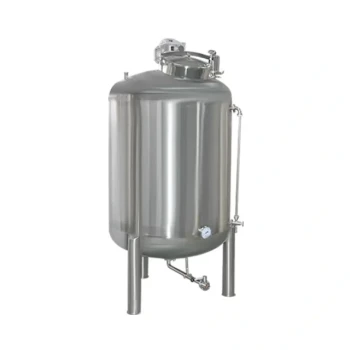
- Stainless Steel Honey Storage and Settling Tank with Double Strainer
- Stainless Steel Honey Storage Tank with Lid for Honey
- Professional Honey Storage Tank with Agitation System
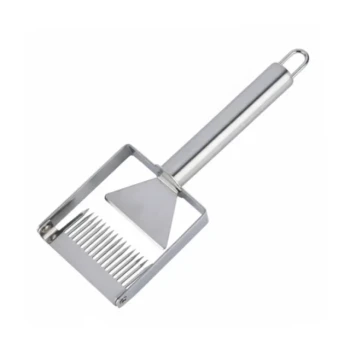
- All-Stainless Steel Pivoting Honey Uncapping Fork for Beekeeping
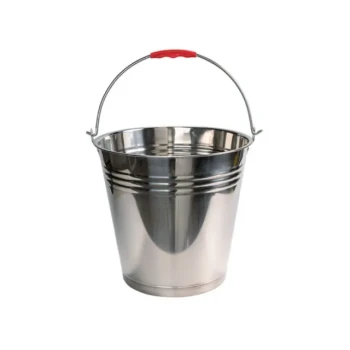
- Food Grade Plastic Honey Bucket Pail for Beekeeping
People Also Ask
- What economic role do honey storage tanks play? Boost Your Revenue Through Strategic Inventory Management
- What roles do industrial honey storage tanks and filtration meshes play in processing? Ensure Purity & Consistency
- What is the purpose of a honey storage tank? Streamline Your Honey Processing for Quality & Efficiency
- What role do settling tanks play in honey production? Achieve Pure, High-Clarity Honey Naturally
- Why are large settling tanks used in the honey clarification process? Achieve Natural Purity & Batch Consistency