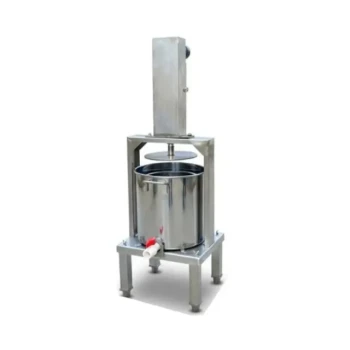
For a commercial honey extraction line, the essential equipment is a coordinated sequence of bee-removal, uncapping, extraction, filtration, storage, and filling machinery. At minimum, an apiary needs bee escapes or fume boards, uncapping tools or machinery, a centrifugal extractor, strainers or filters, food-grade storage tanks, and a bottling system with a sanitary gate valve. Higher-volume operations can add capping presses, heated settling tanks, automated fillers, and mobile or powered processing equipment.
The most efficient setup protects the comb while moving honey through each stage with minimal handling: clear bees, uncap frames, centrifuge the honey, filter it, settle or store it, and fill it hygienically.
Design the Line Around a Logical Workflow
Move Supers Safely From the Apiary
Bee escapes, fume boards with approved repellents, and soft bee brushes help remove bees from honey supers before they enter the processing area.
This reduces labor and limits the risk of bees entering the extraction room. The equipment selected should match the apiary’s harvesting method and local regulations concerning repellents.
Stage Frames Before Extraction
Commercial operations benefit from a dedicated area for receiving and temporarily holding honey supers and movable comb frames.
Standardized frames and beeswax foundation help maintain uniform comb dimensions, making uncapping and extractor loading more consistent.
Separate Clean and Unclean Areas
The line should move in one direction from incoming frames to finished containers.
Separating bee removal and frame handling from filtering, storage, and bottling helps reduce cross-contamination and keeps the food-contact stages easier to clean.
Remove Wax Cappings Efficiently
Choose the Right Uncapping Equipment
A small or lower-volume operation may use uncapping knives, cold knives, uncapping forks, or uncapping scratchers.
Commercial apiaries generally benefit from a stainless steel uncapping tank or powered uncapping machine, particularly when large numbers of frames must be processed continuously.
Collect Cappings for Further Recovery
An uncapping tank should collect wax cappings while allowing honey to drain.
For larger operations, a cappings press can recover residual honey from the wax, improving overall yield before the wax is sent for rendering or other processing.
Match Automation to Throughput
Manual uncapping has a lower initial cost and offers flexibility across different frame sizes.
Automated or semi-automated systems require more investment but can reduce labor bottlenecks when the extractor and downstream equipment have higher capacity.
Extract Honey Without Destroying the Comb
Install a Centrifugal Honey Extractor
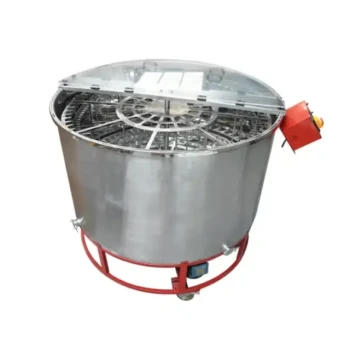
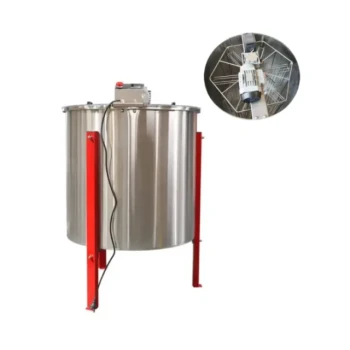
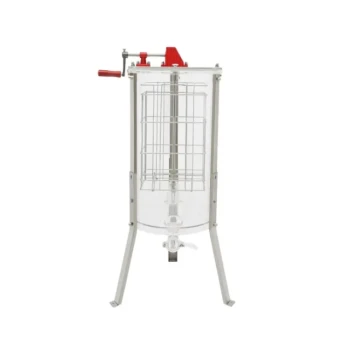
The extractor is the central machine in the line. It uses centrifugal force to remove liquid honey from uncapped cells while leaving the comb largely intact for return to the colonies.
Radial extractors process multiple frames with the comb positioned outward, while tangential extractors expose one side of the frame at a time and may require turning the frames.
Select Capacity Based on the Slowest Stage
Extractor capacity should be evaluated alongside uncapping speed, labor availability, storage volume, and filling capacity.
A large extractor does not improve total throughput if frames cannot be uncapped quickly enough or if filtered honey has nowhere to go.
Prioritize Food-Grade Construction
The honey-contact surfaces should be made from food-grade materials, commonly stainless steel, with smooth surfaces that are easy to wash and sanitize.
Durable construction, reliable bearings, and a stable drive system are especially important for commercial users who need repeatable operation over long harvest periods.
Filter and Condition the Extracted Honey
Use Strainers or Filtration Systems
Freshly extracted honey may contain wax particles and other solid debris. Coarse strainers, fine strainers, or staged filtration systems remove these materials before storage and filling.
Filtration should clarify the honey without applying unnecessary processing that could alter the product’s desired characteristics.
Add Settling or Heating Tanks Where Appropriate
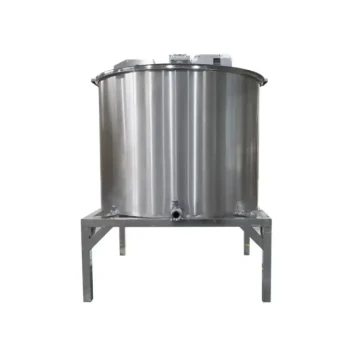
A settling tank or heating tank allows air bubbles and fine particles to separate before bottling.
Commercial facilities may also use controlled hot-water or steam systems for managing viscosity and melting beeswax. Temperature control is important because excessive heat can negatively affect honey quality.
Provide Adequate Intermediate Storage
Food-grade tanks, drums, or containers should hold filtered honey before packaging.
Storage vessels should be covered, easy to clean, and sized to prevent the extraction line from stopping while filled containers are being prepared.
Build a Hygienic Bottling Stage
Install a Bottling Bucket or Filling Tank
A dedicated bottling bucket or filling tank with a sanitary gate valve provides controlled dispensing into jars or other approved containers.
This is a basic requirement for consistent, low-contamination packaging.
Upgrade to Automated Filling for Higher Volumes
Automated or semi-automated honey fillers provide more accurate volume control and reduce repetitive manual labor.
They are particularly valuable for commercial apiaries, wholesalers, and private-label suppliers handling multiple package sizes or sustained production volumes.
Complete the Packaging Workflow
Depending on the product and sales channel, the packaging area may also require container handling, capping, labeling, and case-packing equipment.
These downstream machines should be selected to match the filler’s output rather than treated as separate capacity decisions.
Support Equipment for Commercial Operations
Use Mobile Extraction Units for Distributed Apiaries
A mobile extracting unit can reduce the need to transport heavy supers over long distances.
This approach is useful when apiaries are geographically dispersed or when extraction must be performed close to the harvest site.
Provide Reliable Power
Electric extractors, pumps, fillers, and automated uncapping systems require dependable power.
For field operations or locations with unstable electricity, an appropriately sized electric generator can support continuity, provided it is installed and operated safely away from food-contact areas.
Include Steam or Hot-Water Equipment When Processing Wax
Commercial wax recovery and certain honey-handling processes may require steam generators, boilers, or hot-water systems.
These should be integrated with appropriate temperature control and drainage provisions so that heat supports processing without compromising honey quality or worker safety.
Understanding the Trade-offs
Manual Equipment Costs Less but Needs More Labor
Manual knives, scratchers, strainers, and extractors are accessible and flexible, especially for smaller apiaries.
Their limitations are slower throughput, greater dependence on operator skill, and more variation in output during peak harvest periods.
Automation Improves Throughput but Raises Complexity
Powered uncappers, automated extractors, filtration systems, and filling machines can substantially reduce handling and labor requirements.
However, they increase capital cost, maintenance needs, cleaning responsibilities, and the importance of matching every machine’s capacity across the line.
Larger Equipment Is Not Always More Efficient
Oversized equipment can create underutilized capacity, unnecessary cleaning work, and higher purchasing and operating costs.
The correct approach is to size the line around expected frame volume, seasonal harvest peaks, available labor, packaging formats, and future expansion plans.
Heat Must Be Controlled Carefully
Heating can improve flow and support wax processing, but uncontrolled or excessive heat can damage honey quality.
Use heating and settling equipment only where it serves a clear process need, with reliable control and monitoring.
Food Safety Must Govern Every Selection
Equipment that is difficult to clean, contains unsuitable food-contact materials, or allows honey to remain exposed can undermine an otherwise efficient line.
Sanitary design, cleanable surfaces, protected storage, and disciplined operating procedures are as important as machine speed.
How to Apply This to Your Project
The best equipment package depends on whether the operation prioritizes low initial cost, seasonal flexibility, maximum throughput, or automated packaging.
- If your primary focus is a small or seasonal apiary: Start with bee-removal tools, manual uncapping equipment, a suitable extractor, fine strainers, and food-grade bottling containers.
- If your primary focus is commercial extraction capacity: Invest in stainless steel uncapping equipment, a properly sized radial or tangential extractor, staged filtration, settling tanks, and sufficient intermediate storage.
- If your primary focus is maximizing honey recovery: Add a cappings press and efficient filtration so residual honey and solid particles are recovered or removed before storage.
- If your primary focus is fast retail or wholesale fulfillment: Use a filling tank with a sanitary gate valve, then progress to automated filling, capping, labeling, and packaging equipment.
- If your primary focus is multi-site or field processing: Consider mobile extraction equipment and a reliable generator, while maintaining the same food-grade and sanitation requirements.
- If your primary focus is one-stop equipment sourcing: Specify the complete line as a matched system so extractors, tanks, filters, fillers, spare parts, and service support arrive with compatible capacities and delivery schedules.
A well-matched extraction line turns harvesting into a clean, repeatable process that protects comb, improves recovery, and scales with commercial demand.
Summary Table:
| Stage | Essential Equipment | Purpose |
|---|---|---|
| Bee Removal | Bee escapes, fume boards, soft brushes | Safely clear bees from honey supers before extraction. |
| Uncapping | Uncapping knives, powered uncapping machines, uncapping tank | Remove wax cappings from honeycomb cells. |
| Extraction | Centrifugal extractor (radial or tangential) | Spin honey out of comb without destroying it. |
| Filtration | Coarse/fine strainers, staged filtration systems | Remove wax particles and debris from honey. |
| Settling & Storage | Settling tanks, food-grade storage tanks | Allow air bubbles to rise; hold honey before bottling. |
| Bottling | Bottling bucket with gate valve, automated fillers | Fill jars or containers consistently and hygienically. |
Ready to streamline your honey extraction line? At HONESTBEE, we cater to commercial apiaries and distributors with a comprehensive wholesale offering of beekeeping tools, machinery, and equipment—from hive-making and honey-filling machines to essential consumables. Our full-spectrum portfolio, rapid response, and dedicated service ensure you get the right equipment for your scale, whether you're a distributor seeking OEM/ODM support or an apiary maximizing efficiency. Contact us today to discuss your needs and receive a tailored solution with fast delivery.
Related Products
- 32 Frame Commercial Electric Honey Extractor for Beekeeping and Honey Production
- HONESTBEE 72 Frame Industrial Electric Honey Extractor for Beekeeping
- Commercial 48-Frame Stainless Steel Honey Extractor
- HONESTBEE 3-Frame Manual Acrylic Honey Extractor
- Stainless Steel Manual 8 Frame Radial Honey Extractor Machine for Beehives
People Also Ask
- What are commercial honey extractors used for? Boost Your Apiary's Efficiency & Profitability
- What is a commercial honey extractor? The Essential High-Volume Solution for Large Apiaries
- Who are commercial honey extractors designed for? Scaling Your Industrial Beekeeping Success
- How is honey extracted commercially? Maximize Your Apiary's Efficiency and Honey Yield
- What are commercial honey extractors and for what scale of beekeeping are they intended? Scale Your 200+ Colony Apiary