Before introducing pollen substitutes, a beekeeper must evaluate natural resource availability, specific colony growth goals (such as pollination contracts or splitting hives), and prevailing weather conditions. This decision requires balancing the colony's immediate nutritional needs against the availability of superior natural forage.
While pollen substitutes can accelerate growth, honeybees inherently favor and thrive on natural pollen. These supplements should be viewed as a strategic bridge during times of scarcity or specific production demands, rather than a permanent replacement for diverse floral sources.
Assessing Environmental Availability
Analyzing Natural Flora
The first and most critical step is assessing the local landscape. You must determine if there are sufficient natural pollen-providing plants currently blooming to meet the hive's nutritional needs.
If the local environment offers a diverse and abundant array of pollen sources, the introduction of a substitute is often unnecessary.
Weather Constraints
Even if natural flora is present, accessibility is key. Poor weather conditions, such as rain, high winds, or low temperatures, can prevent bees from foraging effectively.
In these scenarios, natural sources become "inaccessible." A substitute becomes a vital resource to maintain colony health and growth momentum despite the external environment.
Defining Operational Goals
Pollination Services and Crops
You must clearly define why you need rapid colony growth. If your operation supports early-season pollination for orchards or crops like Oil Seed Rape (Canola), artificial stimulation is often required.
These crops bloom early and demand high colony populations before the natural spring buildup is complete. Substitutes bridge this timing gap.
Colony Expansion (Splits)
If your objective is to increase the total number of hives in your apiary, rapid population density is essential.
Using substitutes allows you to build colony strength early in the season. This enables you to perform early-season splits, effectively multiplying your hive count without waiting for natural peak flows.
Economic Efficiency
For commercial operations, the decision involves a cost-benefit analysis regarding migration. Traditionally, beekeepers migrate hives across regions to chase natural floral sources.
This migration incurs high costs in transportation, labor, and potential colony loss. Utilizing substitutes at a stationary apiary can significantly lower production costs per hive, thereby improving the price competitiveness of your honey.
Understanding the Trade-offs
The Superiority of Natural Pollen
It is imperative to remember that honeybees will always favor natural pollen over artificial substitutes. Natural pollen provides a complex nutritional profile that is difficult to replicate perfectly.
Substitutes should only be utilized when natural sources are truly scarce or inaccessible.
Risks of Over-Supplementation
There is a distinct risk in providing too much support. Excessive feeding can cause the colony to grow too quickly for its local environment, leading to resource imbalances.
Furthermore, bees may become reliant on the supplements. The goal is to provide just enough support to sustain growth until the colony can independently forage for natural resources again.
Making the Right Choice for Your Goals
Before mixing your feed, review your primary objectives for the season:
- If your primary focus is Commercial Pollination: Utilize substitutes to artificially boost population density ahead of early crops like orchards or Canola.
- If your primary focus is Apiary Expansion: Use supplements to drive rapid growth, enabling you to split hives early in the season.
- If your primary focus is Cost Management: Replace expensive cross-regional migration with stationary feeding to lower input costs and protect profit margins.
- If your primary focus is Sustainability: Monitor natural pollen flow closely and only supplement during genuine scarcity to prevent colony over-population.
Strategic feeding is not about replacing nature, but about smoothing out the volatility of natural resources to ensure consistent colony health.
Summary Table:
| Evaluation Factor | Key Considerations | Strategic Benefit |
|---|---|---|
| Natural Forage | Check for local blooming plants and variety. | Avoids unnecessary costs when nature provides. |
| Weather Conditions | Assess if rain/cold prevents foraging access. | Maintains colony health during environmental gaps. |
| Operational Goals | Early pollination contracts or hive splitting. | Builds hive population ahead of natural schedules. |
| Cost Management | Compare migration costs vs. stationary feeding. | Increases honey price competitiveness and ROI. |
| Colony Balance | Risk of over-population vs. local resources. | Ensures sustainable growth without dependency. |
Scaling Your Beekeeping Operation?
At HONESTBEE, we understand that commercial success requires more than just supplements—it requires the right infrastructure. We cater to commercial apiaries and distributors by providing a comprehensive wholesale range of professional-grade tools and machinery.
Whether you need to scale your production with honey-filling machines, expand your fleet with durable hive-making hardware, or stock up on essential consumables, our portfolio is designed to enhance your efficiency and lower your operational costs.
Ready to optimize your apiary’s performance? Contact HONESTBEE today for wholesale solutions and let us help you build a more productive beekeeping business.
Related Products
- Heavy-Duty Ergonomic Stainless Steel Pollen Shovel
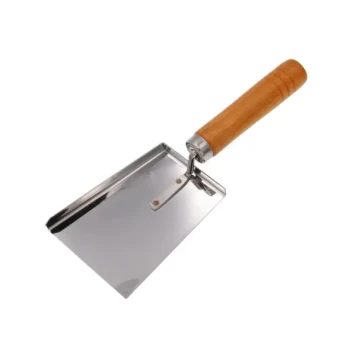
- Stainless Steel Pollen Shovel with Wooden Handle
- Removable Plastic Pollen Trap With Ventilated Tray for Bees Pollen Collector
- Heavy-Duty Ergonomic Grip Galvanized Pollen Shovel
- Plastic Bee Pollen Trap Strips Comb Catcher Collector
People Also Ask
- How is pollen cleaned after it has been dried? Master Efficient Separation for Pure Bee Pollen
- What methods are used to clean harvested bee pollen? Scale Your Beekeeping Operations with the Right Technique
- How can harvested bee pollen be cleaned to remove impurities? Efficient Methods for Commercial and Hobbyist Beekeepers
- How do bee pollen collection tools affect the quality of bee pollen used in functional dairy ice cream production?
- What is the technical significance of using specialized cutting tools for propolis? Master Precision Pollen Harvesting