Technical training is the critical catalyst that transforms modern beekeeping equipment from static assets into high-performance tools. It directly impacts operational efficiency by equipping beekeepers with the specific skills required to assemble, maintain, and operate advanced machinery, preventing costly damage and ensuring that capital investments result in actual production gains.
The Core Reality Buying advanced equipment does not automatically guarantee higher yields; improper use often leads to underutilization or breakage. Technical training bridges this gap, ensuring that modern hives and extraction machinery are operated at their technical limits to maximize production and market supply.
The Mechanics of Operational Efficiency
Precision Assembly and Maintenance
Modern beekeeping relies on complex hardware that requires specific assembly protocols. Technical training provides the operational guidelines necessary to assemble modern hives correctly, ensuring they function as intended.
Beyond assembly, training instills a regimen of proper maintenance. Beekeepers learn to service extraction equipment and hive structures, which directly prevents mechanical failures. This proactive approach ensures equipment longevity and prevents downtime during critical harvest windows.
Preventing Equipment Damage
One of the most significant drags on efficiency is the damage caused by improper handling. Without training, operators often misuse complex machinery, leading to breakage.
Training mitigates this risk by teaching the precise limits and correct usage of tools. By mastering the operation of extraction equipment, beekeepers avoid damaging internal components, ensuring the machinery remains operational and efficient over the long term.
Maximizing Technical Performance
Modern equipment is designed with specific performance benchmarks that can only be reached through skilled operation. Training ensures beekeepers understand how to extract the full utility from their tools.
For example, understanding the nuances of centrifugal extraction allows operators to separate honey efficiently without destroying the honeycomb structure. This not only speeds up the current harvest but preserves the comb for reuse, saving the bees energy and increasing future yields.
Elevating Apiary Management
Transitioning to Commercial Models
Low productivity is frequently a symptom of a knowledge gap rather than a hardware deficiency. Technical training facilitates the transition from traditional methods to high-output commercial models.
By mastering modern pest control devices and seasonal migration techniques, operators can manage larger apiaries with greater precision. This shifts the focus from reactive problem-solving to proactive, standardized management.
Reducing Perceived Complexity
New technology can feel intimidating, leading to hesitation or improper adoption. Training reduces the "perceived difficulty" of modern beekeeping technologies.
When operators feel confident in their ability to handle operations like colony transfer or hygienic harvesting, they utilize the equipment more frequently and effectively. This psychological shift is essential for integrating new tools into daily workflows.
Common Pitfalls and Trade-offs
The Hardware Fallacy
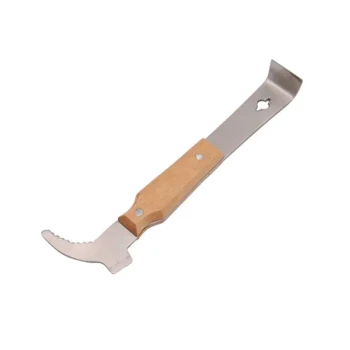
A common mistake is assuming that high-specification tools—such as precision hive tools or ergonomic honey knives—will solve efficiency problems on their own.
Without the accompanying training, these tools are often underutilized. The trade-off is that training requires a significant investment of time and effort before the financial ROI of the equipment can be realized.
The Risk of Partial Knowledge
Incomplete training can be as detrimental as no training. Operators who understand the "how" but not the "why" may skip critical safety or maintenance steps during peak season pressures.
This can lead to a false sense of security, resulting in colony losses or equipment failure when environmental pressures, such as climate fluctuations or disease outbreaks, intensify.
Making the Right Choice for Your Goal
Technical training is not a generic solution; it should be tailored to your specific operational objectives.
- If your primary focus is Equipment Longevity: Prioritize training modules that cover the specific assembly, maintenance schedules, and storage protocols for your hive and extraction machinery.
- If your primary focus is Yield Maximization: Focus on training that standardizes harvesting procedures and master the use of centrifugal extractors to preserve honeycombs for rapid reuse.
Ultimately, the efficiency of your equipment is limited only by the competence of the operator; training is the investment that unlocks that potential.
Summary Table:
| Impact Category | Benefit of Technical Training | Operational Outcome |
|---|---|---|
| Equipment Life | Proper assembly & maintenance protocols | Reduced downtime & extended machine longevity |
| Damage Control | Mastery of machine limits & handling | Prevention of costly breakages & mechanical failure |
| Production Yield | Precision extraction & comb preservation | Faster harvesting & increased seasonal output |
| Management | Shift from reactive to proactive care | Higher scalability for commercial apiary models |
| Psychology | Reduced perceived complexity of tech | Faster adoption & standardized daily workflows |
Maximize Your Apiary's Potential with HONESTBEE
Investing in high-quality hardware is only half the battle. At HONESTBEE, we empower commercial apiaries and distributors by providing not just the full spectrum of beekeeping tools and machinery, but the expertise needed to run them at peak efficiency. From specialized hive-making and honey-filling machines to essential industry consumables, our products are designed for high-performance commercial models.
Ready to scale your production and ensure equipment longevity? Our team is dedicated to supporting your growth with comprehensive wholesale solutions and technical insights tailored to your needs.
Contact HONESTBEE today to discuss your equipment needs!
References
- Teresa Borena Besha, Hailu Chala. Marketable supply of honey: evidence from farmers households in Ethiopia. DOI: 10.17306/j.jard.2022.01525
This article is also based on technical information from HonestBee Knowledge Base .
Related Products
- HONESTBEE 15-in-1 Beekeeper Multi-Tool with Hammer and Pliers for Beekeeping
- Stainless Steel J Hook Hive Tool for Beekeeping
- Stainless Steel Queen Grafting Tool for Beekeeping and Bee Queen Grafting
- Multi-Function Plier-Style Frame Grip Hive Tool
- HONESTBEE Professional Mini J-Hook Hive Tool for Beekeeping
People Also Ask
- What is the recommended method for storing beekeeping tools? Expert Vertical Storage Solutions for Your Apiary
- How does a favorable microclimate interact with beekeeping tools? Boost Overwintering Success and Equipment Longevity
- Why is the treatment of beekeeping tools with high-concentration chemical disinfectants necessary for preventing AFB?
- What role do specialized beekeeping tools play in pest management? Enhance Apiary Health with Precision Tech
- How does the stable local supply of beekeeping tools affect technology adoption? Building Sustainable Apiaries