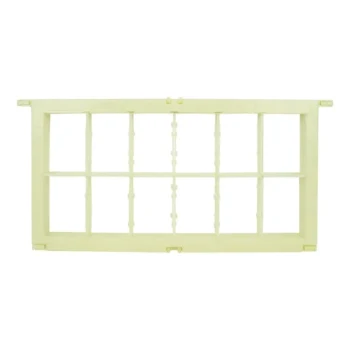
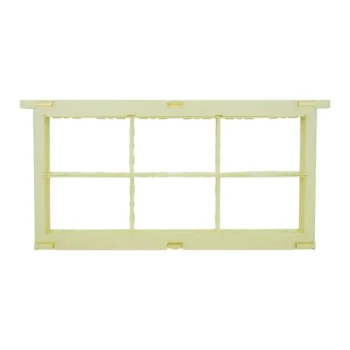
To significantly reduce the physical burden of managing heavy deep frames, the most effective alternative is to utilize smaller frames oriented sideways within your existing hive boxes. Specifically, you can arrange smaller frames crosswise—such as fitting 12 frames into a standard 8-frame Langstroth box—to make individual units much lighter and easier to manipulate compared to full deeps.
Core Takeaway Managing the weight of honey supers does not always require expensive lifting equipment or jigs. By reconfiguring standard boxes to hold smaller frames in a crosswise orientation, you break the total load into lighter, more ergonomic components without sacrificing hive volume.
The Crosswise Frame Strategy
Reducing Weight Through Geometry
The primary challenge with deep frames is the sheer weight of the honey they hold, which can be difficult to lift safely.
By switching to smaller frames, you naturally limit the weight of each individual unit you have to pull.
Maximizing Box Space
You do not need to buy entirely new boxes to implement this strategy.
Standard equipment, such as an 8-frame Langstroth box, can accommodate these smaller frames when placed sideways.
In this configuration, you can fit approximately 12 smaller frames crosswise, optimizing the internal space of the super while keeping individual lifts manageable.
Ensuring Frame Stability
Managing Movement Within the Box
Because these frames are oriented differently than standard deeps, preventing them from falling out or shifting during inspection is critical.
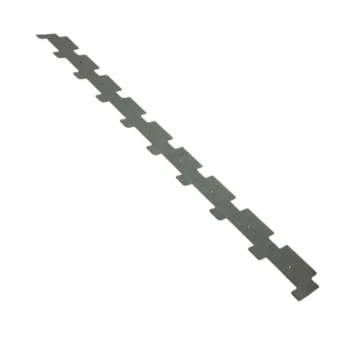
A common hardware solution is the use of frame spacers, which hold the frames at the correct distance and friction-fit them into the box.
Leveraging Natural Adhesion
There is a "low-tech" method to stabilize frames, particularly after honey extraction.
When returning wet, sticky frames to the super, shove them tightly to one side of the box.
The residual honey and propolis will cause the frames to stick together, creating a stable block that is safer to handle and transport back to the hive.
Understanding the Trade-offs
Propolis Buildup
While frame spacers provide immediate stability, they introduce a maintenance challenge.
These spacers tend to accumulate significant amounts of propolis over time.
This buildup can make it difficult to insert or remove frames later, requiring more frequent cleaning of your equipment.
Handling "Sticky" Frames
Relying on the stickiness of extracted frames for stability is effective, but temporary.
It requires careful handling immediately after extraction to ensure the frames adhere to one another before being placed back on the hive.
Making the Right Choice for Your Apiary
The decision to switch frame sizes depends on whether your priority is ergonomics or equipment standardization.
- If your primary focus is Reducing Physical Strain: Switch to smaller, crosswise frames to drastically lower the weight of individual lifts during inspections.
- If your primary focus is Equipment Stability: Utilize frame spacers to lock the smaller frames in place, but be prepared for increased cleaning due to propolis.
- If your primary focus is Workflow Efficiency: Use the "shove and stick" method post-extraction to stabilize frames without adding extra hardware that requires cleaning.
Small changes in frame geometry can lead to massive improvements in your long-term comfort and safety in the apiary.
Summary Table:
| Feature | Standard Deep Frames | Crosswise Small Frames |
|---|---|---|
| Individual Frame Weight | High (Heavy lift) | Low (Ergonomic lift) |
| Box Compatibility | Standard orientation | Fits standard boxes sideways |
| Frame Capacity | 8 or 10 frames | Up to 12 frames |
| Stability Method | Gravity/Hangers | Spacers or natural adhesion |
| Maintenance Level | Low | Moderate (due to propolis) |
Maximize Apiary Efficiency with HONESTBEE
Are you a commercial apiary or a distributor looking to scale your honey production without the physical toll? At HONESTBEE, we specialize in supporting the professional beekeeping industry with a comprehensive wholesale offering.
Our portfolio includes everything you need to optimize your workflow:
- Beekeeping Machinery: From advanced honey-filling machines to automated hive-making equipment.
- Full Spectrum Tools: Specialized hardware and durable consumables designed for heavy-duty use.
- Wholesale Supplies: High-quality beekeeping tools and equipment tailored for distributors worldwide.
Let us help you streamline your operations and enhance safety in the apiary. Contact HONESTBEE today to discuss your bulk equipment needs and see how our industrial-grade solutions can grow your business.
Related Products
- Heart-Shaped Comb Honey Frame and Honeycomb Cassette
- Professional Sectional Comb Honey Frame with 250g Cassette System for Beekeeping
- Professional 500g Sectional Comb Honey Frame System for Beekeeping
- Plastic Honey Comb Frames Cassette Box for Honey
- Heavy Duty Castellated Iron Frame Spacer for Honey Supers
People Also Ask
- How are honeybee combs utilized for non-destructive colony monitoring? Master Population Density Tracking
- What is a honeycomb frame? The Key to Modern, Sustainable Beekeeping
- What is the technical purpose of exchanging honeycomb frames? Master Apiary Equalization for Growth
- What frame to use for honeycomb? Choose the Right System for Pure, Edible Comb
- What is the significance of sampling honeycomb frames and hive bottoms? A Guide to Scientific Sanitation Monitoring