Portable microscopy fundamentally streamlines disease management by enabling immediate, on-site assessment of Nosema infection levels in honeybee colonies. When paired with standard counting chambers to examine abdominal extracts, these devices allow apiarists to identify spore morphology and quantify infection intensity directly in the field. This capability eliminates the delay of laboratory transport, allowing for real-time decisions regarding critical treatment thresholds.
The core value of portable microscopes lies in their ability to provide a rapid, quantitative assessment of infection intensity during field operations. By enabling the direct counting of spores against established benchmarks—such as one million spores per bee—inspectors can immediately determine if a colony requires medical intervention.
The Mechanics of Field Detection
Direct Observation of Morphology
The primary technical function of the portable microscope is the visualization of honeybee abdominal extracts.
This allows the operator to clearly identify the specific shape and structure of Nosema spores. Confirming the morphology is the first step in distinguishing actual infection from other microscopic debris found in the gut.
Quantitative Assessment
Mere detection of presence is often insufficient for large-scale management; knowing the infection intensity is vital.
By using the microscope in combination with standard counting chambers, the operator can perform a spore count. This transforms a qualitative observation into hard data, providing a clear metric of how severe the infection is within a specific colony.
Operational Advantages for Large-Scale Inspections
Rapid Decision Making
In large-scale apiaries, time is a critical resource. Portable microscopes allow for a rapid assessment of colony health without leaving the site.
This immediacy removes the logistical bottleneck of collecting samples, labeling them, and waiting for off-site laboratory results before taking action.
Establishing Treatment Thresholds
The most significant application value is the ability to determine if a colony has reached a specific treatment threshold.
The primary reference highlights the benchmark of one million spores per bee. Identifying colonies that exceed this limit allows apiarists to target treatment only where it is statistically necessary, optimizing resource use and reducing unnecessary chemical exposure.
Understanding the Trade-offs
Sample Preparation is Still Required
While the microscope is portable, the preparation process remains manual.
You must still generate abdominal extracts and properly load the counting chambers in a field setting. This requires a stable workspace and specific tools, which can be challenging during rugged field inspections.
Reliance on User Expertise
The device is only as reliable as the person using it.
Accurate results depend on the operator's ability to correctly identify spore morphology. An inexperienced inspector might miscount or misidentify particles, leading to false positives or missed diagnoses.
Making the Right Choice for Your Goal
To maximize the utility of portable microscopy in your inspections, align your workflow with your management objectives.
- If your primary focus is immediate intervention: Use the device to screen specifically for the one-million-spore threshold, allowing you to treat high-risk colonies immediately while on-site.
- If your primary focus is long-term monitoring: Establish a consistent protocol for creating abdominal extracts to ensure that data collected in the field is comparable to future laboratory verification.
By bridging the gap between field efficiency and laboratory precision, portable microscopes empower apiarists to maintain colony health through data-driven decisions.
Summary Table:
| Feature | Application Value for Nosema Detection |
|---|---|
| Real-Time Analysis | Immediate identification of spore morphology in abdominal extracts. |
| Quantitative Data | Accurate spore counts against the 1 million/bee treatment threshold. |
| Operational Speed | Eliminates laboratory wait times, allowing for instant field decisions. |
| Resource Optimization | Enables targeted treatment of infected colonies, reducing chemical costs. |
| Field Versatility | High-precision diagnostics adapted for remote and rugged apiary sites. |
Protect Your Colonies with Professional Diagnostic Tools
Efficient disease management is the backbone of a productive apiary. At HONESTBEE, we empower commercial apiaries and distributors with the high-precision tools needed to maintain colony health and maximize yield.
From specialized portable microscopy solutions for rapid Nosema detection to industrial-grade honey-filling machines and comprehensive beekeeping equipment, our wholesale portfolio is designed to scale your operations. Partner with us to access professional hardware, essential consumables, and expert support tailored for industry leaders.
Ready to upgrade your apiary’s diagnostic capabilities?
References
- Kathleen V. Lee, Marla Spivak. Is the Brood Pattern within a Honey Bee Colony a Reliable Indicator of Queen Quality?. DOI: 10.3390/insects10010012
This article is also based on technical information from HonestBee Knowledge Base .
Related Products
- Heavy-Duty Ergonomic Grip Galvanized Pollen Shovel
- Professional Dual Action Queen Excluder Scraper for Beekeeping
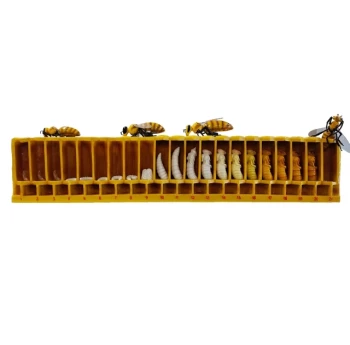
- Honey Bee Lifecycle Model: A Detailed Honeycomb Display of Bee Development
- Precision Honey Refractometer Instrument for Quality Assessment
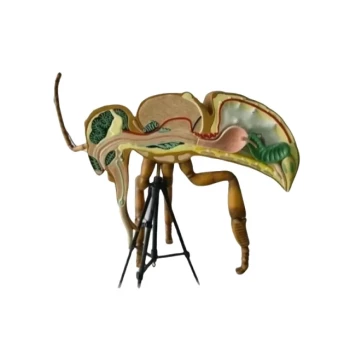
- HONESTBEE Anatomy Bee Model Detailed Anatomical Display for Education and Study
People Also Ask
- For what reasons do beekeepers collect bee pollen? Boost Hive Health and Unlock New Revenue Streams
- Why should commercial apiaries focus on the collection of diversified bee products? Maximize Your Hive’s Profit Potential
- How do bee pollen collection tools affect the quality of bee pollen used in functional dairy ice cream production?
- How does a specialized pollen collector facilitate the harvesting of diverse bee products? Automate High-Value Yields
- What is the impact of pollen collectors and associated equipment on the cost structure of pollen production? Maximize ROI