The economic significance of hive and frame manufacturing machinery lies in its ability to transition an enterprise from a consumer of equipment to a self-sufficient producer. By internalizing production, commercial beekeeping operations significantly reduce long-term capital expenditure, secure a reliable supply chain for rapid colony expansion, and gain the flexibility to customize equipment for specific regional environments.
Core Takeaway Integrating manufacturing machinery is not just about making boxes; it is a strategic asset that lowers the unit cost of production and ensures infrastructure independence. This capability eliminates supply bottlenecks and guarantees the standardized precision necessary for modern, automated, large-scale apiculture.
Transforming the Economic Model
Reducing Long-Term Capital Expenditure
For commercial projects, purchasing hives and frames at retail prices represents a massive, recurring drain on capital. Investing in dedicated woodworking machinery converts this variable cost into a fixed asset, drastically lowering the long-term expense of maintaining and expanding apiary infrastructure.
Lowering Per-Unit Production Costs
Industrial-grade manufacturing machinery utilizes standardized processes to mass-produce components far more cheaply than manual methods. This reduction in the cost per unit is essential for scaling operations from small apiaries to large commercial farms with thousands of hives, where small savings multiply significantly.
Reducing Maintenance Expenses
High-precision manufacturing enhances the durability of hives, particularly in challenging environments like tropical climates. By producing robust, scientifically designed habitats, operators reduce the frequency and cost of equipment repair and replacement over the project's lifecycle.
Operational Control and Flexibility
Eliminating Supply Chain Bottlenecks
A major risk in commercial beekeeping is the inability to acquire hives quickly enough to catch a honey flow or accommodate splitting colonies. On-site manufacturing ensures a timely supply of containers, allowing for unrestricted colony expansion exactly when biological conditions dictate.
Adapting to Regional Conditions
Self-manufacturing grants the flexibility to adjust structural specifications based on local nectar source conditions. Operators can modify designs to optimize for specific regional flows rather than relying on generic, off-the-shelf equipment that may not suit their specific geography.
Strict Material Quality Control
Owning the production line allows for strict oversight of construction materials. By selecting high-quality local timber or composites, enterprises ensure their infrastructure meets rigorous internal standards, avoiding the inconsistencies often found in third-party supplies.
The Efficiency of Standardization
Enabling Interchangeability
Automated machinery ensures that every frame and box meets precise dimensional tolerances. This standardization is critical for operational efficiency, allowing frames to be swapped between hives without friction, which significantly reduces labor time during management and inspections.
Facilitating Modernization and Automation
Precision-made hardware is a prerequisite for advanced commercial workflows. Standardized frames are required for compatibility with automated honey extraction lines and industrial transport platforms, removing barriers to high-output production models.
Understanding the Trade-offs
High Initial Barriers to Entry
While unit costs decrease over time, the upfront cost of acquiring industrial woodworking machinery creates a higher initial barrier to entry. This strategy requires significant capital availability at the project's inception, which may not be feasible for smaller or undercapitalized ventures.
Requirement for Technical Expertise
Shifting to self-manufacturing introduces a new layer of complexity: maintaining industrial machinery. The project plan must account for the skilled labor required to operate CNC or woodworking equipment, moving the operation beyond pure biology into light industrial manufacturing.
Making the Right Choice for Your Goal
To determine if manufacturing machinery belongs in your business plan, consider your specific strategic objectives:
- If your primary focus is rapid, massive scaling: Internal manufacturing is essential to ensure hardware availability never creates a bottleneck for colony growth.
- If your primary focus is operational modernization: The precision of machine-made components is non-negotiable for integrating automated extraction and transport systems.
- If your primary focus is long-term asset durability: Self-manufacturing provides the necessary control over material quality to withstand specific local climate challenges.
Ultimately, investing in manufacturing machinery is the defining step that matures a beekeeping project from a farming operation into a vertically integrated commercial enterprise.
Summary Table:
| Economic Factor | Impact of Self-Manufacturing | Strategic Value |
|---|---|---|
| Unit Production Cost | Significant reduction vs. retail prices | Maximizes profit margins per colony |
| Supply Chain | Eliminates external dependency and delays | Allows for rapid, unrestricted expansion |
| Equipment Quality | Full control over materials and precision | Increases asset durability and lifespan |
| Standardization | Precise dimensional tolerances (CNC/Milling) | Required for automated honey extraction |
| Operational Model | Converts variable costs to fixed assets | Transitions farm to vertically integrated enterprise |
Scale Your Beekeeping Enterprise with HONESTBEE
Transitioning from a consumer to a self-sufficient producer is the key to dominating the commercial apiculture market. HONESTBEE empowers commercial apiaries and distributors with the high-precision tools and machinery necessary for vertical integration.
Our comprehensive wholesale portfolio includes:
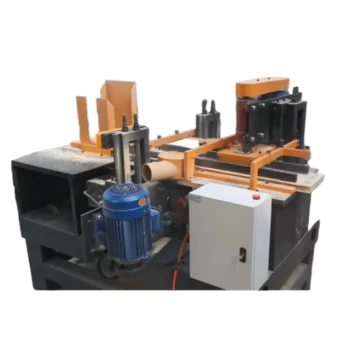
- Specialized Hardware: Advanced hive-making and honey-filling machines for industrial output.
- Full Spectrum Equipment: Every beekeeping tool and machine required for large-scale operations.
- Essential Consumables: A wide array of industry-standard supplies to keep your apiary running.
Whether you are looking to eliminate supply chain bottlenecks or integrate automated extraction lines, we provide the expertise and infrastructure to lower your long-term capital expenditure.
Ready to modernize your operation? Contact us today to discuss your project needs.
References
- E. V Prushkivska, A. O Krasnoshtan. Economic and social factors in the formation of an industrial apiary business project. DOI: 10.33271/ebdut/87.201
This article is also based on technical information from HonestBee Knowledge Base .
Related Products
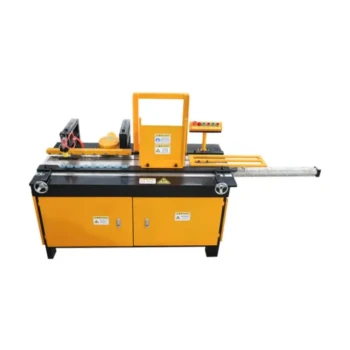
- Beehive Handle and Frame Rest Cutting Machine: Your Specialized Hive Machine
- Mini Desktop Bee Hive Frame Forming Making Machine
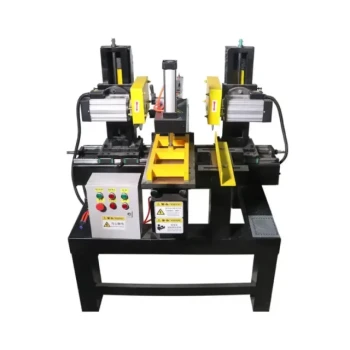
- Beehive Machine Double End Saw for Precision Hive Component Manufacturing
- HONESTBEE Top Bar & Bottom Bar Forming Machine | Bee Frame Machine
- HONESTBEE Bee Frame Side Bar Forming Machine Precision Engineered for High-Volume Production Bee Frame Machine
People Also Ask
- What is the importance of specialized beehive-making machinery? Ensure Precision for Sensor-Based Hive Monitoring
- How do bee hive handles facilitate the evaluation of food stores? Use the Lift Test for Winter Survival
- How do specialized beehive handling machines contribute to efficiency? Streamline Your Mobile Beekeeping Logistics
- How do professional beehive and frame manufacturing machines contribute to commercial apiary management? Boost Efficiency
- What are the standard dimensions for frame rests in a beehive? Essential Guide for Perfect Bee Space