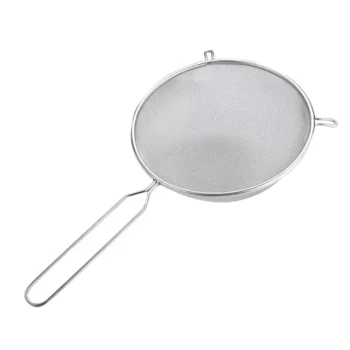
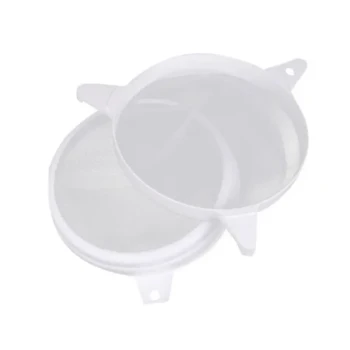
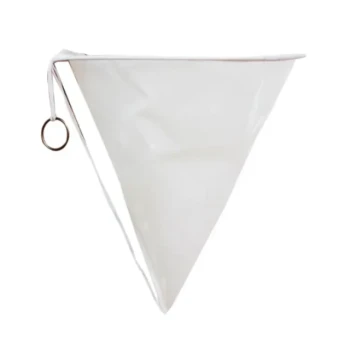
The primary function of a 30-micrometer pore size nylon mesh filter is to serve as a precise physical barrier during the initial processing of liquefied honey. By explicitly retaining all solid residues larger than 30 micrometers—including microplastics, pollen, beeswax, and insect fragments—it separates these materials from the liquid matrix. This step is critical for concentrating target substances for subsequent detection while removing the bulk honey fluid.
The 30-micrometer filter acts as a concentration tool rather than just a sieve. It transforms a complex honey mixture into two distinct components: a purified liquid filtrate and a solid residue concentrate containing the specific analytes required for analysis.
The Mechanics of Residue Isolation
Establishing a Physical Threshold
The filter creates a hard cutoff at 30 micrometers.
Any particulate matter larger than this diameter is physically unable to pass through the nylon mesh.
This ensures that the "solid" portion of the sample is strictly defined by size, removing ambiguity from the separation process.
Targeting Specific Contaminants and Analytes
According to standard protocols, this pore size is specifically selected to capture a distinct range of materials.
It effectively traps microplastic particles, which are often the primary target of investigation in modern environmental analysis.
Simultaneously, it retains organic materials such as pollen grains, beeswax, and bee body fragments, preserving them for further study.
Enhancing Analytical Precision
Reducing Background Interference
Filtration is essential for preparing samples for microscopy.
By isolating large solids, the filter reduces "background noise" on microscopic slides.
This allows researchers to distinguish target particles, such as microplastics or specific pollen types, without the visual clutter of the bulk honey matrix.
Protecting Downstream Processes
Removing these solids serves a protective function for subsequent laboratory steps.
It prevents large contaminants from interfering with processes like centrifugation, where density separation could be compromised by heavy debris.
It also ensures that chemical testing on the liquid filtrate yields accurate results regarding the honey's physicochemical properties.
Understanding the Trade-offs
Risk of Filter Saturation
Because honey is a viscous fluid often laden with wax and debris, a 30-micrometer mesh can clog easily.
If the sample is not sufficiently liquefied or if the sediment load is too high, the filtration rate will drop, potentially requiring multiple filters per sample.
Loss of Nanoscopic Targets
The 30-micrometer threshold is absolute.
While efficient for microplastics and pollen, any target analyte smaller than 30 micrometers will pass through into the filtrate.
Researchers must acknowledge that this method intentionally discards the "fine fraction" of particulate matter.
Making the Right Choice for Your Goal
To determine if this filtration step aligns with your analytical objectives, consider the following:
- If your primary focus is Microplastic or Pollen Detection: This filter is essential, as it concentrates these specific solids while washing away the interfering sugars and liquids.
- If your primary focus is Chemical Purity Analysis: The filter serves as a cleanup step to ensure the liquid honey sample is free of solid debris that could skew physicochemical readings.
By strictly controlling particle size at the 30-micrometer mark, you ensure your analysis is performed on a clean, relevant, and concentrated sample.
Summary Table:
| Feature | Specification | Role in Honey Analysis |
|---|---|---|
| Pore Size | 30 Micrometers (μm) | Hard cutoff for solids like beeswax and pollen |
| Material | Nylon Mesh | Durable, chemical-resistant physical barrier |
| Primary Target | Microplastics & Pollen | Concentrates analytes for microscopic detection |
| Process Benefit | Interference Removal | Reduces background noise and prevents clogging |
| Secondary Role | Protective Filtration | Guards downstream lab equipment from debris |
Elevate Your Honey Processing with HONESTBEE
At HONESTBEE, we understand that precision is the foundation of quality beekeeping. Whether you are a commercial apiary looking to refine your honey production or a distributor seeking high-performance filtration solutions, we provide the tools you need to succeed.
Our comprehensive wholesale catalog includes:
- Advanced Filtration & Machinery: From industrial-grade nylon mesh filters to honey-filling machines.
- Beekeeping Hardware: High-quality hive-making equipment and professional-grade tools.
- Industry Consumables: A full spectrum of essentials to keep your operations running smoothly.
Ready to scale your operation or stock the industry's best equipment? Contact us today to explore our wholesale offerings and see how HONESTBEE can streamline your path from hive to jar.
References
- P. Mühlschlegel, R. Sieber. Lack of evidence for microplastic contamination in honey. DOI: 10.1080/19440049.2017.1347281
This article is also based on technical information from HonestBee Knowledge Base .
Related Products
- Professional Stainless Steel Honey Filter with Support Handle
- Nylon Honey Strainer Square Filter Cloth for Honey Filters
- Conical Nylon Honey Strainer Filter Bag for Beekeeping and Honey Filtration
- Professional Honey Filter with Tripod Support Stand
- Electric Double Wall Honey Filtering Machine Purifier Equipment for Honey Processing Plant
People Also Ask
- Why are stainless steel filters essential during the initial purification phase of honey processing? Ensure Purity
- What are the benefits of using a high-quality honey filter? Elevate Purity and Preserve Natural Flavor
- What is the primary purpose of honey filters? Achieve Professional Clarity & Pure Honey Quality
- What micron filter should I use for honey? Choose the Right Filter for Sales or Competitions
- Why do people filter honey? For Clarity, Stability, and Consumer Appeal