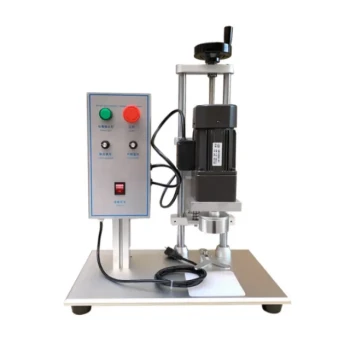
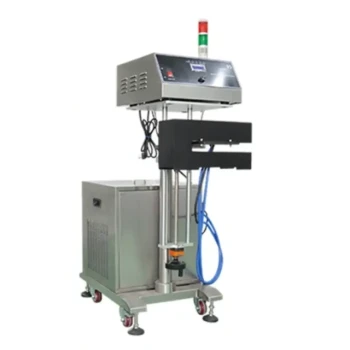
At its core, a filling machine is an industrial device designed to dispense a precise, predetermined amount of product into containers. Whether the product is a liquid, powder, or granule, the machine’s primary function is to automate the packaging process, ensuring accuracy and speed that manual processing cannot match.
The true value of a filling machine is not just moving product, but standardizing consistency. It transforms a variable manual task into a reliable, high-throughput manufacturing stage, significantly minimizing human error and product waste.
The Core Operational Cycle
While specific designs vary, most filling machines operate on a standardized three-step cycle to ensure efficiency.
Step 1: Feeding the System
The process begins with the feeding system, where the product (such as honey or chemicals) is supplied to the machine's main tank.
Depending on the substance, this is achieved using either a pump or simple gravity to move the material from a bulk hopper into the filling assembly.
Step 2: The Filling Stage
Once the product is staged, a container is positioned directly under a filling nozzle.
The machine then engages its specific filling mechanism (such as a valve or piston) to dispense the exact predetermined volume into the bag, pouch, or bottle.
Step 3: Capping and Sealing
After the fill is complete, the container moves to the final station.
Here, the machine applies and secures caps or seals, rendering the product ready for labeling, packaging, and shipment.
Matching Mechanism to Product Viscosity
A filling machine must be selected based on how the product flows. Different mechanisms are engineered to handle specific textures and viscosities.
Piston Filling for Volumetric Accuracy
A piston filling machine operates by drawing product from a hopper into a cylinder through an open valve.
Once the cylinder reaches a preset volume, the piston forces the liquid out through the nozzle. This method is highly effective for ensuring a consistent volumetric fill.
Pump Filling for Viscosity and Particulates
Pump filling machines utilize positive displacement, often through gear or lobe pumps, to draw liquid through the system.
This method is superior for high-viscosity liquids or products containing particulates, as the fluid mechanics involved are less likely to clog moving parts compared to other designs.
Understanding the Trade-offs: Automation Levels
Choosing the right function often depends on the balance between control and throughput.
Automatic Machines
Automatic filling machines are designed for maximum speed and minimal human intervention.
They are programmable to control the entire process, making them ideal for industries where consistency and high production volume are the priority. However, they typically require precise calibration for different container sizes.
Semi-Automatic Machines
Semi-automatic filling machines require an operator to manually load the product or place containers, while the machine handles the dispensing.
The trade-off here is reduced speed for increased control and precision, often allowing for easier adjustments when switching between small batches or different product types.
Making the Right Choice for Your Goal
To select the correct filling machine function, you must identify your production bottleneck.
- If your primary focus is handling thick fluids or particles: Prioritize pump filling machines, as their positive displacement prevents clogging.
- If your primary focus is strict volume control: Utilize piston filling mechanisms to ensure every container receives the exact same amount of product.
- If your primary focus is maximizing throughput: Invest in fully automatic filling machines to remove human latency from the cycle.
By aligning the machine's mechanism with your product's physical properties, you turn packaging from a chore into a competitive advantage.
Summary Table:
| Feature | Piston Filling | Pump Filling | Automatic Machines | Semi-Automatic |
|---|---|---|---|---|
| Core Function | Volumetric accuracy | High-viscosity handling | High-speed throughput | Precision & control |
| Best For | Consistent liquid volumes | Thick fluids / particulates | Mass production | Small batches |
| Mechanism | Piston & Cylinder | Positive Displacement | Programmable PLC | Operator-assisted |
| Primary Benefit | Minimizes product waste | Prevents clogging | Minimal human labor | Easy adjustments |
Scale Your Apiary with HONESTBEE Precision Equipment
Are you looking to transition from manual pouring to high-speed automation? HONESTBEE specializes in supporting commercial apiaries and distributors with professional-grade solutions. From specialized honey-filling machines and hive-making machinery to a full spectrum of beekeeping tools and essential consumables, we provide the hardware you need to grow.
Our value to you:
- High-Throughput Machinery: Engineered for the unique viscosity of honey.
- Wholesale Excellence: Comprehensive supply chains for distributors.
- Industry Expertise: Specialized equipment tailored for the beekeeping industry.
Ready to enhance your production efficiency? Contact us today to find the perfect filling solution!
Related Products
- Precision Durable Efficient HONESTBEE Rotary Honey Filling Machine
- Pneumatic Paste Filling Machine Bottling Packaging Machine Single Nozzle
- Pneumatic Double Nozzle Honey Filling Bottling Packaging Machine
- Economy Small Honey Filling Machine Honey Bottle Filler Packaging Machine
- Precision Automated Packaging Turntable Honey Spoon Filling Sealing Packing Machine
People Also Ask
- What are the common types of bottling machines used for honey? Choosing the Right Solution for Your Apiary
- How do honey filling and processing machines aid native bee product conservation? Boost Value with HONESTBEE Technology
- What is a key feature of the new generation of the honey filling machine? The Advanced Electronic Control Unit
- How do high-precision honey filling machines ensure quality? Optimize Your Commercial Production with HONESTBEE
- How do honey filling machines work? Achieve Precision & Speed for Your Apiary