The primary function of a Magnetic Stirrer in the analysis of honey free acidity is to ensure the rapid, complete, and uniform dissolution of the honey sample into distilled water. By creating a perfectly homogeneous solution, the stirrer prepares the sample for accurate titration, ensuring the subsequent chemical reaction is consistent throughout the entire liquid volume.
Core Insight: In acidity analysis, physical uniformity precedes chemical accuracy. The magnetic stirrer eliminates concentration gradients, ensuring that the neutralization reaction between the honey’s organic acids and the sodium hydroxide titrant is immediate and total.
The Mechanics of Sample Preparation
Overcoming Viscosity
Honey is a dense, viscous substance that does not naturally mix easily with water. The primary reference specifies a protocol using a 10-gram honey sample dissolved in 75 ml of distilled water.
Achieving Rapid Dissolution
Manual mixing is often insufficient to break down the honey structure efficiently. The magnetic stirrer automates this process, rapidly dispersing the honey molecules to create a fluid solution ready for testing.
Creating a Homogeneous Solution
The ultimate goal of the preparation phase is homogeneity. The stirrer ensures there are no undissolved solids or layers of varying density, which is critical for the validity of the subsequent chemical analysis.
The Role During Titration
Facilitating the Chemical Reaction
Once the 0.10M sodium hydroxide (NaOH) titrant is introduced, it must react with the free acids instantly. Continuous stirring ensures the titrant is immediately distributed, allowing for a sufficient and complete reaction with the honey's organic acids.
Stabilizing Sensor Readings
While the primary focus is physical mixing, this directly supports the instrumentation mentioned in supplementary contexts, such as high-precision pH meters.
Reducing Response Lag
If a solution is stagnant, the pH electrode may read a local pocket of acidity rather than the whole sample. Uniform stirring ensures the pH meter accurately tracks the real-time changes in hydrogen ion concentration as the solution approaches the endpoint (e.g., pH 8.3).
Common Pitfalls and Trade-offs
The Risk of Inadequate Mixing
If the stirring speed is too slow or the duration too short, the honey may remain partially undissolved at the bottom of the beaker. This leads to false low-acidity readings because the titrant cannot react with acid trapped in the undissolved honey.
Inconsistent Reaction Rates
Without continuous agitation, the sodium hydroxide may pool in specific areas of the beaker. This causes erratic fluctuations in pH readings, making it difficult for automatic titrators to identify the precise endpoint of the reaction.
Making the Right Choice for Your Goal
To maximize the reliability of your honey acidity analysis, consider these operational priorities:
- If your primary focus is Accuracy: Ensure the stirrer is active not just during dissolution, but continuously throughout the entire titration process to stabilize pH readings.
- If your primary focus is Workflow Efficiency: Utilize the stirrer to rapid-mix the 10g/75ml ratio before testing begins to minimize prep time without sacrificing solubility.
Consistency in physical agitation is the invisible variable that safeguards the reproducibility of your chemical results.
Summary Table:
| Parameter | Role of Magnetic Stirrer | Impact on Analysis |
|---|---|---|
| Honey Dissolution | Overcomes high viscosity of 10g honey samples | Ensures complete solubility in 75ml water |
| Chemical Reaction | Distributes NaOH titrant instantaneously | Prevents localized pH fluctuations |
| Measurement | Stabilizes pH electrode readings | Reduces response lag for precise endpoint detection |
| Consistency | Eliminates concentration gradients | Guarantees reproducibility across multiple batches |
Elevate Your Honey Quality Control with HONESTBEE
At HONESTBEE, we understand that precision in the lab translates to value in the market. As a dedicated partner to commercial apiaries and global distributors, we provide more than just tools—we provide the competitive edge needed to maintain the highest industry standards.
Our comprehensive wholesale portfolio features everything from high-precision laboratory essentials to specialized honey-filling and hive-making machinery. Whether you are scaling your extraction facility or sourcing premium beekeeping consumables, our expertise ensures your operations run with unmatched efficiency.
Ready to optimize your honey production and analysis? Contact us today to discover how HONESTBEE's professional equipment and machinery can drive your business success.
References
- Gayo Borde, Tamirat Teklemichael. Assessment of the Quality of Traditionally Produced Honey in Borana Rangelands, Southern Ethiopia. DOI: 10.11648/j.ajbes.20241004.16
This article is also based on technical information from HonestBee Knowledge Base .
Related Products
- Double Wall Honey Heating Stirring Homogenizer Mixing Machine with Various Capacity
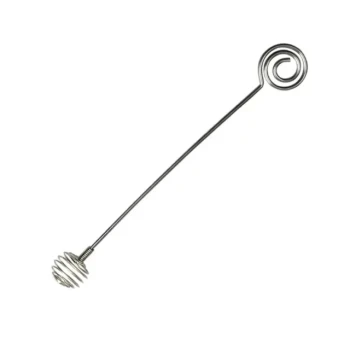
- Modern Stainless Steel Honey Dipper Stirrer
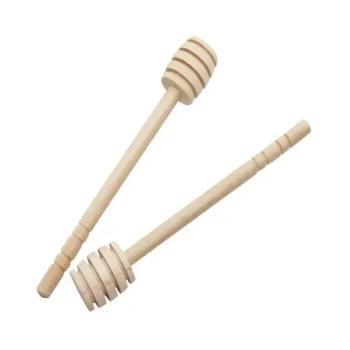
- Natural Wood Honey Dipper for Tea Coffee and Desserts
- Professional Honey Filter with Tripod Support Stand
- Professional Plastic Honey Dipper for Easy Honey Drizzling
People Also Ask
- What impact do homogenizers or oscillating equipment have on honey microbial detection? Ensure Testing Accuracy
- Why is thorough mechanical stirring and homogenization emphasized in honey processing? Ensure Sample Accuracy
- How do heating equipment and homogenizers liquefy crystallized honey? Expert Guide to Professional Honey Processing
- How does the honey mixer handle different types of honey? Master Viscosity for Perfect Blends
- What are the main components of the honey mixer? Engineered for Gentle, Efficient Honey Processing