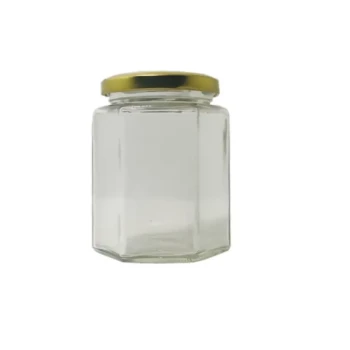
Glass wide-mouth jars equipped with vented lids and feed serve a critical function in the transport of live, diseased honeybee samples. By providing necessary ventilation and nutrition, these containers maintain the bees' vital signs during transit, preventing sample degradation before the bees reach the laboratory.
The ultimate goal of this setup is biological stability. By keeping the host bees alive, you preserve the integrity of the endogenous gut microbiota, which is a prerequisite for accurate pathogen detection and analysis.
The Mechanics of Sample Preservation
To ensure laboratory results reflect the true state of the colony, the sampling environment must sustain life.
Ventilation and Airflow
The vented lids (openings) on the wide-mouth jars are not merely for convenience; they provide essential gas exchange.
Confining bees in airtight containers leads to rapid asphyxiation or stress-induced changes in physiology.
Proper ventilation ensures the bees arrive with their metabolic processes intact.
Nutritional Support
The inclusion of sufficient feed within the jar addresses the high metabolic rate of honeybees.
During transport, bees are cut off from the hive's food stores.
Without immediate access to nutrition, stress levels rise and starvation can occur quickly, compromising the biological validity of the sample.
The Impact on Data Integrity
The physical survival of the bee is secondary to the preservation of the data contained within its body.
Preserving Gut Microbiota
The primary reference highlights that keeping bees alive preserves the endogenous gut microbiota.
When a host organism dies, its internal bacterial population changes rapidly.
Decomposition or the proliferation of post-mortem bacteria can obscure the original microbial community, rendering microbiome studies useless.
Ensuring Pathogen Detection Accuracy
Accurate diagnosis relies on detecting pathogens as they existed in the living hive.
If the sample dies during transport, fragile biological markers may degrade.
By maintaining vital signs, you ensure that subsequent biochemical or molecular tests reflect the active disease state rather than post-mortem artifacts.
Common Pitfalls to Avoid
While the equipment is simple, the methodology requires precision to avoid compromising the sample.
The Risk of Sample Mortality
The most significant trade-off in live sampling is the time sensitivity of the process.
Even with feed and ventilation, glass jars are temporary transport vessels, not long-term housing.
Delays in transport can lead to sample death, which immediately degrades viral RNA and alters the microbial balance, invalidating the collection effort.
Distinguishing Sample Types
It is important not to confuse this method with lethal capture techniques.
Traps designed for high-efficiency capture (often plastic) may prioritize quantity over vitality.
For pathological analysis requiring intact gut flora, the survival of the individual bee in a glass jar takes precedence over bulk collection.
Making the Right Choice for Your Goal
Selecting the correct sampling container depends entirely on the specific biological data you intend to extract.
- If your primary focus is Gut Microbiota Analysis: You must use glass wide-mouth jars with feed to keep the host phenotype and internal bacteria alive and stable.
- If your primary focus is Molecular Diagnostics (e.g., Viral RNA): Prioritize methods that maintain vital signs until freezing, as organism death leads to rapid nucleic acid degradation.
The quality of your diagnosis is only as good as the vitality of your sample upon arrival.
Summary Table:
| Feature | Component | Function in Pathological Sampling |
|---|---|---|
| Aeration | Vented Lids (Openings) | Facilitates gas exchange to prevent asphyxiation and stress. |
| Nutrition | Sufficient Feed | Sustains high metabolic rates and prevents starvation during transit. |
| Stability | Glass Material | Provides a stable, non-reactive environment for biological samples. |
| Integrity | Live Transport | Preserves endogenous gut microbiota and prevents RNA degradation. |
| Goal | Biological Vitality | Ensures laboratory results reflect the colony's true disease state. |
Maximize Your Diagnostic Precision with HONESTBEE
At HONESTBEE, we understand that accurate disease detection begins in the field. As a premier provider for commercial apiaries and global distributors, we supply the specialized tools necessary to maintain sample integrity—from professional-grade glass sampling jars to advanced honey-filling and hive-making machinery.
Whether you are scaling your commercial honey production or looking to stock high-quality beekeeping consumables, our comprehensive wholesale portfolio is designed to support your success. Let us help you safeguard your colony's health with our industry-leading equipment and expertise.
Ready to upgrade your apiary’s efficiency? Contact us today to explore our full spectrum of beekeeping solutions!
References
- О. Є. Галатюк, Ralitsa Balkanska. Isolation and identification of Klebsiella aerogenes from bee colonies in bee dysbiosis. DOI: 10.56808/2985-1130.3037
This article is also based on technical information from HonestBee Knowledge Base .
Related Products
- Hexagonal Glass Honey Jars with Metal Lug Caps Elegant Versatile Packaging
- Modern Square Glass Honey Jar with Twist Off Lid
- Classic Round Glass Honey Jar with Lid
- Hexagonal Glass Honey Jar with Wooden Lid Integrated Dipper Elegant Functional Storage
- Classic Drum Shaped Glass Honey Jar with Airtight Lid
People Also Ask
- What is the aesthetic appeal of using glass jars for honey? Elevate Your Brand with Premium Packaging
- What are the logistical challenges associated with using glass jars for honey packaging? Navigating Weight & Fragility
- What are the advantages of glass containers for honey? Elevate Quality and Market Value with Premium Packaging
- What are the technical advantages of using glass jars for honey? Master Commercial Packaging for Premium Purity
- What are the advantages of using glass jars for honey packaging? Preserve Purity & Elevate Your Brand