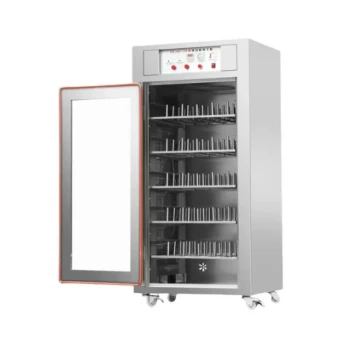
High-pressure sterilization equipment acts as the foundational control mechanism in the artificial production of bee bread. Its specific function is to subject raw material mixtures—specifically pollen and water—to intense heat and pressure (typically 121°C for 15 minutes) to eradicate naturally occurring microbes before fermentation begins.
Core Takeaway By eliminating microbial "noise" from the raw ingredients, this equipment creates a sterile, blank canvas. This ensures that only your selected probiotic strains dictate the fermentation process, guaranteeing consistency, safety, and high product quality.
Creating a Pure Reaction Substrate
Eliminating Natural Interference
Raw pollen is naturally populated with a variety of wild yeast and bacteria. If left unchecked, these indigenous microbes compete with introduced probiotics for resources.
High-pressure sterilization neutralizes this threat entirely. It removes the variables of wild fermentation, ensuring the substrate is chemically and biologically stable.
Establishing Process Controllability
Consistency is the hallmark of successful artificial fermentation. By standardizing the starting material through sterilization, you remove the unpredictability associated with different batches of raw pollen.
This allows for a reproducible process where the outcome is determined by your protocols, not by the random microbial load of the harvest.
Optimizing Probiotic Performance
Facilitating Targeted Inoculation
Once the substrate is sterilized, it is ready for the introduction of specific, high-value probiotic strains. The primary reference highlights strains such as Lactobacillus acidophilus or Lactobacillus paracasei.
Because the environment is free of competitors, these specific strains can establish dominance immediately.
Maximizing Survival Rates
Probiotics are living organisms that require specific nutrients to thrive. In a non-sterile environment, they must fight for these nutrients.
High-pressure sterilization ensures that the nutrients in the pollen/water mixture are exclusively available to the inoculated strains. This directly correlates to improved survival rates of the probiotics and a higher quality final product.
Distinguishing Processes: Sterilization vs. Drying
The Role of High Heat
It is critical not to confuse sterilization with drying. High-pressure sterilization utilizes high temperatures (121°C) specifically for biological elimination during the pre-treatment phase.
The Role of Moisture Control
In contrast, moisture control requires a different approach to preserve heat-sensitive bioactives (like carotenoids).
As noted in the supplementary data, an industrial forced-air drying oven is used for moisture reduction. This occurs at much lower temperatures (38-40°C) to dry pollen to 10-12% initially, or to reduce fermented bee bread to 16-17% moisture.
Common Pitfall
A common error is assuming one piece of equipment can handle both tasks. You cannot use the high-heat sterilization equipment for final drying, as it would destroy the bioactive components and the probiotics you just worked to cultivate.
Making the Right Choice for Your Goal
To ensure a successful artificial bee bread simulation, apply the equipment based on the specific stage of production:
- If your primary focus is Biological Purity: prioritize high-pressure sterilization at the pre-treatment stage to eliminate wild microbes and prepare the substrate for inoculation.
- If your primary focus is Bioactive Preservation: utilize forced-air drying ovens at low temperatures (38-40°C) for moisture control during storage and post-fermentation finishing.
Success in bee bread fermentation relies on sterilizing the raw materials to start the process, and gently drying the final product to finish it.
Summary Table:
| Process Phase | Equipment Used | Primary Function | Operating Conditions |
|---|---|---|---|
| Pre-treatment | High-Pressure Sterilizer | Eradicates wild microbes/competitors | 121°C for 15 minutes |
| Inoculation | Sterile Substrate | Dominance of specific probiotic strains | Targeted strain introduction |
| Finishing | Forced-Air Drying Oven | Moisture reduction & bioactive preservation | Low temperature (38-40°C) |
| Storage | Controlled Environment | Maintaining 16-17% moisture content | Biological stability |
Elevate Your Bee Bread Production with HONESTBEE
Consistency and biological purity are the keys to scaling your artificial bee bread fermentation. At HONESTBEE, we empower commercial apiaries and distributors with the specialized machinery needed to master every stage of production. From high-precision high-pressure sterilization equipment that ensures a pure substrate to industrial forced-air drying ovens that protect delicate bioactives, we provide the full spectrum of beekeeping tools and machinery.
Whether you are a wholesale distributor looking for a reliable hardware partner or a large-scale apiary seeking to optimize your processing line, our comprehensive portfolio of hardware and consumables is designed for your success.
Ready to upgrade your apiary’s efficiency? Contact us today to discuss our wholesale solutions!
References
- Rodica Mărgăoan, Mustafa Kösoğlu. Impact of Fermentation Processes on the Bioactive Profile and Health-Promoting Properties of Bee Bread, Mead and Honey Vinegar. DOI: 10.3390/pr8091081
This article is also based on technical information from HonestBee Knowledge Base .
Related Products
- Heavy Duty Stainless Steel Honey Processing Machine Decrystallizing Tank
- Electric Honey Press Machine for Squeezing Honey Comb Press Equipment
- High Quality Honey Dehumidifier Dryer Thickening Machine for Beekeeping
- Professional Thermostatic Conical Honey Melter
- HONESTBEE Professional Cabinet Bottle Dryer
People Also Ask
- What are the features of the processing tanks offered? Engineered for Purity and Efficiency
- What types of stainless steel processing tanks are used for honey? Essential Equipment for Quality Honey Production
- What design options are available for honey processing tanks? Optimize Efficiency with Custom Geometries
- What types of stainless steel are used for honey processing? Ensure Food Safety with 304 & 316 Grade Equipment
- Why is industrial-grade stainless steel processing equipment required for honey harvesting? Ensure Purity & Compliance