Heating serves two primary technical functions in honey processing: significantly reducing viscosity to facilitate straining and bottling, and dissolving natural sugar crystals to delay solidification. By liquefying the honey, processors can efficiently remove impurities through filtration and ensure a consistent, shelf-stable texture for the consumer.
While heating is essential for efficient filtration and visual clarity, it represents a critical trade-off; controlled heat improves flow and stability, but excessive temperature can permanently degrade the delicate enzymes and biological compounds that define high-quality honey.
Operational Efficiency and Filtration
The primary utility of heating honey is mechanical. Raw honey is naturally viscous and often crystallized, making it difficult to move through industrial machinery.
Reducing Viscosity for Flowability
Honey at room temperature is thick and resistant to flow. Heating reduces this viscosity, allowing the honey to move fluidly through pumping systems and pipes.
This improved flowability prevents machinery clogs and ensures the product can be handled efficiently during the bottling process.
Enabling High-Density Filtration
To achieve a clean final product, honey must be strained. Lowering the viscosity via heat allows the honey to pass through high-density filters.
This process is crucial for removing fine contaminants such as wax debris, pollen grains, and other physical impurities that would otherwise remain in the finished jar.
Accelerating Production Speed
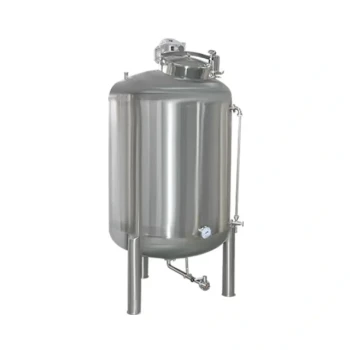
Heating tanks allow for continuous operation rather than batch-by-batch stop-gaps. By accelerating the flow rate, the entire processing timeline—from extraction to bottling—is significantly shortened.
Product Stability and Appearance
Beyond the mechanics of moving the liquid, heating alters the chemistry of the honey to ensure it remains shelf-stable and visually appealing to consumers.
Delaying Natural Crystallization
Raw honey naturally crystallizes over time. Heating is used to dissolve small sugar crystal nuclei that act as seeds for this solidification.
By eliminating these nuclei, processors can delay the crystallization process, keeping the honey in a liquid state for a much longer period on the shelf.
Enhancing Visual Clarity
Many consumers prefer honey that looks clear and luminous. The filtration process, enabled by heating, removes the particulate matter that causes cloudiness.
This results in a "polished" product with high visual clarity, which is often associated with higher quality in mass-market commercial environments.
The Critical Trade-off: Heat vs. Quality
While heating solves logistical problems, it introduces a risk to the honey's nutritional profile. This is the most sensitive aspect of honey processing.
Sensitivity to High Temperatures
Honey is biologically active and extremely sensitive to thermal fluctuation. Uncontrolled or excessive heat can darken the honey's color and alter its flavor profile.
Preserving Bioactive Components
The medicinal and nutritional value of honey lies in its enzymes and bioactive compounds. These components are fragile and easily destroyed by high heat.
To balance flowability with quality, modern equipment uses precise temperature control. The goal is to apply just enough heat to allow for filtration and bottling while minimizing thermal damage to the honey's biological value.
Understanding the Processing Goals
When evaluating honey, it is helpful to understand the intent behind the processing method used.
- If your primary focus is shelf stability and clarity: Look for processed liquid honey, as the heating process ensures it remains crystal-free and visually consistent for months.
- If your primary focus is medicinal value and enzymes: Seek out "raw" or minimally processed honey, accepting that it will be thicker, cloudier, and prone to natural crystallization.
Heating is a powerful tool for standardization and efficiency, but the highest quality honey relies on precision technology to ensure that improved texture does not come at the cost of biological integrity.
Summary Table:
| Purpose | Primary Technical Benefit |
|---|---|
| Viscosity Reduction | Lowers thickness for efficient pumping and bottling |
| Impurity Filtration | Enables high-density straining of wax and debris |
| Crystal Dissolution | Delays natural solidification for longer shelf life |
| Visual Enhancement | Achieves high clarity and a polished appearance |
Scale Your Production with HONESTBEE
Are you looking to optimize your honey processing facility? HONESTBEE caters to commercial apiaries and distributors with a comprehensive wholesale offering. We provide high-precision honey-filling machines and filtration systems designed to balance efficiency with product integrity. Our portfolio spans the full spectrum of beekeeping tools, specialized hardware like hive-making machinery, and essential industry consumables.
Partner with us to enhance your operational speed and product quality. Contact our experts today to discuss how our specialized equipment can grow your business.
Related Products
- Stainless Steel Heated Honey Tank Warming Heating Tank
- Electric Heated Honey Uncapping Knife for Beekeeping
- Silicone Rubber Honey Drum Heating Belt
- Electric Hot Honey Uncapping Knife with Thermostat
- Professional Electric Honey Uncapping Knife with Heated Digital Temperature Control for Beekeeping
People Also Ask
- What are the benefits of precise temperature control in honey heating tanks? Preserve Quality and Efficiency
- How do honey heating tanks offer scalability for growing beekeeping operations? Strategic Equipment Growth Solutions
- What features of a honey heating tank contribute to hygiene? Ensure Purity with Stainless Steel & Sanitary Design
- What is the primary role of a honey heating tank? Enhance Your Honey Processing Flow and Quality
- What is the purpose of using heating tanks or constant temperature water baths in honey dehydration? Optimize Purity & Flow