The primary purpose of settling honey after extraction is to utilize gravity as a gentle, natural purification mechanism. By allowing the honey to rest undisturbed, you enable impurities to separate based on density, resulting in a cleaner final product.
During this resting period, lightweight debris like wax particles and air bubbles rise to the surface, while heavier sediment sinks to the bottom. This stratification allows the beekeeper to bottle clear, pure honey from the middle layer, effectively separating it from physical contaminants without the need for aggressive processing.
Core Takeaway Settling is a passive but essential refinement stage that dictates the clarity, texture, and market grade of the final product. By allowing gravity to separate debris and air from the liquid, you ensure purity and color consistency while minimizing the need for heavy mechanical filtration.
The Mechanics of Gravity Separation
Creating Distinction Layers
When honey leaves the extractor, it is a turbulent mixture of liquid, solids, and air. Settling exploits the differences in density between these elements.
The Surface Layer
Lighter materials, specifically wax particles broken off during uncapping or extraction, will naturally float upward. Alongside the wax, air bubbles introduced during the spinning process rise to create a foam or "scum" layer on top.
The Sediment Layer
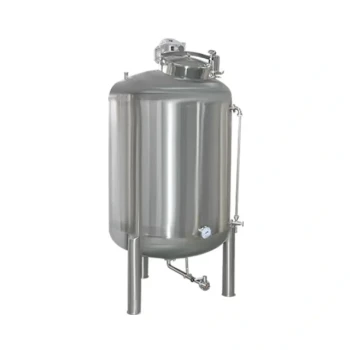
Heavier particles, which may include larger bee parts or other dense debris, will sink to the very bottom of the settling tank or bucket.
The Clarified Zone
The goal of settling is to maximize the size of the middle layer. This zone contains the purified honey, free from the floating wax and the sunken sediment, ready for bottling.
Why Purity Matters
Enhancing Visual Appeal
Commercial market grade relies heavily on the appearance of the honey. Settling removes the cloudiness caused by suspended air bubbles and fine wax, ensuring the honey has a consistent color and a clear, glass-like finish.
Improving Texture
Consumers generally expect a smooth mouthfeel. Removing solid debris prevents the grit or chewiness associated with wax particles, ensuring a professional-quality texture.
Shelf Life Stability
While honey is naturally preservative, high concentrations of particulate matter or air pockets can sometimes act as nucleation sites for crystallization or harbor moisture. A settled, clear honey is generally more stable in storage.
Understanding the Trade-offs
Time vs. Efficiency
Settling is a slow process compared to mechanical filtration. While pumping honey through a high-pressure filter is faster, settling is gentler and preserves the integrity of the honey. However, it requires dedicating space and time for the tanks to sit undisturbed.
The Moisture Risk
Honey is hygroscopic, meaning it absorbs moisture from the air. Because settling requires the honey to sit exposed (even in a tank) for a period of time, the environment must be strictly controlled.
Environmental Control is Critical
If you settle honey on a rainy or humid day without climate control, the honey may absorb excess water. This can raise the moisture content to levels that allow fermentation, ruining the batch. The extraction and settling room must be kept dry to prevent this spoilage.
Making the Right Choice for Your Goal
To ensure you apply the settling process effectively, consider your end goals:
- If your primary focus is Commercial Sale: Prioritize a multi-stage process involving both filtration and gravity settling to guarantee the color consistency and clarity required for high market grades.
- If your primary focus is Preventing Spoilage: Ensure your settling tank is in a strictly distinct, dry environment, as humidity absorbed during the resting phase is a leading cause of long-term storage failure.
- If your primary focus is Workflow Efficiency: Use a collection bucket with a bottom gate; this allows you to bottle the settled honey from the bottom (after draining the very first bit of sediment) while the wax remains floating on top.
By balancing the time required for settling with strict environmental controls, you transform raw, cloudy extraction runoff into a premium, shelf-stable product.
Summary Table:
| Aspect | Process Effect | Benefit to Final Product |
|---|---|---|
| Surface Layer | Wax and air bubbles float to the top | Clear, foam-free appearance |
| Middle Zone | Clarified honey remains in the center | Premium mouthfeel and glass-like finish |
| Bottom Layer | Heavier sediment sinks to the base | Elimination of grit and physical impurities |
| Storage Stability | Reduces nucleation sites for crystals | Longer shelf life and improved stability |
Elevate Your Honey Production with HONESTBEE
At HONESTBEE, we understand that commercial success in beekeeping requires more than just a harvest; it requires professional-grade purity. Whether you are a commercial apiary or a distributor, we provide the industrial-strength honey-filling machines, specialized settling tanks, and comprehensive extraction tools needed to transform raw honey into a premium market-ready product.
Why partner with HONESTBEE?
- Wholesale Excellence: Full spectrum of beekeeping machinery and essential industry consumables.
- Precision Engineering: From hive-making to honey-processing, our equipment ensures maximum efficiency.
- Global Support: Tailored solutions for large-scale operations and international distributors.
Ready to scale your operation and enhance your honey's market value? Contact our experts today to explore our wholesale machinery and tools!
Related Products
- Stainless Steel Honey Storage and Settling Tank with Double Strainer
- Heavy Duty Stainless Steel Honey Processing Machine Decrystallizing Tank
- Stainless Steel Honey Storage Tank with Lid for Honey
- Professional Honey Storage Tank with Agitation System
- Stainless Steel Uncapping Tank with Stand and Strainer
People Also Ask
- What economic role do honey storage tanks play? Boost Your Revenue Through Strategic Inventory Management
- What roles do industrial honey storage tanks and filtration meshes play in processing? Ensure Purity & Consistency
- What is the purpose of a honey storage tank? Streamline Your Honey Processing for Quality & Efficiency
- What role do settling tanks play in honey production? Achieve Pure, High-Clarity Honey Naturally
- Why are large settling tanks used in the honey clarification process? Achieve Natural Purity & Batch Consistency