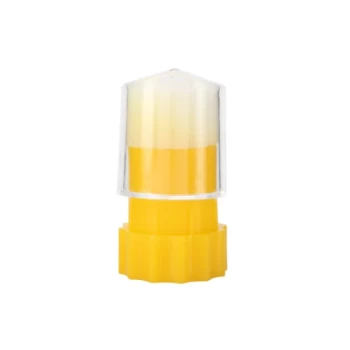
Specialized thoracic color markers serve as durable visual indicators designed primarily to categorize and track queen bees within field experiments. By applying these safe coatings to the thorax, researchers can instantly distinguish between different treatment cohorts—such as pesticide-exposed groups versus control groups—to monitor vital metrics like colony acceptance, egg-laying status, and overall survival duration.
By providing a persistent and non-toxic visual cue, these markers transform indistinguishable insects into trackable data points, enabling precise comparative analysis of queen longevity and reproductive health under varying environmental conditions.
The Role of Markers in Experimental Design
Distinguishing Treatment Groups
In complex field environments, identifying specific subjects without physical interference is difficult.
Thoracic markers allow for the rapid categorization of queens based on their experimental group.
This visual distinction is critical when comparing how external factors, such as chemical exposure, affect different subsets of the population simultaneously.
Monitoring Longitudinal Health
The primary value of these markers lies in their ability to support long-term data collection.
Researchers use them to track queen acceptance rates—determining if a colony rejects or accepts a new queen—and to verify continuous egg-laying status over time.
This longitudinal tracking provides essential data on the survival duration of queens in stressed environments compared to healthy controls.
Ensuring Subject Safety
The composition of the marker is just as important as its visibility.
These coatings are formulated to be safe and long-lasting, ensuring the chemical makeup of the paint does not harm the bee or alter its behavior.
This neutrality ensures that the data collected reflects the experimental variables, not the impact of the marking process itself.
Broader Applications in Behavioral Research
Studying Site Fidelity
While color markers are standard for queens, similar marking techniques using non-toxic pigments are used to track forager bees.
This allows researchers to assess positional memory and site fidelity, distinguishing between bees returning to a specific food source and new arrivals.
This is particularly useful when mapping how foragers interact with pesticide-contaminated areas versus safe zones.
Analyzing Social Networks
For more granular data, researchers may use specialized identification tags rather than simple color dots.
These tags provide a unique ID for thousands of individuals, enabling the analysis of task transitions within the hive.
This method tracks how bees shift roles, such as moving from nest cleaning to foraging, allowing for a deep understanding of behavioral development.
Operational Considerations and Trade-offs
Application Precision
Applying markers requires significant manual dexterity and specialized tools.
Whether using brushes or wire marking tools, the application must be precise to avoid inhibiting the bee’s movement or sensory perception.
Poor application can lead to the marker wearing off prematurely or the bee being injured, which compromises the integrity of the survival data.
Identification Limits
There is a functional limit to how much information a simple color marker can convey.
While effective for cohort-level tracking (e.g., Treatment Group A vs. Group B), color markers alone cannot distinguish between thousands of individual bees.
For studies requiring unique identification of every single bee in a large colony, numbered tags are required rather than simple color codes.
Making the Right Choice for Your Goal
Selecting the correct marking method depends entirely on the granularity of data your experiment requires.
- If your primary focus is comparing colony health and queen longevity: Use standard thoracic color markers to create distinct visual cohorts (e.g., exposed vs. control) for easy tracking of survival and acceptance.
- If your primary focus is individual behavioral mapping: Opt for specialized identification tags that provide unique IDs to track task transitions and social network interactions across the colony.
- If your primary focus is foraging patterns: Use non-toxic pigments to mark foragers, allowing you to differentiate between returning visitors and new arrivals at specific feeding sites.
Successful field tracking relies on balancing the visibility of the marker with the safety of the subject to ensure data accuracy.
Summary Table:
| Tracking Method | Primary Use Case | Key Benefits | Level of Detail |
|---|---|---|---|
| Thoracic Color Markers | Queen & Cohort Tracking | Rapid visual categorization; monitors survival & acceptance. | Cohort-level (e.g., Treatment vs. Control) |
| Non-toxic Pigments | Foraging Patterns | Tracks site fidelity and positional memory in the field. | Group-level movement |
| Numbered ID Tags | Social Network Analysis | Monitors individual task transitions and hive roles. | Individual-level (1:1 tracking) |
Elevate Your Apiary Research with HONESTBEE
At HONESTBEE, we specialize in supporting commercial apiaries and distributors with high-quality, professional-grade beekeeping solutions. Whether you are conducting field research or scaling honey production, we provide the tools you need to succeed:
- Precision Research Tools: Durable thoracic markers, identification tags, and specialized hardware for accurate data collection.
- Industrial Machinery: High-efficiency hive-making and honey-filling machines to streamline your operations.
- Comprehensive Wholesale Catalog: From essential industry consumables to unique honey-themed cultural merchandise.
Ready to enhance your productivity and research accuracy? Partner with an industry leader who understands the needs of large-scale beekeeping operations.
Contact HONESTBEE Today to Discuss Your Wholesale Needs
References
- Claudia Dussaubat, Yves Le Conte. Combined neonicotinoid pesticide and parasite stress alter honeybee queens’ physiology and survival. DOI: 10.1038/srep31430
This article is also based on technical information from HonestBee Knowledge Base .
Related Products
- Professional Engraved Round Hive Number Tags for Beekeeping
- Queen Bee Marking Pen UNI Medium Point for Queen and Bee Marking
- Queen Bee Marking Pen POSCA Queen Marking Pens for Beekeeping Bee Markers
- Durable Plastic Hive Number Set for Beekeeping
- Professional Large-Format Hive Number Set for Beekeeping
People Also Ask
- What role do numbered tags and specialized adhesives play in honey bee genetic research? Linking Genotype to Behavior
- What function do hive identification tags serve in long-term monitoring? Secure Precise Data & Outlier Detection
- What is the role of record-keeping tools like manuals and hive markers in professional queen bee breeding? Master Data.
- What are the advantages of numbered plastic tags? Achieve Precise Individual Honeybee Identification
- Why is stable hive temperature important for honeybee colonies in winter? The Key to Winter Survival and Spring Buildup