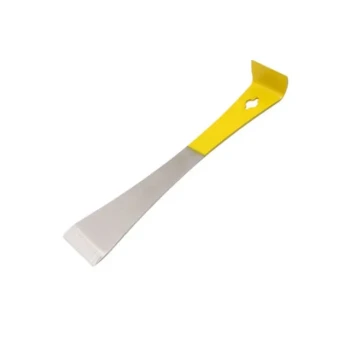
The specialized grafting tool is the foundational instrument for precision apiculture. In the context of larval rearing and in vitro culture, its primary role is the non-destructive transfer of fragile, young larvae (typically 12–24 hours old) from the honeycomb to artificial rearing environments. This tool ensures larval viability by preventing mechanical damage, which is critical for successful queen breeding and the consistency of laboratory research data.
For distributors and wholesalers, the grafting tool represents the vital link between colony management and scalable queen production. It is a high-precision instrument that directly determines larval survival rates and the overall efficiency of modern commercial and scientific rearing operations.
Enhancing Scalability in Artificial Queen Rearing
Precision Handling for High Survival Rates
The primary function of a grafting tool is to provide mechanical support for larvae during the delicate transition from hive cells to queen cups. By utilizing a precision-designed tip, the tool lifts the larva along with a small amount of royal jelly, cushioning the organism against physical trauma.
Minimizing physical injury at this stage is essential for ensuring that the nurse bees in the colony accept the relocated larvae. High acceptance rates are the cornerstone of profitable queen production and efficient apiary management.
Streamlining Large-Scale Production
In commercial beekeeping, speed must be balanced with accuracy to maintain a full-spectrum product portfolio. Professional-grade grafting tools allow technicians to move hundreds of larvae per hour with minimal fatigue.
For resellers, offering tools that feature ergonomic designs and consistent tip geometry is key to satisfying the needs of large-scale breeding operations. Reliable tools reduce labor costs and improve the predictability of the queen-rearing cycle.
Critical Function in In Vitro Culture and Research
Maintaining Larval Viability for Infection Studies
In laboratory settings, grafting tools are indispensable for in vitro infection experiments. The primary objective is to transfer 1-day-old larvae to artificial culture plates without any microscopic tearing of the cuticle.
This level of precision ensures that the larvae remain healthy enough to respond naturally to experimental variables. Any mechanical damage during grafting can introduce confounding variables, rendering expensive research data invalid.
Ensuring Consistency in Experimental Data
Research and development (R&D) facilities require tools that provide repeatable results across thousands of samples. The fine structural design of specialized grafting tools allows for the selection of larvae at exact ages, such as the first-instar stage (0–8 hours post-hatching).
Providing these high-precision instruments to research institutions demonstrates deep professional industry expertise. It positions distributors as partners in the advancement of bee health and disease resistance screening.
Understanding the Trade-offs and Pitfalls
Material Quality and Tip Design
Not all grafting tools are equal; lower-quality versions often suffer from burrs or inconsistent flexibility in the tip. These defects significantly increase the risk of larval mortality, even when used by experienced technicians.
Distributors must prioritize premium trading services by sourcing tools with high-grade stainless steel or high-quality synthetics. Durable materials ensure that the tool can withstand repeated sterilization without losing its precision edge.
The Learning Curve and Operational Risk
While the tool is designed for precision, it requires a high degree of technical skill to operate effectively. Inexperienced users may still cause damage regardless of the tool's quality, leading to poor grafting outcomes.
Wholesalers can add value by providing comprehensive product documentation and support. Highlighting the importance of user training helps end-users achieve the high survival rates promised by the equipment.
Strategic Sourcing for Professional Success
To maximize value in the apiculture supply chain, distributors should focus on tools that balance technical precision with manufacturing durability.
- If your primary focus is commercial queen breeding: Prioritize ergonomic tools that offer rapid-fire transfer capabilities to maximize daily output and labor efficiency.
- If your primary focus is scientific research and in vitro culture: Focus on high-precision instruments with ultra-fine tips that guarantee the integrity of delicate 1-day-old larvae.
- If your primary focus is inventory management and resale: Seek out suppliers offering one-stop sourcing and ultra-fast delivery to ensure your stock meets seasonal peaks in demand.
Partnering with a provider that combines deep technical expertise with efficient order fulfillment ensures your clients have the precision tools necessary for a successful rearing season.
Summary Table:
| Application | Primary Function | Value for Professionals |
|---|---|---|
| Queen Breeding | Non-destructive larval transfer | High survival rates & scalable production |
| In Vitro Culture | Precision handling (1-day larvae) | Consistent research data & low mortality |
| Commercial Apiary | Ergonomic, high-speed grafting | Reduced labor costs & improved efficiency |
| Wholesale Supply | Durable material construction | Premium quality & long-term tool reliability |
Partner with HONESTBEE for Premium Apiculture Solutions
Elevate your wholesale inventory with HONESTBEE, your dedicated partner in precision beekeeping. We cater specifically to commercial apiaries and B2B distributors, offering a one-stop sourcing experience for a full-spectrum product portfolio. From high-precision grafting tools to specialized honey-filling and hive-making machinery, we provide the hardware and consumables your customers need to succeed.
Why Choose HONESTBEE?
- Comprehensive Wholesale Offering: A complete array of beekeeping tools and industry-themed merchandise.
- Deep Professional Expertise: Equipment designed for technical precision and laboratory-grade consistency.
- Operational Excellence: Benefit from ultra-fast delivery, rapid response times, and efficient order fulfillment.
- Scalable Support: We offer reliable supply chains and dedicated service to maximize your profit margins and market reach.
Ready to enhance your product lineup with industry-leading tools?
References
- Amy Floyd, Kirk E. Anderson. Microbial Ecology of European Foul Brood Disease in the Honey Bee (Apis mellifera): Towards a Microbiome Understanding of Disease Susceptibility. DOI: 10.3390/insects11090555
This article is also based on technical information from HonestBee Knowledge Base .
Related Products
- Stainless Steel Queen Grafting Tool for Beekeeping and Bee Queen Grafting
- Plastic Chinese Queen Grafting Tool for Bee Queen Rearing
- Stainless Steel Beekeeping Queen Grafting Tool for Honey Bee Rearing
- Plastic Beekeeping Honey Bee Larvae Grafting Tools for Queen Rearing and Chinese Grafting
- Retractable Chinese Queen Rearing Grafting Tools Equipment
People Also Ask
- What are the steps involved in using a queen grafting tool? A Guide to Successful Queen Rearing
- What is grafting in queen rearing? Take Control of Your Apiary's Genetics
- What are the benefits of using a queen grafting tool for queen rearing? Master Precision for Superior Bee Genetics
- What is the step-by-step process for using a queen grafting tool? Master Larva Transfer for Better Queen Rearing
- What is the primary function of a queen grafting tool? Master Precise Larval Transfer for High Queen Acceptance