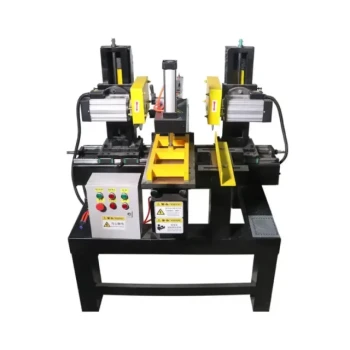
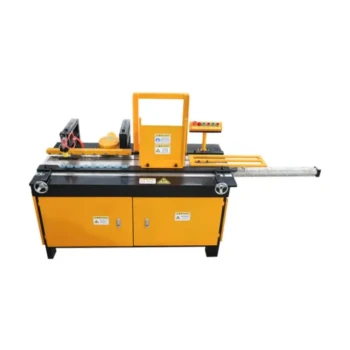
High-precision hive manufacturing equipment is not merely an industrial convenience; it is a biological requirement for effective modern apiculture. By ensuring hive frames and vertical honeycombs meet strict uniform specifications, this equipment enables honeybees to perform critical biological communications, such as the waggle dance, at precise angles without physical obstruction.
Standardization bridges the gap between biological necessity and industrial efficiency. By guaranteeing geometric precision, this equipment supports complex bee communication while providing a stable, scalable foundation for smart monitoring systems and mechanized operations.
The Biological Impact of Precision
Facilitating Critical Communication
The primary biological argument for standardized manufacturing is the geometry of the honeycomb. Honeybees rely on vertical honeycombs to communicate resource locations via the waggle dance.
If manufacturing tolerances are loose, the comb structure may deviate. High-precision equipment ensures the physical angles required for these communications are maintained, supporting the colony's ability to forage efficiently.
Maintaining the "Bee Space"
While not explicitly biological communication, the physical gap between frames—known as "bee space"—is vital for colony health.
Industrial-grade machinery allows manufacturers to hit these specific dimensions consistently. This prevents bees from gluing frames together with propolis or building burr comb, which can disrupt air flow and thermal regulation within the hive.
Operational Efficiency and Scalability
Enabling Mobility and Isolation
Modern management often requires moving colonies for pollination services or isolating them for disease control. Standardized hives facilitate the periodic isolation and transport of colonies because the components stack and lock reliably.
Without this mechanical consistency, transporting hives becomes risky, increasing the likelihood of escapees or structural failure during transit.
Component Interchangeability
For commercial operations, the ability to swap components between hives is non-negotiable. Standardization ensures interchangeability of frames and boxes across the entire apiary.
This allows for mechanized honey harvesting and efficient rotation of equipment. It significantly reduces labor costs and maintenance overhead, as beekeepers do not need to customize parts for individual hives.
Integration with Smart Technology
A Stable Platform for Sensors
The deep need in modern beekeeping is the integration of digital tools. Standardized hives provide a stable physical platform necessary for installing smart monitoring devices.
Technologies such as acoustic sensors require a predictable environment to capture accurate data on colony health. If the physical structure varies, the acoustic signature may change, rendering the data unreliable.
From Physical Site to Digital Data
Standardization allows for the conversion of dispersed apiary sites into quantifiable spatial distribution data.
By utilizing uniform specifications, beekeepers can accurately record and compare honey production capacity and colony size. This data is essential for ecological modeling and maintaining stable production outputs in a changing environment.
Understanding the Trade-offs
High Initial Investment
Transitioning to high-precision, standardized equipment often requires a shift from low-cost, handmade gear to industrial-grade components. This represents a significant upfront fixed asset investment, which can be a barrier for smaller operations.
Dependency on Uniformity
Standardization creates a dependency on specific manufacturing tolerances. If a supplier deviates slightly from the industry standard, interchangeability is compromised, potentially rendering new equipment incompatible with existing stocks.
Making the Right Choice for Your Goal
Standardized manufacturing is the hardware foundation that allows beekeeping to scale from a hobby to a precision industry.
- If your primary focus is Commercial Scalability: Prioritize equipment that guarantees frame interchangeability to enable mechanized harvesting and reduce labor costs.
- If your primary focus is Colony Health & Research: Focus on high-precision internal dimensions to ensure accurate acoustic monitoring and optimal conditions for biological communication.
Precision in manufacturing is the invisible infrastructure that turns a wooden box into a high-performance biological instrument.
Summary Table:
| Feature | Biological/Operational Benefit | Significance for Modern Beekeeping |
|---|---|---|
| Geometric Precision | Facilitates the Waggle Dance | Ensures efficient colony communication and foraging behavior. |
| Bee Space Consistency | Optimal Thermal & Air Flow | Prevents burr comb and propolis buildup, improving hive health. |
| Interchangeability | Mechanized Harvesting | Drastically reduces labor costs and simplifies equipment rotation. |
| Structural Uniformity | Smart Sensor Integration | Provides stable environments for acoustic sensors and digital monitoring. |
| Standardized Locking | Safe Transport & Mobility | Enables reliable colony relocation for professional pollination services. |
Elevate Your Commercial Beekeeping with HONESTBEE Precision
Transitioning to standardized, industrial-grade equipment is the key to transforming your apiary into a high-performance operation. HONESTBEE specializes in supporting commercial apiaries and distributors with a comprehensive wholesale range of high-precision beekeeping solutions.
Our value to your business includes:
- Advanced Machinery: From precision hive-making to honey-filling machines that ensure total standardization.
- Full-Spectrum Supply: A complete array of beekeeping tools, hardware, and essential industry consumables.
- Cultural & Retail Support: A diverse portfolio of honey-themed merchandise to expand your market reach.
Ready to scale your production and optimize colony health through superior hardware?
Contact HONESTBEE today for wholesale solutions
References
- Bartosz Piechowicz, Anna Koziorowska. The Pollinators in Agricultural Ecosystems. DOI: 10.3390/agriculture13051076
This article is also based on technical information from HonestBee Knowledge Base .
Related Products
- High-Efficiency Pneumatic Bee Hive Making Machine for Rapid Box Assembly
- Beehive Machine Double End Saw for Precision Hive Component Manufacturing
- Beehive Handle and Frame Rest Cutting Machine: Your Specialized Hive Machine
- Mini Desktop Bee Hive Frame Forming Making Machine
- Automatic High-Speed Bee Hive Box Stapling Machine
People Also Ask
- How does the introduction of professional beehive-making machinery benefit sustainable beekeeping? Scale Your Apiary
- Why is specialized beehive-making machinery critical for low-defense breeding? Enhance Selection with Precision Tools
- How does the introduction of specialized beehive making machinery contribute to increasing the scale of regional beekeeping industries?
- What is the importance of specialized beehive making machinery in a circular bio-economy? Build Local Sustainability
- Why is specialized beehive-making machinery essential? Scale Your Apiary with Precision Industrial Standards