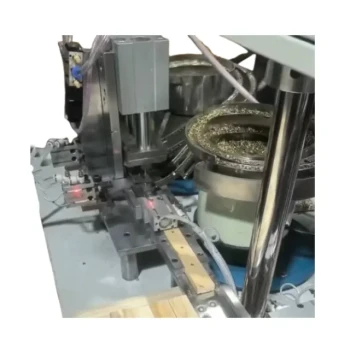
Classifying plants by their output is fundamentally an engineering decision. It serves as the critical blueprint for selecting your downstream processing equipment. By categorizing sources into nectar, pollen, or secretion, you ensure your machinery is compatible with the specific physical properties of the harvest, preventing operational bottlenecks before they occur.
Accurate plant classification prevents costly equipment mismatches. It aligns your processing line with the specific viscosity and particulate nature of your harvest, ensuring maximum efficiency in both extraction and bottling.
The Link Between Botany and Machinery
To optimize a commercial facility, you must view biological surveys as technical specifications for your hardware.
Handling Pollen-Rich Sources
Regions dominated by pollen-producing flora introduce a high particulate load to the hive.
Standard extraction gear often struggles to separate these solids efficiently.
Therefore, identifying a pollen-rich zone necessitates the installation of specialized pollen collectors and advanced screening machines to manage the intake effectively.
Managing Secretion-Based Sources
Secretion-based sources, such as honeydew, produce a raw material that differs significantly from standard floral nectar.
This substance typically exhibits much higher viscosity and density.
Consequently, processing these sources requires honey-filling machines compatible with high-viscosity fluids, as standard pumps and fillers may stall or cavitate under the resistance.
Enhancing Operational Efficiency
The ultimate goal of this classification is to synchronize the tool with the task.
When equipment is perfectly matched to the raw material's properties, throughput increases and mechanical wear decreases.
This targeted approach streamlines both the harvesting of the raw product and the bottling of final goods.
Understanding the Trade-offs
While matching equipment to flora is efficient, it requires careful strategic planning to avoid rigidity.
The Risk of Hyper-Specialization
Building a facility exclusively for one type of source (e.g., high-viscosity secretion) can be risky.
If the botanical makeup of the region shifts due to climate or land use, specialized machinery may become obsolete or inefficient.
Capital Expenditure vs. Versatility
Specialized equipment, such as high-viscosity fillers or pollen screens, often carries a higher initial cost than general-purpose gear.
You must weigh the efficiency gains of specialized machinery against the flexibility of standard equipment.
Making the Right Choice for Your Goal
To maximize return on investment, use your botanical survey data to guide your procurement strategy.
- If your primary focus is Pollen-Rich Regions: Prioritize capital investment in specialized collectors and fine-particulate screening machinery to manage solid loads.
- If your primary focus is Secretion-Based Sources (Honeydew): Ensure your filling lines are rated for high-viscosity fluids to prevent mechanical failure during bottling.
Technical success in beekeeping relies not just on finding the bees, but on engineering the process to fit the product.
Summary Table:
| Plant Category | Key Output Characteristic | Hardware Requirement | Operational Focus |
|---|---|---|---|
| Pollen-Rich | High particulate load/solids | Specialized collectors & screening machines | Efficient solid-liquid separation |
| Secretion (Honeydew) | High viscosity & high density | High-torque pumps & specialized filling lines | Preventing cavitation and machine stall |
| Nectar-Dominant | Standard fluid dynamics | Standard centrifugal extractors & fillers | Maximizing throughput and flow speed |
Scale Your Apiary with Precision Engineering
At HONESTBEE, we understand that commercial success depends on the perfect synergy between nature and machinery. Whether you are a large-scale commercial apiary or a global distributor, we provide the technical solutions you need to process nectar, pollen, and high-viscosity secretions without compromise.
Our comprehensive wholesale offering includes:
- Automated Honey-Filling Machines: Rated for varying viscosities to ensure smooth bottling.
- Industrial Extractors & Pollen Collectors: Engineered to handle high particulate loads.
- Custom Hive-Making Machinery: Built for durability and scale.
- Industry Consumables: A full spectrum of tools and merchandise to support your brand.
Don't let equipment mismatches stall your production. Partner with HONESTBEE to equip your facility with specialized hardware designed for maximum efficiency.
Contact Our Technical Experts Today
References
- Fazlı Öztürk, Kumru Özge GÖRHAN. Seyhan (Adana) İlçesi Peyzaj Bitkilerinin Arıcılık Açısından Değerlendirilmesi. DOI: 10.46291/ispecjasvol5iss4pp939-948
This article is also based on technical information from HonestBee Knowledge Base .
Related Products
- Stainless Steel J Hook Hive Tool for Beekeeping
- HONESTBEE 15-in-1 Beekeeper Multi-Tool with Hammer and Pliers for Beekeeping
- HONESTBEE Professional Mini J-Hook Hive Tool for Beekeeping
- Durable Galvanized Steel Frame Grip
- Multi-Function Plier-Style Frame Grip Hive Tool
People Also Ask
- What specific challenges do beekeeping hive tools address during hive maintenance? Essential Solutions for Apiaries
- What are the features of a J-hook hive tool? Effortlessly Lift Frames with Superior Leverage
- What is a J-hook hive tool and why is it favored by some beekeepers? Master Gentle Frame Handling
- What is the purpose of the J-hook hive tool? Effortlessly Lift Frames with Superior Leverage
- How is a J-hook hive tool designed and what is its primary use? Master Effortless Hive Inspections