The short answer: Apis mellifera is larger, carries heavier nectar and pollen loads, develops substantially larger colonies, and produces several times more honey than Apis cerana. Commercial apiaries should therefore pair A. mellifera with larger modular hives, higher-capacity supers, standardized movable frames, and heavy-duty extraction equipment, while A. cerana generally requires smaller, lighter, more adaptable hive hardware and lower-throughput processing machinery. Behavioral differences—especially A. cerana’s stronger swarming and absconding tendencies—are equally important when selecting inspection and management equipment.
Equipment should be sized to the bee species’ colony population, comb dimensions, expected harvest volume, and behavior—not merely to the external dimensions of the hive. A. mellifera supports standardized, high-throughput commercial systems; A. cerana is better served by smaller, flexible systems designed to reduce colony stress and accommodate greater movement risk.
The Biological Differences That Drive Equipment Selection
Body size and load-carrying capacity
Apis mellifera workers are generally larger than Apis cerana workers. This difference is reflected in their typical foraging loads: A. mellifera workers carry approximately 40–80 mg of nectar and 12–29 mg of pollen, compared with roughly 30–40 mg of nectar and 7–14 mg of pollen for A. cerana.
The larger loads do not automatically determine frame dimensions, but they contribute to faster colony provisioning and greater honey accumulation. Hive capacity and harvesting equipment must therefore reflect the total colony output rather than the load of an individual worker.
Foraging range and operating environment
A. mellifera commonly forages across approximately 2–5 km, while A. cerana typically works within a shorter range of about 0.8–2 km. This makes A. mellifera particularly suitable for concentrated agricultural forage, orchards, and broad open landscapes.
A. cerana is well adapted to more fragmented forage, forested areas, plantations, and varied terrain. Apiaries in these environments often benefit from lighter, durable, and easily transported hive equipment rather than large, high-capacity installations.
Queen productivity and colony population
A. mellifera queens may lay approximately 800–1,800 eggs per day, compared with about 300–800 eggs per day for A. cerana. During strong nectar flows, A. mellifera colonies can reach approximately 40,000–60,000 workers, while A. cerana colonies more commonly reach 25,000–30,000.
The larger A. mellifera population requires more brood space, storage capacity, ventilation, and structural support. It also creates greater batch volume at harvest, affecting uncapping, extraction, filtering, and filling operations.
How Species Biology Affects Hive Hardware
Hive volume and super capacity
Commercial A. mellifera operations generally benefit from larger cavity hives with modular boxes and multiple honey supers. Langstroth-style systems are especially practical because standardized boxes and movable frames integrate with inspections, queen excluders, transport systems, and commercial extractors.
A. cerana colonies are smaller and may perform better in smaller tetragonal boxes, specialized wooden hives, or adapted log-hive designs. Oversized hive cavities can be inefficient if they are difficult for the colony to defend, regulate, or occupy.
Annual and seasonal yields vary substantially with climate, forage, and management. The supplied production ranges indicate roughly 25–30 kg per colony for A. mellifera under typical agricultural conditions versus approximately 4–5 kg for A. cerana in comparable lower-yield conditions, while other operating environments report higher figures for both species.
Frame and comb dimensions
The smaller body size and nesting behavior of A. cerana can require scaled-down frame dimensions, narrower comb spacing, or species-specific foundation. Entrance openings may also need adjustment, including smaller entrance slits or other configurations suited to local management practices.
A. mellifera is more commonly managed with standardized movable-frame systems. This is a major commercial advantage because the same frame format can be supported by hive bodies, frame holders, uncapping equipment, extractors, replacement parts, and transport systems.
Using incorrectly sized equipment can cause wild comb construction, poor frame stability, difficult inspections, and unnecessary colony stress. Suppliers should confirm the target species and frame standard before quoting hive bodies, foundations, frames, or machinery.
Hive sealing and maintenance
A. mellifera actively uses propolis to seal gaps and stabilize the nest environment. Hive hardware should therefore tolerate propolis buildup without compromising frame removal or inspection.
A. cerana is reported to seal hive cracks less extensively. Its equipment may require more deliberate attention to joints, covers, entrances, and weatherproofing, particularly in mobile or exposed apiaries.
How to Size Honey Extraction Machinery
Start with harvest volume, not bee count
The central sizing variable is the expected kilograms of honey per harvest cycle, not simply the number of bees in a colony. A large A. mellifera colony can produce several times more honey than an A. cerana colony, so the extraction line must handle more frames, heavier loads, and longer operating periods.
For A. mellifera, commercial operations should evaluate high-capacity radial or equivalent extractors, robust baskets, heavy-duty drives, and adequate tank capacity. Uncapping tables, conveyors, pumps, filters, and filling machinery should be sized to prevent the extractor from becoming a bottleneck.
Match the extractor to the frame standard
A high-capacity extractor is useful only if its baskets correctly accommodate the apiary’s frame dimensions, frame count, and honey weight. This is straightforward in standardized A. mellifera operations, where Langstroth-compatible equipment is widely available.
A. cerana operations may use smaller or nonstandard frames. They may therefore require custom baskets, adjustable extractor supports, smaller extractors, or manually loaded systems rather than simply purchasing a large commercial machine designed for standard A. mellifera frames.
Consider throughput and batch economics
For A. mellifera, calculate throughput using:
- Frames harvested per day
- Honey weight per frame
- Extractor basket capacity
- Cycle time for loading, spinning, and unloading
- Uncapping and filling-line speed
- Available labor and power supply
For A. cerana, a smaller extractor may be economically preferable because the lower colony yield can leave a large machine underutilized. The correct choice is not the largest available unit; it is the unit that provides sufficient capacity without creating unnecessary capital cost or handling complexity.
Design the complete processing line
Extraction capacity must be balanced with the rest of the line. A fast extractor paired with slow uncapping, filtering, settling, or filling equipment will not increase total output.
Commercial A. mellifera facilities may justify mechanized uncapping, larger settling tanks, pumps, filtration systems, and automated filling equipment. A. cerana facilities often benefit from modular systems that can scale as colony numbers and harvest volumes grow.
Behavioral Differences That Affect Commercial Management
Swarming pressure
A. cerana has a stronger tendency to swarm than A. mellifera. Swarming can reduce colony strength, interrupt production, and create additional labor requirements for inspections, colony division, and queen management.
Hive equipment for A. cerana should support frequent inspection and flexible colony management. Accessible frames, manageable box weights, and adaptable hive configurations are often more valuable than maximum box volume.
Absconding under stress
A. cerana also has a notably higher tendency to abscond, or abandon the hive entirely, when exposed to resource shortages, heat, pests, disturbance, or other stressors. Equipment must therefore support stable environmental conditions, reliable entrances, secure covers, and low-disruption handling.
A. mellifera generally has lower absconding and swarming tendencies in commercial management. This makes standardized hive placement, scheduled inspections, migratory handling, and mechanized harvesting more predictable.
Temperament and frame handling
A. mellifera is generally described in the reference material as calmer on frames during inspection and more compatible with standardized mechanized handling. This does not eliminate the need for protective equipment or good husbandry, but it can improve workflow consistency.
More defensive or flight-prone colonies increase the importance of stable frames, secure hive stands, smooth frame rests, protective equipment, and low-vibration machinery. Behavioral variation within each species means operators should validate equipment under local colony conditions rather than rely on species averages alone.
Understanding the Trade-offs
Higher output also means higher infrastructure demand
A. mellifera offers greater commercial output, but it requires more investment in hive bodies, supers, frames, extraction machinery, feeding systems, and pest-management equipment. Its larger colonies also generate heavier handling loads and greater processing volume.
The productivity advantage is commercially attractive only when forage, labor, transport, storage, and processing capacity can support it.
Lower output does not mean lower management risk
A. cerana may require less capital-intensive extraction equipment and can be well suited to difficult terrain and local forage. However, lower honey volume is accompanied by greater sensitivity to swarming, absconding, and equipment mismatch.
A smaller operation can still lose substantial production if unsuitable hive dimensions, poor sealing, excessive disturbance, or infrequent inspections trigger colony departure.
Avoid mixing incompatible standards
A common procurement mistake is assuming that all movable-frame equipment is interchangeable. Frame depth, width, spacing, foundation size, extractor basket geometry, and hive-body dimensions must be checked as a complete system.
For distributors and B2B resellers, a reliable one-stop supply program should distinguish clearly between standardized A. mellifera components and customizable or reduced-scale A. cerana equipment. Accurate specification at the quotation stage prevents costly returns and line incompatibility.
Treat production figures as planning ranges
Honey yield varies with climate, forage availability, colony strength, season, and management. Reported figures for both species differ across agricultural, plain, hill, and forest environments.
Use the figures as capacity-planning ranges, then size machinery against the apiary’s actual harvest records and expected peak season. Avoid purchasing equipment solely on a single annual yield estimate.
Making the Right Choice for Your Goal
Select the equipment package according to species, operating environment, frame standard, and expected peak throughput.
- If your primary focus is high-volume commercial honey production: Use standardized A. mellifera hive bodies, deep or multiple honey supers, compatible movable frames, and heavy-duty extraction, uncapping, filtering, and filling equipment.
- If your primary focus is small-scale or terrain-flexible production: Use lighter A. cerana-appropriate hive hardware and a compact extractor matched to the colony’s smaller frames and lower harvest volume.
- If your primary focus is equipment distribution: Offer a complete specification-matched package, including boxes, frames, foundations, entrances, queen excluders, extractors, spare parts, and processing accessories.
- If your primary focus is operational reliability: Confirm frame dimensions, seasonal harvest volume, colony population, power availability, and local behavior before finalizing machinery capacity.
- If your primary focus is rapid procurement and fulfillment: Maintain ready-to-ship standardized A. mellifera components while supporting configurable frame and hive options for A. cerana operations.
The best commercial system is not the largest one—it is the system whose hive dimensions, handling workflow, and processing capacity precisely match the biology and production pattern of the bee being managed.
Summary Table:
| Feature | Apis mellifera | Apis cerana |
|---|---|---|
| Worker size | Larger | Smaller |
| Nectar load (mg) | 40–80 | 30–40 |
| Pollen load (mg) | 12–29 | 7–14 |
| Foraging range (km) | 2–5 | 0.8–2 |
| Queen egg laying (per day) | 800–1,800 | 300–800 |
| Colony population (workers) | 40,000–60,000 | 25,000–30,000 |
| Honey yield (kg/colony) | 25–30 | 4–5 |
| Swarming tendency | Lower | Higher |
| Absconding tendency | Lower | Higher |
| Typical hive equipment | Standard Langstroth, larger supers | Smaller or specialized hives, reduced frames |
| Extraction machinery | High-capacity, radial extractors | Compact, adjustable or custom extractors |
Optimize your apiary with HONESTBEE's full-spectrum equipment tailored to your bee species and operational scale. Whether you're a commercial producer managing Apis mellifera or a smaller Apis cerana operation, our one-stop sourcing and rapid delivery ensure you get the right hives, frames, and extraction machinery. Need a custom quote or OEM/ODM support? Contact us today and let our experts match the perfect equipment to your colony's biology and production goals.
Related Products
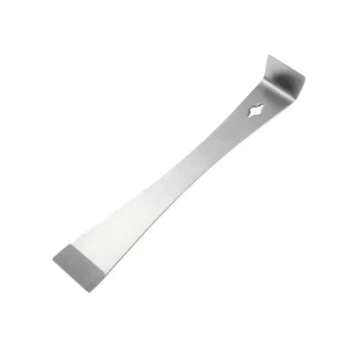
- HONESTBEE Classic Pry Bar Hive Tool with High Visibility Finish for Beekeeping
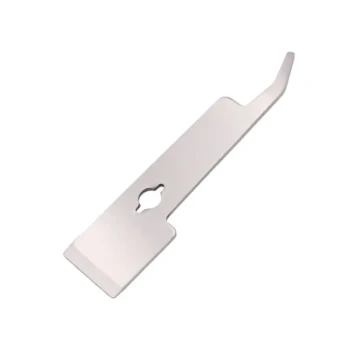
- Professional Stainless Steel Pry-Bar Hive Tool
- Ergonomic Two Person Foldable Hive Lifter
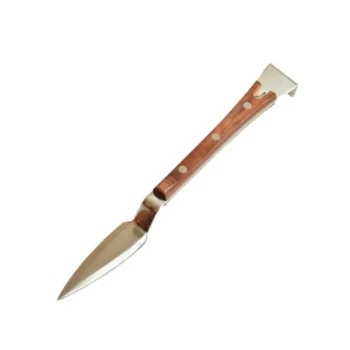
- HONESTBEE Professional Long Handled Hive Tool with Precision Cutting Blade
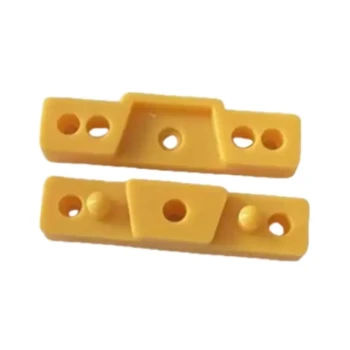
- Durable Plastic Interlocking Hive Connector for Beekeeping
People Also Ask
- What specific challenges do beekeeping hive tools address during hive maintenance? Essential Solutions for Apiaries
- Why are specialized beekeeping tools essential for executing colony health monitoring processes? Enhance Hive Precision
- What are some essential tools for beekeepers? Start Your Apiary with the Right Gear
- What are the essential tools and gear for basic beekeeping? Equip Your Apiary for Success and Safety
- What is the purpose of adding crystalline soda when disinfecting beekeeping tools? Boost Sterilization Efficiency