The decisive operational advantage is control: modern moveable-frame beehives let beekeepers remove individual combs without dismantling the colony or destroying the hive structure. Compared with fixed hives such as skeps, they support routine health inspections, selective harvesting, standardized management, and more efficient scaling.
Moveable frames turn beekeeping from a destructive, infrequent process into a repeatable management system. The colony can be inspected, treated, expanded, and harvested while remaining intact.
Why Moveable Frames Improve Hive Management
Inspect colonies without destruction
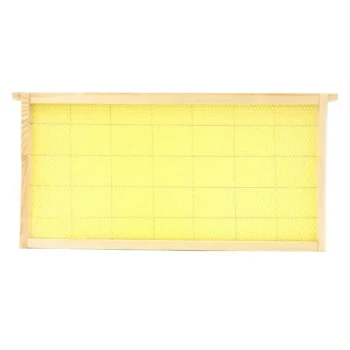
Each frame can be lifted out independently for inspection of brood, food stores, queen activity, pests, and disease symptoms.
A skep generally does not provide this access. Evaluating its internal condition is difficult, and harvesting commonly requires destroying the comb and potentially killing or displacing the colony.
Identify problems earlier
Regular, precise inspections allow beekeepers to detect health or population issues before they become severe.
This supports more timely interventions and reduces the need to make management decisions based only on external observations.
Manage the colony throughout the season
Beekeepers can rearrange, replace, add, or remove frames as colony conditions change.
This enables more structured seasonal management, including monitoring honey accumulation, controlling space, and supporting colony development.
How They Improve Harvesting Efficiency
Harvest honey without destroying the comb
With moveable frames, beekeepers can remove mature honeycombs while leaving the hive body and usable comb intact.
The colony can then reuse existing wax comb rather than rebuilding its entire nest, allowing more of its energy to be directed toward brood rearing and honey production.
Support multiple harvests
Because the colony and hive structure remain intact after harvesting, beekeepers can return frames or add additional capacity for later production.
This creates a more repeatable harvest cycle than fixed hives, where honey collection is often destructive and less frequent.
Improve honey handling and processing
Standard frames can be removed, transported, graded, uncapped, and processed using consistent procedures.
That supports more efficient honey extraction and can help commercial operators maintain better control over hygiene, product separation, and quality requirements.
Why Standardization Matters at Commercial Scale
Create consistent equipment requirements
Langstroth and Modified National designs use standardized frame arrangements and hive components.
This makes it easier to manage multiple colonies, replace damaged parts, train staff, and maintain a consistent operating process across an apiary.
Enable scientific breeding and grading
Removable frames make it practical to compare colonies, assess brood patterns, select stronger queens, and manage breeding programs more systematically.
These activities are far more difficult when the comb is fixed permanently inside the hive.
Support larger and migratory operations
A standardized hive design simplifies inspection routines, equipment planning, transport, and apiary organization.
For commercial beekeepers and distributors, this also supports a broader product ecosystem, including compatible hive bodies, frames, supers, and management accessories.
Production and Labor Advantages
Increase productive efficiency
The primary productivity gain comes from preserving the colony and its comb while enabling active management.
Supplementary evidence indicates that modern movable-frame systems can substantially outperform traditional hives, with some studies reporting approximately 1.6 times higher annual honey production. Actual results depend on forage, climate, colony strength, management quality, and equipment use.
Reduce unnecessary colony losses
Fixed-hive harvesting can destroy the comb and may kill or seriously disrupt the colony. Moveable-frame systems allow honey to be removed while preserving the colony for continued production.
This improves the productive value of each colony over time.
Make labor more predictable
Frame-by-frame inspection and harvesting create a repeatable workflow rather than requiring the beekeeper to dismantle or destroy the hive.
That predictability is particularly valuable when managing many colonies or fulfilling commercial supply commitments.
Understanding the Trade-offs
Higher initial investment
Moveable-frame systems require manufactured hive components and compatible equipment, while skeps may be simpler and cheaper to construct.
The higher upfront cost should therefore be evaluated against improved reusability, inspection access, productivity, and long-term colony management.
More equipment and training are required
Beekeepers must understand frame spacing, hive assembly, inspection technique, seasonal management, and harvesting procedures.
The system delivers its full value only when the operator has the skills and tools to use it correctly.
Standardization requires supply reliability
A commercial apiary depends on compatible replacement frames, hive bodies, supers, and other components.
For wholesalers, resellers, and distributors, reliable sourcing and fast fulfillment are operationally important because a shortage of one standardized component can disrupt hive maintenance or expansion.
Higher yields are not automatic
A modern hive is an enabling platform, not a guarantee of production. Poor forage conditions, weak colonies, pests, disease, or inadequate management can still limit output.
Reported yield comparisons should therefore be treated as performance potential rather than universal results.
Making the Right Choice for Your Goal
Moveable-frame hives are the stronger choice when the objective is repeatable, scalable, and non-destructive beekeeping.
- If your primary focus is colony health: Choose removable-frame designs because they allow regular inspection for brood quality, pests, diseases, and food reserves.
- If your primary focus is honey yield: Use moveable frames to preserve comb, support multiple harvests, and manage colony capacity throughout the season.
- If your primary focus is commercial scale: Prioritize standardized Langstroth or Modified National systems that simplify training, replacement, transport, and apiary-wide management.
- If your primary focus is distribution or resale: Build a compatible product portfolio around standardized hive bodies, frames, supers, and accessories, backed by dependable fulfillment and responsive technical support.
- If your primary focus is low initial cost: Skeps may appear simpler, but compare their lower entry cost with destructive harvesting, limited inspection access, and reduced long-term manageability.
Moveable-frame hives provide the operational foundation for healthier colonies, more efficient harvesting, and scalable modern beekeeping.
Summary Table:
| Aspect | Moveable-Frame Hives | Traditional Fixed Hives (e.g., Skeps) |
|---|---|---|
| Inspection | Individual frames removable for detailed checks | Difficult; destructive to access |
| Harvesting | Non-destructive; comb preserved | Destructive; often destroys comb and colony |
| Scalability | Standardized components support multiple colonies | Non-standard; limited scalability |
| Productivity | Can significantly increase yields | Lower yields; colony loss risk |
| Training & Cost | Higher initial investment, requires training | Lower cost, simpler construction |
Ready to upgrade your beekeeping with moveable-frame hives? HONESTBEE offers a comprehensive range of standardized hive equipment, from Langstroth and Modified National hives to frames, supers, and accessories. Our one-stop sourcing, rapid delivery, and expert support ensure you can scale your operations smoothly. For distributors and commercial beekeepers, we provide OEM/ODM customization, certifications, and reliable supply. Contact us today to get a quote and boost your apiary's productivity. Contact us
Related Products
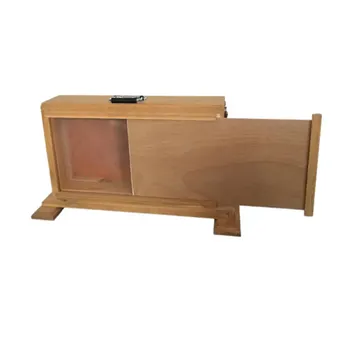
- Professional Observation Hive: The Ultimate Portable Solution for Beekeeping Education, Exhibitions, and Colony Displays
- Professional Grade Foldable Beehive Handles
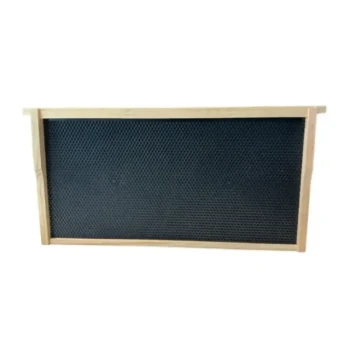
- Assembled Wooden Bee Frames with Plastic Foundation for Durability and Convenience by HONESTBEE
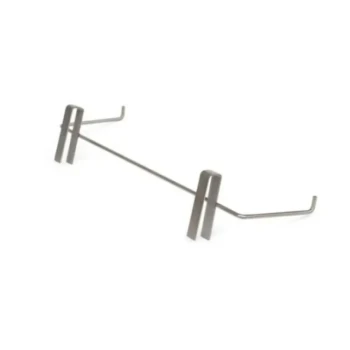
- Heavy-Duty Stainless Steel Clip-On Frame Perch
- Plastic Bee Frame Beekeeping Hive Frames for Wholesale
People Also Ask
- How does transitioning to modern hives boost honey yield? Increase production and product quality for your commercial apiary
- How do Langstroth and Dadant standard beehives compare regarding brood chamber management and component compatibility? Find the Perfect Fit for Your Apiary
- What are the key operational differences and structural trade-offs between Langstroth beehives and top-bar beehives for apiary management? Discover which hive system fits your operational needs.
- What are the primary differences between Langstroth, horizontal top bar, and Warré hive box designs when selecting beekeeping equipment? Choose the Right Hive for Your Apiary
- Why do commercial apiary operators transition from traditional hive structures, such as clay cylinders, to standardized Langstroth hive boxes? Discover Scalable Beekeeping Solutions