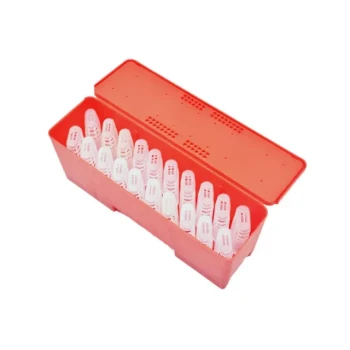
Strict sterilization or replacement is the mandatory standard for all bee transport equipment used during restocking efforts in American Foulbrood (AFB) affected areas. Every piece of gear, specifically transit boxes and queen cages, must be either brand new or have undergone high-intensity disinfection prior to use. This requirement is absolute to ensure that all containers are completely free of AFB spores before new bees are introduced.
American Foulbrood spores are highly resilient and capable of causing reinfection if not eliminated completely. To protect your investment in new colonies, you must verify that every transport vessel is bacteriologically sterile through the use of virgin materials or rigorous disinfection.
The Standard for Transport Equipment
The Two Acceptable States
There are only two conditions under which transport equipment is safe for use in these scenarios. The equipment must be factory new, ensuring it has never been exposed to apiary pathogens. Alternatively, if the equipment is reused, it must be subjected to high-intensity disinfection.
Equipment Scope
This requirement applies to the entire transport ecosystem. It explicitly includes transit boxes used for moving packages or established colonies. It also extends to smaller components, such as queen cages, which are frequently overlooked vectors for disease transmission.
The Biological Necessity
Breaking the Chain of Infection
The primary goal of these strict requirements is to prevent the spread of disease during the movement of honeybee colonies. AFB spores can linger on surfaces long after the bees are gone. Using contaminated equipment creates an immediate bridge for the disease to infect healthy stock.
Protecting New Livestock
When restocking, you are introducing vulnerable new queen bees or bee packages. Ensuring transport containers are spore-free is vital to their survival. Introducing healthy bees into a container harboring old spores renders the restocking effort futile and endangers the colony immediately.
Common Pitfalls to Avoid
Underestimating Disinfection Needs
A standard wash or rinse is insufficient for AFB. The reference specifies high-intensity disinfection for a reason. Failing to use industrial-strength methods will leave viable spores behind, leading to almost certain reinfection.
Ignoring Small Vectors
Beekeepers often focus on the large transit boxes but may neglect smaller items. Queen cages must be treated with the same rigor as larger boxes. A single contaminated cage can introduce AFB into a pristine colony.
Making the Right Choice for Your Goal
To ensure the success of your restocking program, select the approach that best fits your resources and risk tolerance:
- If your primary focus is maximum biosecurity: Prioritize the use of brand new equipment to eliminate any variable of cleaning error.
- If your primary focus is equipment reuse: Ensure your protocols meet the standard of high-intensity disinfection; anything less puts your new colonies at risk.
Biosecurity during transport is not just a regulatory hurdle; it is the foundation of a healthy apiary.
Summary Table:
| Requirement Category | Standard for AFB Areas | Key Considerations |
|---|---|---|
| Equipment Status | Brand new or high-intensity disinfected | Must be bacteriologically sterile |
| Included Items | Transit boxes, queen cages, and hive gear | All surfaces must be free of spores |
| Primary Goal | Breaking the chain of infection | Prevents transmission to new livestock |
| Risk Factor | AFB spore resilience | Standard washing is insufficient |
| Best Practice | Use virgin materials | Eliminates the risk of cleaning errors |
Secure Your Apiary’s Future with HONESTBEE
Protecting your commercial operation from American Foulbrood requires more than just diligence—it requires the right tools. HONESTBEE specializes in supporting commercial apiaries and distributors with a comprehensive range of high-quality beekeeping equipment. From factory-new transit boxes and queen cages that ensure maximum biosecurity to advanced hive-making and honey-filling machinery, we provide the industrial-strength solutions you need to scale safely.
Don't let contaminated equipment jeopardize your investment. Partner with a supplier that understands the biological necessities of large-scale beekeeping.
Ready to upgrade your equipment? Contact us today to discuss your wholesale needs!
References
- Ireneusz Nowak, Aleksandra Leska. American foulbrood, as an infectious disease of honey bees – selected legal and environmental aspects. DOI: 10.26485/spe/2020/115/5
This article is also based on technical information from HonestBee Knowledge Base .
Related Products
- Plastic Transporting Bee Packages and Nuc Boxes for Beekeeping
- Professional Queen Bee Introduction and Transport Cage
- JZBZ Style Professional Battery Box with 20 Shipping Cages
- Professional Queen Cage with Sliding Gate and Feeder Plug
- High-Efficiency Pneumatic Bee Hive Making Machine for Rapid Box Assembly
People Also Ask
- What role do bee package boxes play in the commercial transport and expansion of honeybee colonies? - Logistic Essentials
- What are beekeeping boxes called? A Guide to Hive Bodies and Box Types
- How do standardized bee packages serve as a recovery mechanism for commercial beekeeping? Ensure Business Continuity
- What is the commercial value of using standardized bee packages? Drive Scalability in Large-Scale Apiaries
- Why is the timely introduction of high-quality bee packages critical? Save Your Apiary from Asian Hornet Invasions