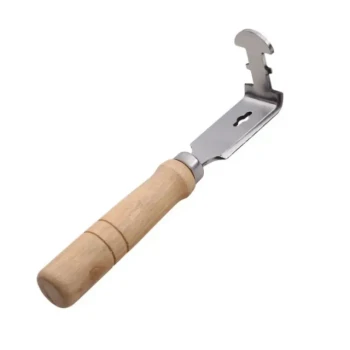
Anatomical observation tools serve as the fundamental lens through which researchers decode the complex internal architecture of stingless bee nests. By revealing specific structural details—such as the vertical or horizontal arrangement of brood cells and the morphology of honey pots—these tools allow for the precise evaluation of a colony's reproductive efficiency and honey production potential.
By quantifying internal structures like support pillars and brood clusters, anatomical observation provides the critical data needed to design superior beekeeping equipment and optimize colony management.
Deciphering Internal Nest Architecture
Visualizing Brood Cell Arrangement
The primary function of these tools is to categorize the geometry of the brood area.
Researchers use them to determine if brood cells are organized in vertical or horizontal clusters. This distinction is vital for understanding the spatial requirements of different stingless bee species.
Identifying Structural Supports
Beyond the cells themselves, observation tools reveal how the nest supports its own weight.
They allow for the classification of support pillars as either columnar (cylinder-like) or lamellar (plate-like). Identifying these support structures is essential for replicating natural conditions in artificial hives.
Analyzing Honey Pot Morphology
These tools also enable the detailed study of food storage structures.
Researchers examine the shape and size of honey storage pots. This morphological data helps estimate the maximum honey production potential of a specific colony.
From Observation to Application
Assessing Colony Efficiency
Anatomical data is not just descriptive; it is diagnostic.
By understanding the internal layout, experts can evaluate how efficiently a colony reproduces. It provides a baseline for determining the health and vigor of the queen and the workforce.
Driving Equipment Innovation
The ultimate goal of anatomical study is often engineering.
The insights gained regarding nest architecture serve as a key reference for developing new beekeeping equipment. "Rational hives" are designed to mimic these natural internal structures to reduce stress on the bees.
Enhancing Real-Time Monitoring
While anatomical tools often look at structure, supplementary tools like transparent observation windows allow for ongoing assessment.
These windows enable technicians to monitor the queen’s egg-laying and larval development without disrupting the nest's thermal environment. This bridges the gap between static anatomical study and dynamic health monitoring.
Understanding the Challenges and Trade-offs
Disruption vs. Data Integrity
Deep anatomical study can sometimes require invasive techniques to fully map the nest.
However, using non-invasive windows limits the view to the exterior of the brood, potentially missing internal structural anomalies. You must balance the need for detailed structural data against the need to maintain colony stability.
Sampling Purity
When studying the contents of honey pots, the method of extraction matters as much as the observation.
Using specialized manual or vacuum tools is necessary to extract honey without damaging the surrounding architecture. Failing to use these targeted tools allows impurities to contaminate samples, compromising the authenticity of laboratory results.
Making the Right Choice for Your Goal
To apply these insights effectively, align your tools with your specific objective:
- If your primary focus is designing artificial hives: Prioritize anatomical tools that map support pillar types and brood cell orientation to mimic natural geometry.
- If your primary focus is colony management: Utilize transparent observation windows to monitor reproductive status without breaking the thermal seal.
- If your primary focus is honey analysis: Employ vacuum sampling tools to extract resources from pots without destroying the complex nest structure.
Detailed knowledge of internal anatomy is the blueprint for sustainable and efficient stingless beekeeping.
Summary Table:
| Feature Observed | Data Insight Gained | Practical Application |
|---|---|---|
| Brood Cell Arrangement | Vertical vs. Horizontal clustering geometry | Determining spatial requirements for hive boxes |
| Support Pillars | Columnar vs. Lamellar structure identification | Engineering durable and stable artificial hive frames |
| Honey Pot Morphology | Volume, shape, and distribution density | Estimating honey yield and optimizing extraction tools |
| Larval Development | Real-time reproductive health and queen vigor | Timing colony splits and health interventions |
Elevate Your Apiary Operations with HONESTBEE
At HONESTBEE, we understand that precision in beekeeping starts with high-quality equipment designed around biological insights. As a leading provider for commercial apiaries and global distributors, we offer a comprehensive wholesale range of:
- Advanced Machinery: Hive-making and automated honey-filling machines to scale your production.
- Professional Tools: Specialized hardware and anatomical observation aids to ensure colony health.
- Essential Consumables: A full spectrum of beekeeping supplies for daily operations.
- Boutique Merchandise: Honey-themed cultural products to enhance your brand's market appeal.
Whether you are expanding your distribution network or optimizing your honey production facility, our expert team is ready to supply the tools you need for success.
Partner with HONESTBEE – Contact Us Today
References
- David Reinhard Jesajas, Sih Kahono. Location and characteristics of stingless bee nests (Apidae: Meliponini) in the Cycloop Mountain Nature Reserve, Indonesia. DOI: 10.15517/rev.biol.trop..v71i1.51166
This article is also based on technical information from HonestBee Knowledge Base .
Related Products
- Professional Dual-End Stainless Steel Hive Tool for Beekeeping
- Professional Stainless Steel Pry-Bar Hive Tool
- HONESTBEE Professional Mini J-Hook Hive Tool for Beekeeping
- Double Head Beekeeping Grafting Tools for Beekeepers
- Professional Queen Catcher and Introduction Queen Cage
People Also Ask
- What specific challenges do beekeeping hive tools address during hive maintenance? Essential Solutions for Apiaries
- Why are professional hive tools considered indispensable? Master Beekeeping Maintenance with Precision Leverage
- What is the role of professional hive tools in routine apiary maintenance? Expert Tips for Hive Health and Longevity
- What role do professional beehives and beekeeping tools play in honey prosumption? Scale yield & commercial success.
- What are the primary functions of a stainless steel hive tool? Essential Equipment for Professional Beekeeping