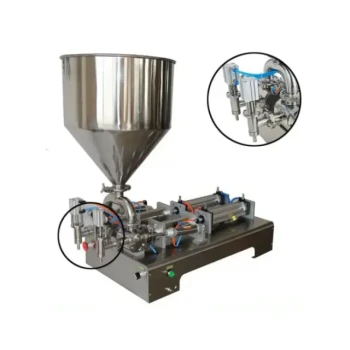
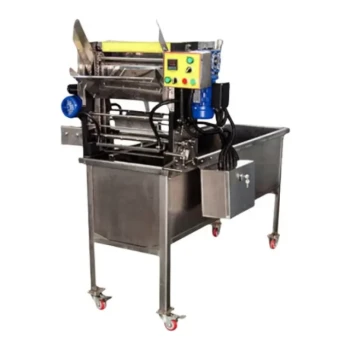
Automated honey-filling machines serve as the critical infrastructure for scaling production. In apiaries where algorithmic population optimization has successfully boosted yield, these machines manage the resulting surge in output. They ensure high-precision quantitative filling and rapid sealing to handle peak flows without the product loss or bottlenecks associated with manual processing.
The Core Insight While population optimization generates high yield, automated filling machines capture it. By eliminating processing bottlenecks and minimizing waste, this technology converts biological success into realized economic value and market-ready consistency.
Bridging the Gap Between Yield and Market
Handling Peak Output Efficiency
Apiaries that optimize populations often experience sharp spikes in honey flow. Manual processing cannot scale linearly to meet these surges without significant labor costs.
Automated machines provide the necessary throughput to process these peak volumes immediately. This prevents a backlog in the extraction room and ensures the raw product is stabilized quickly.
Precision and Waste Reduction
When yields are high, even small variances in filling volume add up to significant financial loss.
Industrial-grade filling machines utilize high-precision metering to ensure every jar contains the exact specified volume. This minimizes "overfill" product loss, maximizing the net profit extracted from the optimized colonies.
Validating Optimization Data
For apiaries driven by algorithmic or genetic optimization, accurate data is essential.
Automated fillers provide precise yield measurements during the packaging phase. This data serves as a key indicator for verifying the success of population optimization strategies and assessing the economic impact of environmental factors.
Preserving Quality and Purity
Mitigating Contamination Risks
High-yield operations involve moving large quantities of product, which increases the window for exposure to contaminants.
Automated sealing capabilities significantly reduce the risk of secondary contamination associated with manual handling. By creating a closed-loop system from tank to sealed jar, the natural purity of the honey is preserved.
Ensuring Product Consistency
To compete in commercial markets, the final product must be standardized.
Automation ensures rigorous hygienic standards and consistent packaging presentation. This standardization enhances market competitiveness, which is vital for operations transitioning from small-scale to commercialized beekeeping.
Strategic Reinvestment of Resources
Shifting Focus Back to Colony Health
Processing honey is labor-intensive and time-consuming.
By automating the "end-of-line" tasks, beekeepers and researchers can redirect their attention to core technical activities. This allows for a deeper focus on population genetic improvement, disease prevention, and health monitoring.
Financial Security for Expansion
The efficiency of automated filling directly optimizes net profit by reducing labor costs and material waste.
This improved financial margin provides the capital necessary for reinvestment. Apiaries can use these funds to purchase replenishment colonies or upgrade quarantine facilities, creating a virtuous cycle of growth.
Understanding the Trade-offs
The Capital vs. Labor Balance
While automation reduces long-term labor costs, it requires a significant upfront capital investment.
Small apiaries or those with inconsistent yields may find the ROI (Return on Investment) slower to realize than high-yield commercial operations. The equipment is a fixed cost that requires steady production to justify.
Maintenance and Technical Complexity
Introducing industrial machinery adds a layer of technical complexity to the apiary.
Operators must shift from purely biological management to managing mechanical maintenance. Downtime due to mechanical failure during a peak flow can cause bottlenecks if backup protocols are not in place.
Making the Right Choice for Your Goal
To determine if this technology aligns with your current operational status, consider your primary objectives:
- If your primary focus is Commercial Scaling: Prioritize machines with high throughput speeds to eliminate bottlenecks during peak honey flow periods.
- If your primary focus is Genetic Research: Select machines with advanced data logging and metering precision to accurately measure yield per colony or batch for analysis.
- If your primary focus is Brand Premiumization: Focus on machines that offer superior hygiene controls and vacuum sealing to guarantee the highest purity and shelf stability.
Automation is not just a convenience; it is the mechanism that translates biological optimization into sustainable economic reality.
Summary Table:
| Key Feature | Impact on High-Yield Apiaries | Primary Benefit |
|---|---|---|
| High-Precision Metering | Minimizes overfill and product loss | Maximizes net profit per harvest |
| Rapid Throughput | Processes surges during peak honey flow | Eliminates processing bottlenecks |
| Closed-Loop Sealing | Reduces manual handling and exposure | Preserves purity and hygiene |
| Data Logging | Tracks exact output per colony/batch | Validates optimization strategies |
| Labor Automation | Reallocates staff to colony health tasks | Lowers long-term operational costs |
Scale Your Commercial Apiary with HONESTBEE
Transitioning from high-yield optimization to market success requires the right infrastructure. HONESTBEE empowers commercial apiaries and distributors with a comprehensive suite of professional beekeeping tools and industrial machinery.
From high-precision honey-filling machines and hive-making hardware to specialized beekeeping consumables and honey-themed cultural merchandise, we provide the full spectrum of equipment needed to maximize your economic value.
Ready to eliminate bottlenecks and enhance your brand's consistency?
Contact HONESTBEE Today to discover how our wholesale solutions can support your expansion.
References
- Wuxun Li, Yiwen Sun. A honey bee requirements design study based on multi-objective optimization. DOI: 10.56028/aetr.4.1.426.2023
This article is also based on technical information from HonestBee Knowledge Base .
Related Products
- Fully Automatic Honey Filling Packaging Machine for Processing Line
- Automatic Honey Filling and Filtering Machine for Beekeeping Bottle Filling
- Precision Durable Efficient HONESTBEE Rotary Honey Filling Machine
- Precision Automated Packaging Turntable Honey Spoon Filling Sealing Packing Machine
- Semi Automatic Small Honey Bottle Filling Machine Honey Filler
People Also Ask
- Why are fully automatic honey filling and packaging lines essential? Boost Your Honey's Market Value and Quality
- What is a fully-automatic honey filler? Streamline Your Production with High-Precision Automation
- How do automated honey filling and packaging machines affect profitability? Boost Margins with HONESTBEE Technology
- How do automated honey filling and packaging machines contribute to the market value of honey products? Maximize Your ROI
- How do industrial-grade automated honey filling and packaging machines mitigate the risk of physical contamination?