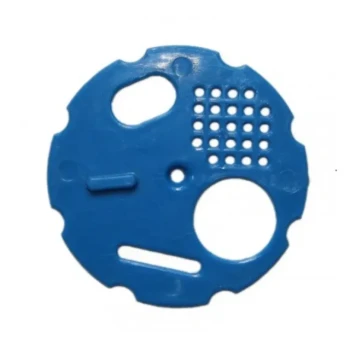
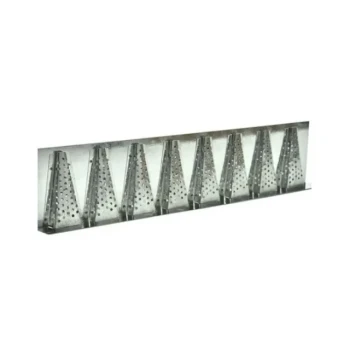
Beehive entrance reducers act as critical containment barriers during Oxalic Acid (OA) vaporization or fogging treatments. By significantly decreasing the hive's opening area, they effectively "lock" the medicinal vapor or mist within the internal space, preventing the active ingredients from dispersing into the outside air before they can take effect.
The core function of an entrance reducer during treatment is to maximize contact time. It transforms the hive from a ventilated structure into a contained fumigation chamber, ensuring the treatment is chemically efficient and biologically effective.
The Mechanics of Vapor Containment
Restricting Vapor Escape
When OA is vaporized, it creates a fine mist intended to coat the bees and the hive interior.
Without an entrance reducer, the hive's natural ventilation—or even a light breeze—causes a rapid loss of active ingredients.
The reducer minimizes the exit route, forcing the vapor to remain suspended within the hive structure.
Increasing Contact Time
Effective pest control relies on duration of exposure, not just the presence of the chemical.
By locking the vapor inside, the reducer extends the period during which the honeybee colony is exposed to the medicinal mist.
This ensures the OA has sufficient time to contact varroa mites throughout the colony before the vapor settles or dissipates.
Improving Equipment Utilization
The use of reducers directly impacts the utilization rate of your vaporization equipment.
If the hive is open, a significant percentage of the fog generated by your equipment is immediately wasted.
By sealing the major exit, you ensure that the machine's output is directed entirely toward the pest control process, rather than treating the surrounding air.
Critical Considerations for Application
The Importance of the "Seal"
While the primary reference highlights the role of the reducer, it is implied that the quality of the reduction matters.
Merely placing an object in the entrance is insufficient if significant gaps remain.
To achieve the "locking" effect described, the reducer must effectively decrease the opening area enough to overcome the vapor's natural tendency to expand and escape.
Balancing Ventilation and Treatment
The goal is temporary containment, not permanent suffocation.
The reducer is a tool to manage airflow specifically during the treatment window.
It serves to hold the concentration of the chemical high enough to be lethal to pests, without requiring excessive amounts of acid to compensate for leakage.
Making the Right Choice for Your Goal
- If your primary focus is Maximum Efficacy: Ensure the entrance reducer creates a tight constriction to maintain high vapor density and prolong contact time with the colony.
- If your primary focus is Chemical Efficiency: Use reducers to prevent the rapid loss of active ingredients, ensuring every gram of OA contributes directly to pest control.
By strictly managing the hive entrance, you ensure the treatment environment is stable enough to deliver the intended results.
Summary Table:
| Feature | Role in OA Treatment | Benefit to Beekeeping |
|---|---|---|
| Vapor Containment | Prevents active ingredients from escaping | Higher chemical utilization rate |
| Contact Time | Keeps OA mist suspended longer | More effective Varroa mite elimination |
| Airflow Control | Minimizes natural hive ventilation | Stable fumigation environment |
| Equipment Efficiency | Directs output into the hive interior | Reduces waste of expensive medication |
Elevate Your Beekeeping Operation with HONESTBEE
Are you looking to scale your apiary's productivity and improve colony health? At HONESTBEE, we specialize in supporting commercial apiaries and distributors with high-performance beekeeping solutions. From precision beehive-making and honey-filling machinery to a full spectrum of wholesale beekeeping tools and industry consumables, we provide the hardware you need to succeed.
Our expert-grade equipment is designed to complement effective treatment strategies, ensuring your operations are both efficient and profitable. Whether you are stocking your retail shelves or upgrading your commercial honey production line, our team is ready to deliver quality results.
Ready to optimize your supply chain? Contact HONESTBEE today to explore our wholesale catalog and discover how our comprehensive equipment range can benefit your business.
References
- Cody Prouty, Cameron Jack. Oxalic acid application method and treatment intervals for reduction of <i>Varroa destructor</i> (Mesostigmata: Varroidae) populations in <i>Apis mellifera</i> (Hymenoptera: Apidae) colonies. DOI: 10.1093/jisesa/iead086
This article is also based on technical information from HonestBee Knowledge Base .
Related Products
- Steel Round Disc Entrance Reducer for Flexzion Bee Hive Nuc Box Gate
- Beehive Entrance Reducer Guardian Metal Hive Entrance for Bees
- White Plastic 0.5L Beekeeping Entrance Feeder for Bees
- Beehive Entrance Discs Plastic Bee Entrance Disc for Bee Hives
- Professional Hive Front Entrance Bee Feeder
People Also Ask
- What is the purpose of an entrance reducer for a beehive? Strengthen Colony Defense and Prevent Robbery
- Why are entrance reducers used to counter hornet infestations? Protect Your Hive with Strategic Choke Points
- Why is it critical to maintain a smaller entrance for a newly established bee hive? Boost Colony Growth and Security
- What is the function of an entrance reducer on a beehive? Strengthen Colony Defense and Climate Control
- Under what conditions should a beekeeper adjust the size of a beehive entrance? Seasonal & Defense Management Tips