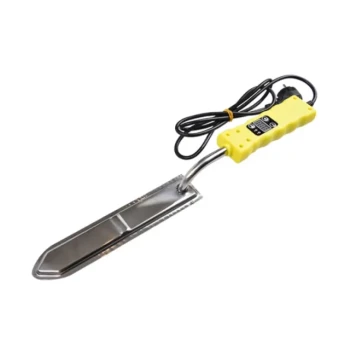
Environmental monitoring devices serve as essential decision-support tools in commercial beekeeping by translating physical conditions into actionable data. Rather than relying on intuition, high-precision sensors—such as digital thermometers and rain gauges—allow operators to track climatic variables in real-time to scientifically predict production windows and manage colony health.
Success in commercial beekeeping relies on synchronizing colony activity with precise environmental limits. By monitoring these variables, operators can shift from reactive maintenance to proactive management, ensuring interventions occur exactly when the biology of the bee and the flora demands it.
The Science of Nectar and Foraging
To understand the value of these devices, one must understand the biological constraints of the hive. Sensors are not just recording weather; they are identifying the physiological windows in which honey production is physically possible.
Defining the Foraging Window
Honeybees do not forage efficiently in all conditions. Their activity is heavily dependent on specific physical constraints.
Monitoring devices help confirm when temperatures fall within the critical range of 12°C and 35°C. Outside of this window, foraging activity drops significantly or ceases altogether, halting production.
Identifying Peak Nectar Secretion
Plant biology is equally sensitive to temperature. While bees may fly at 12°C, the plants they rely on often require warmer conditions to yield nectar.
The optimal secretion window typically lies between 16°C and 25°C. Sensors allow beekeepers to identify exactly when this thermal overlap occurs, pinpointing the moments of highest potential yield.
Operational Decision Making
The primary function of environmental data is to enable timely interventions. In a commercial setting, knowing when to act is as important as knowing how to act.
Predicting Production Periods
By tracking temperature trends and rainfall, operators can predict peak production periods.
This predictive capability allows for better resource allocation, ensuring that equipment and labor are ready exactly when the environmental conditions favor a heavy honey flow.
Managing Downtime and Risks
Conversely, sensors provide early warnings for extreme weather events.
If data indicates temperatures are consistently drifting outside the habitable 12°C–35°C range, operators can anticipate downtime.
Triggering Supplemental Support
When the environment fails to support foraging, the colony is at risk.
Real-time data empowers the beekeeper to provide supplemental feeding or initiate colony protection measures immediately, preventing starvation or stress during non-productive windows.
Understanding the Limitations
While environmental monitoring is powerful, it is not a standalone solution for hive management.
Data Requires Interpretation
Sensors provide raw metrics, not strategy. The data is only valuable if the operator understands the biological implications of the readings.
Microclimate Variability
A single sensor may not reflect the conditions of an entire apiary if the terrain varies. Reliance on limited data points without considering local microclimates can lead to inaccurate predictions.
Maximizing Yield Through Data
To leverage environmental monitoring effectively, align your data analysis with your specific operational goals.
- If your primary focus is Maximizing Production: Prioritize tracking the 16°C–25°C window to identify and capitalize on the period of optimal nectar secretion.
- If your primary focus is Colony Preservation: Set alerts for conditions falling below 12°C or exceeding 35°C to immediately trigger supplemental feeding or protective interventions.
True efficiency involves using data to harmonize your operations with the rigid biological schedules of your hives.
Summary Table:
| Metric Type | Optimal Range | Operational Impact |
|---|---|---|
| Foraging Temperature | 12°C - 35°C | Determines when bees can physically leave the hive to forage. |
| Nectar Secretion | 16°C - 25°C | Identifies the peak window for honey production and yield. |
| Rainfall Tracking | Variable | Predicts nectar dilution and potential foraging downtime. |
| Extreme Weather | <12°C or >35°C | Triggers alerts for supplemental feeding or colony protection. |
Scale Your Apiary Operations with HONESTBEE
Transition from reactive maintenance to data-driven precision. At HONESTBEE, we specialize in supporting commercial apiaries and distributors with a comprehensive wholesale inventory designed for professional success.
Our expertise extends across the entire beekeeping spectrum, offering:
- Advanced Machinery: High-efficiency honey-filling and specialized hive-making machines.
- Professional Hardware: A full range of durable beekeeping tools and equipment built for heavy use.
- Essential Consumables: Every item needed to keep your colonies thriving year-round.
Whether you are scaling a commercial operation or supplying the industry, we provide the tools and hardware necessary to harmonize your business with the biological demands of your bees.
Contact HONESTBEE today to discuss your wholesale needs
References
- Г.С. Мазина, А.М. Мазин. Погодные условия и динамика среднесуточных привесов пчелосемей в условиях псковской области. DOI: 10.54016/svitok.2025.21.20.003
This article is also based on technical information from HonestBee Knowledge Base .
Related Products
- Digital Honey Refractometer for Precision Measurement of Optimal Honey Quality
- Professional Electric Honey Uncapping Knife with Heated Digital Temperature Control for Beekeeping
- HONESTBEE Adjustable Voltage Wire Embedder with Digital Display
People Also Ask
- What role do high-precision refractometers play in determining the maturity and quality of honey? Ensure Honey Purity.
- Do the color and viscosity of honey affect its refractometer reading? Mastering Moisture Measurement Accuracy
- Why is a honey refractometer considered essential for commercial beekeepers? Ensure Honey Quality and Profitability
- What is the best way to store a honey refractometer? Preserve Accuracy and Extend Its Lifespan
- What is a honey refractometer? The Essential Tool for Perfect Honey Quality