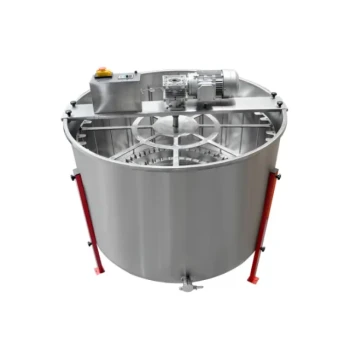
Industrial grinding and extraction machines serve as the critical technical bridge between raw hive by-products and pharmaceutical-grade supplements. They function primarily to mechanically alter the physical state of raw propolis and bee pollen—often using low temperatures—to maximize surface area, which facilitates the efficient chemical extraction of bioactive compounds like flavonoids and antioxidants.
The Core Transformation Deep processing does not simply reduce particle size; it fundamentally alters the accessibility of the material. By mechanically breaking down complex waxy or cellular structures, these machines enable solvents to penetrate deeply, concentrating active ingredients while stripping away impurities.
Overcoming Physical Barriers in Propolis
Raw propolis presents unique handling challenges due to its resinous nature. Industrial machinery is specifically designed to navigate these physical properties to prepare the material for extraction.
Managing Consistency Through Temperature
At room temperature, propolis is inherently sticky and difficult to process. Industrial grinders utilize low-temperature or frozen processing to render the propolis brittle.
This thermal control prevents the machinery from clogging. It ensures the resin shears into distinct particles rather than smearing against the grinding components.
Maximizing Surface Area for Solvents
The primary mechanical goal is to pulverize the frozen solid into fine particles. This significantly increases the contact surface area between the propolis solids and the extraction solvent (often methanol).
Enhancing Mass Transfer
By maximizing the contact area, the machinery facilitates a more rapid "mass transfer." This means the solvent can dissolve the active substances—such as polyphenols and flavonoids—much faster than it could with coarse chunks.
Breaking the Waxy Structure
Propolis contains a complex wax structure that encapsulates its active ingredients. Industrial crushing effectively fractures this structure.
This ensures a high solvent extraction rate, releasing antifungal and preservative components that would otherwise remain trapped inside the resin.
Unlocking Bioactives in Bee Pollen
While propolis requires temperature management, the processing of bee pollen and bee bread focuses on cellular accessibility.
Penetrating the Cellular Matrix
Bioactive components in pollen are often locked within a tough cellular matrix. Grinding machines use mechanical force to pulverize these particles into a fine powder.
This physical disruption is essential. It allows extraction solvents to fully penetrate the cell walls, ensuring the release of internal nutrients.
Improving Specific Surface Area
Similar to propolis, the goal is increasing the specific surface area of the sample.
This ensures that subsequent chemical analyses are representative of the whole batch. It guarantees that the resulting dietary supplements contain a standardized concentration of bioactives.
The Result: Purity and Standardization
The ultimate role of these machines is to elevate raw agricultural products into ingredients suitable for health and pharmaceutical applications.
Deep Processing for Supplements
The combination of grinding and extraction is defined as deep processing. It moves the product beyond simple raw consumption.
Concentration of Actives
By utilizing controlled physical and chemical conditions, these machines concentrate active ingredients. The process separates the therapeutic compounds from the bulk material.
Removal of Impurities
Simultaneously, the process filters out impurities. This results in high-quality extracts or powders that meet the rigorous standards required for health food or pharmaceutical markets.
Understanding the Trade-offs
While industrial processing is necessary for high-potency extracts, it introduces specific risks that must be managed.
Thermal Degradation Risks
Mechanical grinding generates friction, which creates heat. Since bioactive compounds like antioxidants and flavonoids are heat-sensitive, the cooling systems in these machines are not optional—they are critical to preserving potency.
Solvent Dependency
The grinding process is only as effective as the solvent used afterward. Increasing surface area is futile if the solvent (e.g., methanol) is not chemically suited to dissolve the specific target compounds efficiently.
Making the Right Choice for Your Goal
When selecting industrial processing equipment or defining your extraction protocol, consider your end-product requirements.
- If your primary focus is Potency: Prioritize machinery with advanced cooling capabilities (cryogenic grinding) to prevent heat from degrading sensitive antioxidants during the pulverization phase.
- If your primary focus is Efficiency: Ensure your grinding particle size is calibrated to match your specific solvent's viscosity, maximizing mass transfer speed without creating filtration bottlenecks.
Effective deep processing relies on the precise balance of mechanical force and thermal control to unlock nature’s chemistry without destroying it.
Summary Table:
| Process Component | Role in Processing | Key Benefit |
|---|---|---|
| Cryogenic Grinding | Low-temperature pulverization | Prevents clogging & preserves heat-sensitive antioxidants |
| Surface Area Expansion | Reducing particle size | Increases mass transfer & solvent extraction efficiency |
| Cellular Disruption | Breaking waxy/pollen matrices | Releases trapped flavonoids, polyphenols, and nutrients |
| Impurity Filtration | Separating resin from actives | Ensures high purity for health and pharmaceutical markets |
Scale Your Beekeeping Business with HONESTBEE
Are you looking to transition from raw hive products to high-value extracts? HONESTBEE specializes in supporting commercial apiaries and distributors with professional-grade solutions. Whether you need specialized hive-making machinery, honey-filling lines, or industrial processing tools to unlock the potency of propolis and pollen, we have the expertise to help you succeed.
Our Value to You:
- Comprehensive Wholesale Offering: A full spectrum of tools, machinery, and essential consumables.
- Industry-Leading Technology: Equipment designed for thermal control and maximum extraction efficiency.
- Growth Partnership: We cater specifically to the needs of large-scale operations and global distributors.
Ready to elevate your production standards and market reach?
Contact HONESTBEE Today to explore our wholesale machinery and equipment solutions.
References
- Cliff Van Eaton, Ron Law. Marketing apitherapy products and the challenge of government regulation. DOI: 10.1080/0005772x.2000.11099480
This article is also based on technical information from HonestBee Knowledge Base .
Related Products
- Heavy-Duty Ergonomic Grip Galvanized Pollen Shovel
- Stainless Steel Pollen Shovel with Wooden Handle
- Electric Flatting and Embossing Machine with Tray for Beekeeping
- Stainless Steel 3 Frame Manual Honey Extractor Spinner for Bee Honey Extraction
- Stainless Steel Manual 8 Frame Radial Honey Extractor Machine for Beehives
People Also Ask
- For what reasons do beekeepers collect bee pollen? Boost Hive Health and Unlock New Revenue Streams
- Why should commercial apiaries focus on the collection of diversified bee products? Maximize Your Hive’s Profit Potential
- How do bee pollen collection tools affect the quality of bee pollen used in functional dairy ice cream production?
- How does a specialized pollen collector facilitate the harvesting of diverse bee products? Automate High-Value Yields
- What is the impact of pollen collectors and associated equipment on the cost structure of pollen production? Maximize ROI