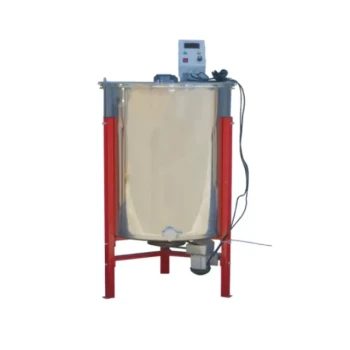
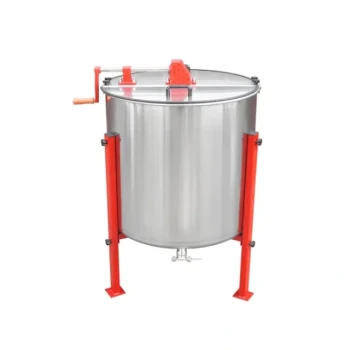
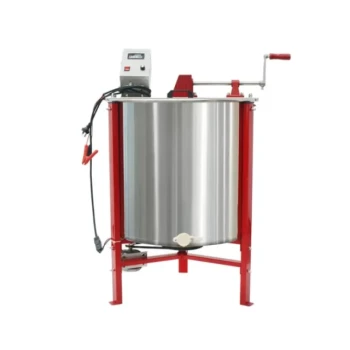
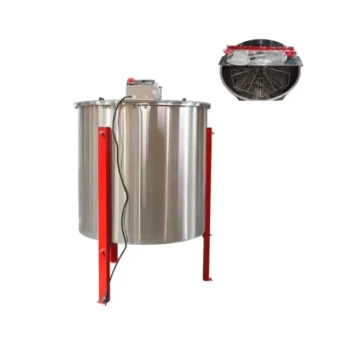
Manual and automatic centrifugal extractors serve as the primary mechanism for separating liquid honey from the honeycomb through high-speed rotational force. By spinning the frames, these devices extract the honey while leaving the solid wax structure intact. This ensures a clean separation without the destructive pressure or heat required by traditional, less efficient methods.
Core Insight: Centrifugal extractors are the industry standard for maintaining honey purity and biological value. Unlike crushing or heating methods, they preserve the honeycomb structure for reuse, significantly reducing the energy burden on the bee colony and shortening production cycles.
Enhancing Purity and Quality
Eliminating Contaminants
The primary role of a centrifugal extractor is to ensure physical hygiene. Traditional methods, such as squeezing or pressing the comb, often introduce significant impurities into the final product. Centrifugal force prevents common contaminants—such as dust, larval remains, and beeswax fragments—from mixing with the liquid honey, resulting in a cleaner final product.
Preserving Chemical Integrity
Centrifugal extraction protects the biological properties of the honey. Older techniques often rely on sun-melting or open-flame heating to separate wax from honey. This exposure to high temperatures destroys active ingredients (enzymes) and degrades the natural flavor profile. By utilizing mechanical force instead of heat, centrifugal extractors prevent the development of Hydroxymethylfurfural (HMF), a marker of thermal degradation.
Minimizing Air Exposure
Mechanized extraction supports a more controlled environment than open-air pressing. By integrating with multi-layer stainless steel screens, these machines filter out wax debris immediately. This reduces the honey's exposure to air and potential environmental pollutants, preserving the clarity and chemical composition required for accurate pollen and residue analysis.
Operational Efficiency and Sustainability
Non-Destructive Extraction
Unlike pressing, which destroys the comb, centrifugal extractors apply force only to the liquid honey. The structural integrity of the beeswax frames remains undamaged during the process. This is a critical factor for commercial viability, as it preserves the capital investment of the hive structure.
The Cycle of Reuse
Because the frames remain intact, beekeepers can return the empty combs directly to the beehive. This creates a highly efficient production loop. Bees do not have to consume energy or time rebuilding wax combs, allowing them to focus immediately on refilling the cells.
Increased Yield Per Colony
By eliminating the need for comb reconstruction, the overall production cycle is shortened. Conserving the energy bees would otherwise spend on wax secretion directly translates to higher honey yields per colony over the course of a season.
Comparing Extraction Methodologies
The Pitfalls of Traditional Methods
To understand the value of a centrifuge, one must recognize the limitations of the alternatives. Methods like squeezing or pressing inevitably crush the comb, making reuse impossible and complicating filtration. Similarly, heating methods may be easier to perform without machinery, but they compromise the honey's classification as "raw" and can alter its chemical profile.
Mechanical Prerequisites
While superior in result, centrifugal extraction requires specific preparation. The wax "cappings" must be removed from the cells before spinning. While the machine handles the separation efficiently, it relies on this pre-processing step to function, unlike heat extraction which simply melts everything together.
Making the Right Choice for Your Goal
Whether utilizing a manual unit for small batches or an industrial automatic system, the principles of centrifugal extraction support high-quality beekeeping.
- If your primary focus is Product Purity: Centrifugal extraction is mandatory to avoid the introduction of larval debris and wax particles common in pressed honey.
- If your primary focus is Nutrient Preservation: This method is the only way to extract honey without heat, preserving natural enzymes and preventing flavor degradation.
- If your primary focus is Production Efficiency: The ability to reuse intact honeycombs will significantly shorten your harvest cycles and increase total yield.
Centrifugal extractors transform honey harvesting from a destructive harvest into a sustainable cycle, protecting both the product and the colony that produced it.
Summary Table:
| Feature | Centrifugal Extraction | Traditional Pressing/Heating |
|---|---|---|
| Honey Purity | High (filters out larvae and dust) | Low (prone to wax and debris) |
| Comb Integrity | Preserved (ready for immediate reuse) | Destroyed (requires total rebuild) |
| Nutrient Value | Maximum (cold extraction) | Compromised (heat destroys enzymes) |
| Yield Speed | Fast (shorter production cycles) | Slow (energy diverted to wax building) |
| Chemical Profile | Prevents HMF development | Risk of thermal degradation |
Scale Your Honey Production with HONESTBEE Precision
At HONESTBEE, we specialize in empowering commercial apiaries and distributors with high-performance beekeeping infrastructure. Whether you are seeking manual extractors for artisanal batches or fully automatic centrifugal machinery for industrial output, our equipment is designed to maximize your yield while preserving the biological integrity of your honey.
Our value to your business includes:
- Comprehensive Wholesale Offering: A complete spectrum of beekeeping tools, machinery, and essential consumables.
- Industrial Specialization: From advanced honey-filling machines to hive-making hardware.
- Retail Support: A wide array of honey-themed cultural merchandise to diversify your portfolio.
Ready to enhance your extraction efficiency and product quality? Contact us today to explore our wholesale solutions!
References
- Smith A. R. Dossou, Rodrigue Castro Gbèdomon. Promotion of beekeeping: Insights from an empirical analysis of three honey value chains in<scp>Benin</scp>. DOI: 10.1111/1477-8947.12238
This article is also based on technical information from HonestBee Knowledge Base .
Related Products
- Manual Hand Crank 4 Frame Honey Extractor Centrifuge for Beekeeping
- electric honey extractor honey centrifuge 3 frame honey extractor stainless steel honey frame extractor
- Professional 4 Frame Self Reversing Electric Honey Extractor for Beekeeping
- Commercial 48-Frame Stainless Steel Honey Extractor
- Electric 4 Frame Tangential Honey Extractor
People Also Ask
- What are some tips for achieving efficient honey extraction with a centrifuge extractor? Maximize Your Yield & Efficiency
- What is the proper procedure for maintaining a centrifuge honey extractor? Expert Tips for Longevity and Hygiene
- What are the advantages of using a centrifuge honey extractor? Maximize Yields and Protect Your Honeycombs
- Which type of honey extractor is generally more durable? Focus on Material & Build Quality for Longevity
- What is a manual honey extractor? The Essential Guide to Cost-Effective Beekeeping for Beginners