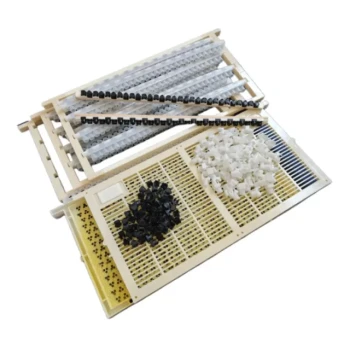
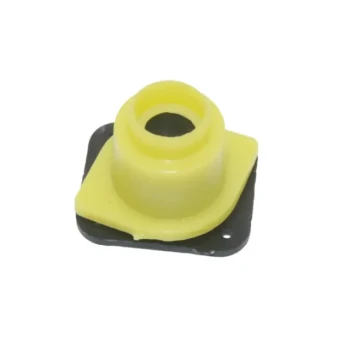
Professional queen rearing tools function as the operational bridge between identifying a genetic advantage and establishing it within a population. Specifically, these tools facilitate the precise larval grafting and queen cell management necessary to isolate and propagate complex traits, such as high-intensity grooming behavior, which allows colonies to naturally defend against Varroa mites.
Core Takeaway While tools do not create genetic resistance, they provide the necessary precision to scale the selection of specific neural gene expressions (like Neurexin-1). Without professional equipment to control reproduction and propagation, beneficial traits like grooming behavior cannot be reliably stabilized or scaled across an apiary.
The Mechanism of Genetic Propagation
Precision in Larval Grafting
Breeding for Varroa resistance is not about random selection; it requires targeting specific, often recessive or complex traits. Professional grafting tools allow breeders to manually transfer larvae from a proven "breeder queen" into queen cell cups with minimal stress.
This precision ensures that the specific lineage selected for resistance—such as those exhibiting high-intensity grooming—is the exact lineage being propagated.
Scaling Neural Gene Expression
Recent advancements link grooming behavior—the physical removal of mites—to specific biological markers, such as the Neurexin-1 gene. This behavior is regulated by neural gene expression.
Professional rearing equipment allows for the mass production of queens carrying these specific genetic markers. By systematizing cell management, breeders can move from a single resistant colony to hundreds of daughter colonies that share the same neural advantages.
Ensuring Genetic Purity and Validation
Controlling the Paternal Line
While rearing tools manage the queen, professional artificial insemination (AI) equipment controls the drone (male) genetics. Natural mating introduces environmental uncertainty that can dilute resistant traits.
AI equipment enables single-drone or multi-drone insemination under laboratory conditions. This ensures that the resistant queen is mated with drones from known resistant stock, locking in the genetic background required for Varroa defense.
Standardizing the Environment
To prove that a bee variety is truly resistant, researchers must eliminate variables. Standardized beehives and frames provide a controlled environment where colony strength and larval distribution are regulated uniformly.
This hardware consistency ensures that observed differences in mite loads are due to genetics, not micro-climatic fluctuations or hardware variations.
Verifying Hygienic Behavior
Before rearing begins, the stock must be proven. Tools used for the pin-kill test (fine needles applied in a grid) simulate brood death to measure hygienic behavior.
A high clearing rate within 24 hours indicates a colony efficient at removing threats. This validates which queens are worthy of the grafting process described above.
Understanding the Trade-offs
Breeding vs. Chemical Management
It is critical to distinguish between tools that breed resistance and tools that manage mites.
Chemical application tools (such as precise sprayers for oxalic acid) are essential for maintaining the health of the colony and preventing collapse (CCD) during the breeding program. However, they do not contribute to the genetic improvement of the stock.
The Risk of Complexity
Rearing and insemination tools require high technical skill. Mismanagement during the grafting or insemination phase can damage the queen or result in poor fertilization. Furthermore, focusing solely on one trait (like grooming) without a broad genetic view can lead to inbreeding depression if not carefully managed using pedigree data.
Making the Right Choice for Your Goal
To effectively utilize professional equipment for Varroa resistance, align your tooling with your operational objective:
- If your primary focus is Genetic Research: Prioritize artificial insemination equipment and standardized hives to isolate specific gene expressions and eliminate environmental variables.
- If your primary focus is Commercial Propagation: Invest heavily in precision grafting tools and cell management systems to scale the production of queens from established resistant lineages.
Professional tools turn the theoretical possibility of Varroa-resistant genetics into a reproducible, scalable reality.
Summary Table:
| Tool Category | Primary Function in Resistance Breeding | Impact on Varroa Defense |
|---|---|---|
| Precision Grafting Tools | Precise transfer of larvae from proven breeder queens. | Ensures propagation of grooming-behavior lineages. |
| AI Equipment | Controlled mating between queens and known resistant drones. | Locks in specific genetic markers like Neurexin-1. |
| Pin-Kill Test Tools | Measuring hygienic behavior and brood clearing rates. | Validates genetic resistance before mass rearing. |
| Cell Management Systems | Scaled production of daughter queens. | Allows resistant traits to be distributed across apiaries. |
| Standardized Hives | Providing a controlled environmental baseline. | Ensures observed resistance is genetic, not environmental. |
Scale Your Resistant Stock with HONESTBEE
Are you a commercial apiary or distributor looking to lead the industry in Varroa-resistant genetics? HONESTBEE is your strategic partner in beekeeping excellence. We provide the full spectrum of professional tools needed to turn genetic potential into a scalable reality:
- Precision Breeding Hardware: From advanced queen rearing kits to specialized grafting equipment.
- Industrial Machinery: Honey-filling and hive-making machines to support your growth.
- Comprehensive Wholesale Range: All the consumables and specialized tools required for large-scale operations.
Contact HONESTBEE Today to access the professional equipment you need to stabilize and propagate superior honeybee varieties. Let us help you provide your customers with the future of sustainable beekeeping.
References
- Berkant İsmail Yıldız, Kemal Karabağ. Effects of Neural Gene Expressions on Grooming Behavior in Honey Bees. DOI: 10.34248/bsengineering.646925
This article is also based on technical information from HonestBee Knowledge Base .
Related Products
- Retractable Chinese Queen Rearing Grafting Tools Equipment
- Plastic Chinese Queen Grafting Tool for Bee Queen Rearing
- Stainless Steel Queen Grafting Tool for Beekeeping and Bee Queen Grafting
- Stainless Steel Beekeeping Queen Grafting Tool for Honey Bee Rearing
- No Grafting Queen Rearing Kit: System for Royal Jelly Production and Queen Rearing
People Also Ask
- Which specialized tools are necessary for implementing standardized queen rearing? Scale Your High-Yield Apiary
- Why are specialized queen rearing tools necessary to mitigate winter hive losses? Boost Apiary Survival and Recovery
- How do queen-rearing tools facilitate the sustainability and expansion of a commercial apiary? Drive Scalable Growth
- In what ways do modern queen rearing equipment and grafting tools improve competitiveness? Boost Breeding Success Rate
- What role do specialized queen rearing tools and consumables play in modern large-scale apiculture? Drive Production & Scale