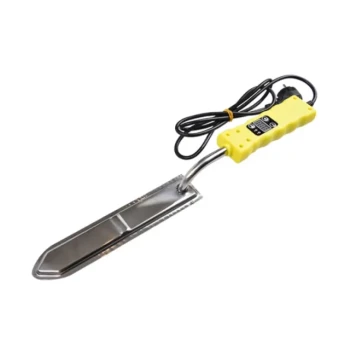
A high-precision digital temperature recorder acts as the central nervous system for quality control in microwave beeswax extraction. Positioned at the discharge outlet, its primary function is to monitor the final temperature of the beeswax in real-time, ensuring the material stays within the strict processing window of 60-70°C.
Core Insight Beeswax and honey are biologically active materials that degrade rapidly if overheated. The digital recorder provides the essential data required to dynamically balance microwave power and conveyor speed, directly safeguarding the product's color and physical structure.
The Critical Role of Thermal Precision
Preserving Material Integrity
Beeswax and honey are extremely sensitive to thermal fluctuations. The specific target range for extraction is narrow, strictly between 60°C and 70°C.
The Consequences of Deviation
If the temperature exceeds this limit, the physical properties of the wax can change, and the natural color may darken or degrade. Conversely, falling below this range may result in incomplete extraction.
Real-Time Monitoring Location
The recorder is strategically placed at the discharge outlet. This location captures the cumulative heat absorption of the material after it has passed through the microwave field, providing the most accurate metric of the final product state.
Operational Control and Feedback
Regulating Microwave Output
The data provided by the temperature recorder dictates the energy input. If the readout trends high, operators (or automated systems) know to immediately reduce the microwave output power.
Adjusting Conveyor Speed
Temperature data also informs the speed of the conveyor belt. Adjusting the speed controls the "residence time"—how long the wax sits inside the heating chamber.
Ensuring Consistency
By constantly balancing power and speed based on the recorder's feedback, the system maintains a consistent output quality regardless of minor variations in the raw material input.
Understanding the Trade-offs
Reliance on Sensor Placement
The accuracy of the system is entirely dependent on the sensor measuring the core temperature of the bulk material. Surface measurements at the discharge outlet can sometimes differ from the internal temperature if the layer is thick.
Reaction Time Latency
While the recorder provides real-time data, there is always a slight physical lag between adjusting the conveyor speed and seeing the temperature change at the discharge point. Operators must account for this delay to avoid over-correcting the system.
Making the Right Choice for Your Goal
To maximize the utility of your temperature recording system, consider your primary production objectives:
- If your primary focus is Product Quality (Color & Purity): Prioritize keeping the temperature closer to the 60°C lower limit to minimize any risk of thermal degradation, even if it slightly reduces throughput.
- If your primary focus is Production Speed: Aim for the upper 70°C limit to maximize flow, but ensure your recorder has a high refresh rate to catch overheating instantly.
The temperature recorder is not just a passive monitor; it is the active tool that allows you to translate raw heat into a high-value, commercial-grade product.
Summary Table:
| Feature | Function in Extraction | Impact on Final Product |
|---|---|---|
| Real-Time Monitoring | Tracks heat at the discharge outlet | Prevents overheating and color degradation |
| Power Regulation | Guides microwave energy adjustments | Ensures consistent material integrity |
| Speed Control | Informs conveyor residence time | Balances throughput with extraction efficiency |
| Data Feedback | Creates a dynamic quality control loop | Guarantees high-value, commercial-grade wax |
Elevate Your Apiary’s Production Efficiency with HONESTBEE
Precision is the backbone of high-quality beeswax and honey production. At HONESTBEE, we specialize in empowering commercial apiaries and distributors with the professional tools and machinery needed to master complex workflows.
From high-precision thermal monitoring systems to advanced honey-filling and hive-making machines, our comprehensive wholesale portfolio covers the full spectrum of beekeeping hardware and essential industry consumables. Whether you are scaling up production or seeking specialized honey-themed cultural merchandise, we provide the expertise to ensure your success.
Ready to optimize your extraction workflow?
Contact us today to explore our full range of professional beekeeping solutions!
References
- A. V. Shevelev, G M Toboev. Optimization of structural and technological modes of operation of the microwave wax melter. DOI: 10.32634/0869-8155-2022-364-11-88-93
This article is also based on technical information from HonestBee Knowledge Base .
Related Products
- Professional Electric Honey Uncapping Knife with Heated Digital Temperature Control for Beekeeping
- Digital Honey Refractometer for Precision Measurement of Optimal Honey Quality
- HONESTBEE Adjustable Voltage Wire Embedder with Digital Display
People Also Ask
- Why are electric honey uncapping knives essential? Boost Efficiency & Preserve Comb for Professional Honey Extraction
- What is an electric uncapping knife and how is it used? Master Faster Honey Extraction with Heat
- What are the advantages and disadvantages of using an electric knife for uncapping honey frames? Boost Extraction Speed
- What are the drawbacks of using an electric knife for uncapping honey frames? Cost and Power Constraints Explained
- How should an electric uncapping knife be utilized? Master Efficient Honey Extraction with Heated Precision