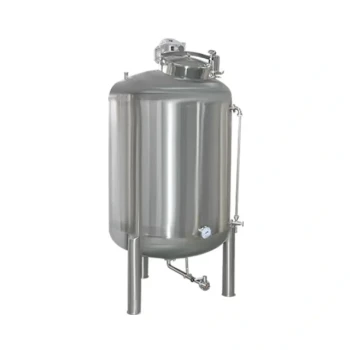
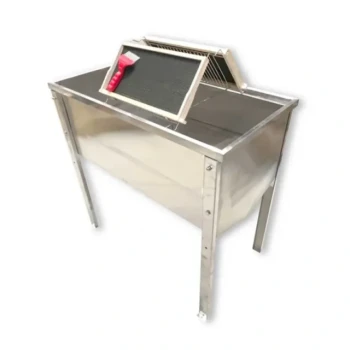
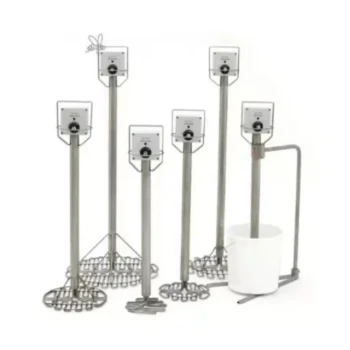
A honey settling tank serves as the critical mechanism for passive clarification in the final stages of honey processing. It utilizes gravity to separate honey from contaminants, effectively removing air bubbles and fine debris that filtration systems may miss.
Core Takeaway By relying on the physical principle of specific gravity, settling tanks allow lighter impurities to float and heavier ones to sink, ensuring the final product achieves the high transparency and purity required for top-tier commercial grading.
The Mechanics of Clarification
Leveraging Specific Gravity
The settling tank operates on a simple physical principle: specific gravity. Honey is denser than most of the impurities introduced during extraction, such as beeswax fragments and larval debris.
When the honey is allowed to stand still, these lighter materials naturally separate. This passive process requires no mechanical intervention, protecting the honey's structure while effectively isolating contaminants.
The Role of Buoyancy
During the stationary phase, buoyancy drives lighter particles to the surface. This is particularly effective for removing tiny air bubbles trapped in the honey during the centrifugal extraction process.
While filters intercept solid debris, they often let micro-bubbles pass through. The settling tank acts as a "maturator," giving these bubbles time to rise and dissipate, which is essential for a cloud-free appearance.
Elevating Commercial Value
Enhancing Transparency
The primary commercial goal of a settling tank is to upgrade the product's visual grade. Consumers equate clarity and transparency with high quality.
By removing the fine haze caused by suspended air and microscopic wax particles, the tank ensures the honey looks polished and professional when bottled.
Meeting Industry Standards
Achieving a "clear and transparent" physical appearance is often a prerequisite for commercial grading.
Without this settling phase, honey may appear cloudy or "raw," which can lower its market value. The settling tank ensures the product meets the sensory expectations necessary for premium pricing.
Understanding the Trade-offs
The Cost of Time
Unlike active filtration, which is a continuous flow process, settling is a stationary phase. It requires the honey to sit undisturbed for an extended period.
This introduces a bottleneck in production speed. Producers must balance the need for perfect clarity against the time required for effective settling, which varies based on the honey's viscosity and temperature.
Passive vs. Active Separation
A settling tank is not a substitute for initial filtration; it is a refinement step. It relies on natural separation, meaning it cannot quickly remove large volumes of debris.
It is most effective when used after a primary filtration stage has already intercepted the bulk of larger beeswax and insect remains.
Making the Right Choice for Your Goal
To determine how to integrate a settling tank into your workflow, consider your specific production targets:
- If your primary focus is Premium Retail Sales: Prioritize a longer settling duration to ensure maximum transparency and the removal of all micro-bubbles, as visual appeal drives consumer confidence.
- If your primary focus is High-Volume Production: Use the settling tank as a short-term buffer between filtration and bottling to remove major air pockets without stalling the production line for days.
Ultimately, the settling tank is the gatekeeper of quality, transforming extracted raw honey into a polished, shelf-stable commercial product.
Summary Table:
| Feature | Function in Quality Control | Benefit to Final Product |
|---|---|---|
| Passive Clarification | Uses specific gravity to separate wax and debris | Achieves high purity without mechanical damage |
| De-foaming | Allows trapped micro-bubbles to rise and dissipate | Results in a cloud-free, crystal-clear appearance |
| Visual Polishing | Removes microscopic haze missed by filters | Elevates sensory grade for premium market pricing |
| Sedimentation | Separates heavy impurities via gravity | Ensures a clean, consistent texture for bottling |
Elevate Your Honey Quality with HONESTBEE
Are you looking to scale your commercial apiary or expand your distribution portfolio? At HONESTBEE, we specialize in empowering beekeeping businesses with the professional-grade tools needed to produce world-class honey. From high-capacity honey settling tanks and precise filling machines to advanced hive-making hardware and essential industry consumables, we provide a comprehensive wholesale solution tailored to your needs.
Why partner with us?
- Industrial Strength: Our machinery is designed for the rigorous demands of large-scale commercial operations.
- Total Supply Chain: We offer everything from specialized processing equipment to honey-themed cultural merchandise.
- Expert Support: We help you streamline production to meet the highest industry standards for transparency and purity.
Ready to enhance your production efficiency and product value? Contact our expert team today to explore our wholesale catalog and customized equipment solutions!
References
- Janaína Tayna Silva, Hellén Felicidade Durães. Use of beekeeping as a source of income for small producers. DOI: 10.30612/realizacao.v7i13.11258
This article is also based on technical information from HonestBee Knowledge Base .
Related Products
- Stainless Steel Honey Storage and Settling Tank with Double Strainer
- Stainless Steel Honey Storage Tank with Lid for Honey
- Heavy Duty Stainless Steel Honey Processing Machine Decrystallizing Tank
- Professional Honey Storage Tank with Agitation System
- Stainless Steel Heated Honey Tank Warming Heating Tank
People Also Ask
- What economic role do honey storage tanks play? Boost Your Revenue Through Strategic Inventory Management
- What roles do industrial honey storage tanks and filtration meshes play in processing? Ensure Purity & Consistency
- What is the purpose of a honey storage tank? Streamline Your Honey Processing for Quality & Efficiency
- What role do settling tanks play in honey production? Achieve Pure, High-Clarity Honey Naturally
- Why are large settling tanks used in the honey clarification process? Achieve Natural Purity & Batch Consistency