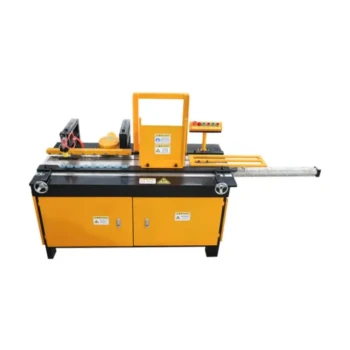
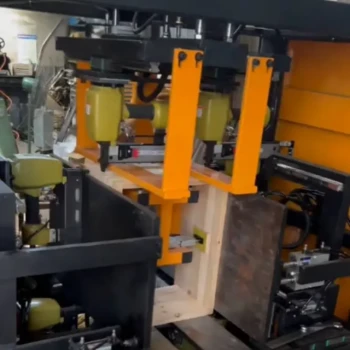
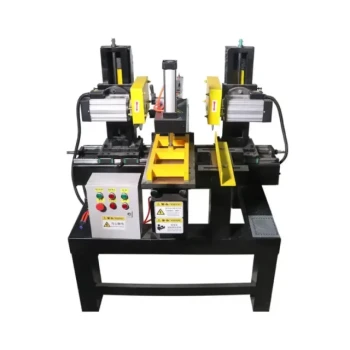
Hive-making machinery serves as the foundational catalyst for shifting regional beekeeping from artisanal practices to industrial-scale production. By automating the woodworking process, these machines replace inconsistent manual labor with high-precision manufacturing, enabling the mass production of standardized, interchangeable hive components necessary for modern apiary management.
The core function of this machinery is not merely faster cutting, but the democratization of precision. It overcomes the "interchangeability barrier" that limits manual beekeeping, reducing investment costs and creating a standardized hardware foundation that allows regional sectors to scale rapidly.
Establishing Standardization and Precision
The Necessity of Interchangeability
In manual woodworking, slight variations in dimensions prevent parts from fitting together across different hives.
Industrial machinery eliminates this variable, utilizing high-precision processing to ensure every frame, box, and bottom board is identical.
This standardization is critical for large-scale operations, allowing beekeepers to swap components between colonies without modification or maintenance difficulties.
Aligning Hardware with Bee Biology
Precision machinery ensures that hive internal dimensions strictly adhere to "bee space" requirements.
When manual hives fail to meet these specific biological tolerances, bees may build erratic comb or glue parts together, making management difficult.
Machine-produced hives reduce colony stress and facilitate scientific management by maintaining exact, biologically appropriate dimensions.
Economic and Operational Scalability
Removing Supply Bottlenecks
Manual production cannot keep pace with the demands of a rapidly growing industrial sector.
High-efficiency cutting and assembly tools allow communities to rapidly scale up their hive inventory to meet market demand.
This capability is a prerequisite for increasing the total regional honey supply, as it removes the hardware shortage that often limits production.
Lowering Barriers to Entry
By mass-producing components, machinery significantly reduces the unit cost of modern beehives.
This lower price point reduces the initial investment required for individual farmers to enter the market or expand their existing apiaries.
Consequently, modern equipment becomes accessible to a broader demographic, accelerating the shift away from inefficient traditional methods.
Stimulating Local Manufacturing Economies
The introduction of this machinery does more than help farmers; it creates a secondary industry.
It supports the development of local manufacturing enterprises dedicated to beekeeping supplies.
This diversification creates additional employment opportunities within the supply chain, strengthening the overall regional economy.
Transitioning to Modern Methodology
Replacing Obsolete Infrastructure
Hive-making machinery is the primary driver for phasing out traditional equipment, such as manual basket hives.
It provides a steady stream of modern or transitional hives that offer superior temperature control and pest resistance compared to traditional structures.
This upgrade is essential for improving overall industrial efficiency and honey yields per colony.
Facilitating Mechanized Extraction
Standardized frames produced by these machines are compatible with mechanical honey extractors.
Irregular, hand-made frames often break or do not fit in centrifugal extractors, limiting harvest speed.
By ensuring dimensional uniformity, machinery paves the way for the mechanization of the entire production line, from hive management to honey processing.
Understanding the Trade-offs
Capital vs. Labor Intensity
While machinery reduces the long-term cost of hives, it requires a significant upfront capital investment to acquire and install the manufacturing equipment.
Regions must weigh this initial cost against the long-term savings in labor and increased output.
Maintenance Dependencies
Shifting to mechanized production introduces a dependency on technical maintenance and spare parts for the machinery itself.
If the manufacturing equipment fails without local repair expertise, the entire supply chain for new hives can face disruption.
Making the Right Choice for Your Goal
To leverage hive-making machinery effectively, align your strategy with your specific developmental objectives:
- If your primary focus is rapid regional expansion: Prioritize high-volume machinery to eliminate supply bottlenecks and drive down the per-unit cost for new beekeepers.
- If your primary focus is operational efficiency: Ensure the machinery selected offers strict dimensional precision to guarantee frame interchangeability and compatibility with extraction equipment.
- If your primary focus is economic development: View the machinery as a manufacturing investment to create local jobs and a self-sufficient supply chain, rather than just a tool for farmers.
Industrialization requires that the hardware governing the bees' environment is as reliable and scalable as the market you intend to build.
Summary Table:
| Key Role | Primary Benefit | Impact on Industrialization |
|---|---|---|
| Standardization | Interchangeable hive components | Enables large-scale operational management |
| Biological Precision | Consistent "bee space" adherence | Improves colony health and honey yields |
| Supply Scalability | Rapid mass production | Removes hardware bottlenecks for sector growth |
| Economic Efficiency | Lower unit costs | Reduces entry barriers for commercial beekeepers |
| Process Integration | Compatible with extractors | Facilitates full mechanization of the honey line |
Scale Your Beekeeping Enterprise with HONESTBEE
Transitioning from artisanal methods to industrial-scale production requires more than just tools—it requires a reliable hardware foundation. HONESTBEE specializes in empowering commercial apiaries and distributors with the high-precision machinery needed to thrive in a competitive market.
How we add value to your business:
- Comprehensive Wholesale Range: From specialized hive-making and honey-filling machines to a full spectrum of beekeeping tools and consumables.
- Industrial Efficiency: Our machinery ensures the dimensional standardization necessary for mechanized extraction and interchangeable apiary management.
- Market Growth: We help you lower production costs and eliminate supply bottlenecks, allowing your regional beekeeping sector to scale rapidly.
Ready to modernize your operations and boost your honey yields? Contact HONESTBEE today to discover how our professional equipment and industry expertise can drive your success.
References
- Pete M. Illgner, Mark P. Robertson. BEEKEEPING AND LOCAL SELF-RELIANCE IN RURAL SOUTHERN AFRICA*. DOI: 10.1111/j.1931-0846.1998.tb00112.x
This article is also based on technical information from HonestBee Knowledge Base .
Related Products
- High-Efficiency Pneumatic Bee Hive Making Machine for Rapid Box Assembly
- Beehive Handle and Frame Rest Cutting Machine: Your Specialized Hive Machine
- Mini Desktop Bee Hive Frame Forming Making Machine
- Automatic High-Speed Bee Hive Box Stapling Machine
- Beehive Machine Double End Saw for Precision Hive Component Manufacturing
People Also Ask
- How does the introduction of professional beehive-making machinery benefit sustainable beekeeping? Scale Your Apiary
- Why is specialized beehive-making machinery critical for low-defense breeding? Enhance Selection with Precision Tools
- How does the introduction of specialized beehive making machinery contribute to increasing the scale of regional beekeeping industries?
- What is the importance of specialized beehive making machinery in a circular bio-economy? Build Local Sustainability
- Why is specialized beehive-making machinery essential? Scale Your Apiary with Precision Industrial Standards