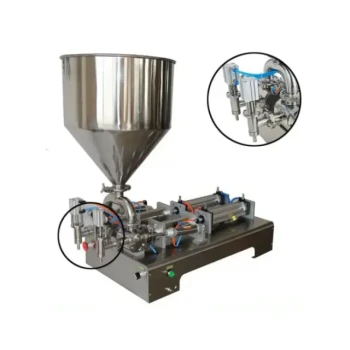
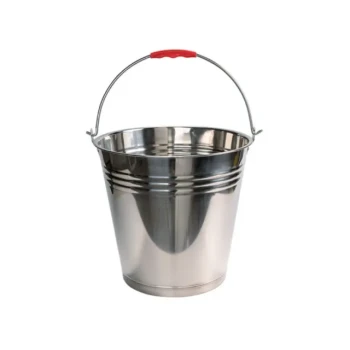
In high-humidity tropical environments, the primary role of honey packaging and filling equipment is rigorous moisture control. By maintaining the moisture content of finished honey below 20%, specialized equipment inhibits fermentation and extends shelf life. This technology is the critical defense line against environmental moisture absorption, ensuring the product meets international safety standards like the Codex Alimentarius.
Core Takeaway Honey is naturally hygroscopic (water-absorbing), making it highly susceptible to spoilage in tropical climates. Professional filling equipment and high-barrier packaging are essential to lock moisture levels below the critical 20% threshold, preventing fermentation and ensuring the product remains viable for export and premium markets.
The Battle Against Moisture and Spoilage
In tropical regions, the ambient humidity is often far higher than the equilibrium relative humidity of honey. This creates a constant pressure for moisture to migrate into the product.
The Fermentation Threshold
The most critical function of your equipment is maintaining moisture content below 20%. Above this level, dormant yeasts in honey become active, leading to rapid fermentation and spoilage.
Closed-Loop Isolation
Industrial-grade filling equipment utilizes closed-loop operations. This isolates the honey from the humid external atmosphere during the critical transfer from storage tanks to bottles.
Preventing Re-absorption
By minimizing air contact during processing, the equipment prevents the honey from "drinking" atmospheric moisture. This preserves the viscosity and chemical stability achieved during the harvest and filtration stages.
Ensuring Hygiene and Process Integrity
Beyond moisture control, high-humidity environments are breeding grounds for bacteria and mold. Your equipment acts as a sanitation firewall.
Eliminating Secondary Contamination
Automated filling systems reduce human intervention. This prevents secondary contamination from biological agents that thrive in warm, wet climates.
Material Inertness
High-standard equipment uses food-grade stainless steel for pump bodies and pipelines. This is chemically inert and prevents corrosion or leaching, which can be accelerated by humidity and the acidic nature of honey.
Filtration and Purity
Professional machinery integrates standardized filtration systems. These remove impurities that could act as nucleation points for crystallization or spoilage, doing so without stripping the honey of its nutritional components.
Market Access and Standardization
Inconsistent processing is a barrier to entry for high-value markets. Equipment serves as a standardization tool.
International Compliance
To export from a tropical region to markets like the EU or North America, you must meet strict standards such as the Codex Alimentarius. Precision equipment ensures your product consistently meets the chemical and physical requirements defined by these bodies.
Traceability and Metering
Modern equipment offers precise metering. This ensures that every unit is uniform in volume and weight, a requirement for retail channels. It also supports traceability, allowing you to track batches through the supply chain.
Understanding the Trade-offs
While advanced equipment is vital, it is not a magic solution. You must balance technology with material science.
Equipment vs. Packaging Materials
The best filling machine cannot save honey packed in poor materials. Permeability is the enemy. If your packaging material allows gas exchange, moisture will penetrate the bottle over time, regardless of how dry the honey was when filled.
Automation vs. Complexity
High-precision automated systems require stable power and technical maintenance. In some tropical regions, maintaining these sophisticated machines can be challenging compared to simpler, manual systems, though manual systems pose higher contamination risks.
Cost vs. Barrier Protection
High-barrier consumables (bottles and seals) that block moisture are more expensive than standard plastics. You must weigh the cost of these materials against the potential loss of product value due to spoilage.
Making the Right Choice for Your Goal
The equipment and packaging you choose should align with your specific business objectives.
- If your primary focus is International Export: Prioritize automated, closed-loop filling systems and high-barrier glass or heavy-grade plastic packaging to strictly guarantee moisture stays below 20% for long transit times.
- If your primary focus is Local Quick-Turnover Sales: You may utilize semi-automatic equipment, but ensure strict hygiene protocols and airtight sealing to prevent immediate fermentation before consumption.
- If your primary focus is Organic Certification: Invest in equipment with full stainless steel contact parts and clean-in-place (CIP) capabilities to meet rigorous traceability and hygiene standards.
Ultimately, in a tropical climate, your packaging line is not just a logistical tool; it is the primary preservation system that protects your harvest's value.
Summary Table:
| Feature | Function in Tropical Environments | Impact on Honey Quality |
|---|---|---|
| Closed-Loop Filling | Isolates honey from humid ambient air | Prevents moisture re-absorption and fermentation |
| Moisture Control | Maintains water content below 20% | Inhibits yeast activity and extends shelf life |
| Precision Metering | Ensures uniform volume and weight | Meets international standards (Codex Alimentarius) |
| Inert Materials | Food-grade stainless steel construction | Prevents corrosion and chemical leaching |
| High-Barrier Seals | Airtight packaging and capping | Blocks gas exchange and long-term moisture ingress |
Secure Your Harvest with Professional Honey Processing Solutions
In humid tropical climates, the right equipment is the difference between a premium product and a total loss. HONESTBEE specializes in supporting commercial apiaries and distributors with high-performance, closed-loop honey-filling machines and specialized hardware designed to withstand challenging environments. From hive-making machinery to precise honey-packaging lines and essential beekeeping consumables, we provide the end-to-end tools you need to meet international standards and maximize your market value.
Protect your honey's quality and scale your export potential today.
Contact HONESTBEE for a Professional Consultation
References
- Jordanna Hinton, David Lloyd. An Overview of Rural Development and Small-Scale Beekeeping in Fiji. DOI: 10.1080/0005772x.2019.1698104
This article is also based on technical information from HonestBee Knowledge Base .
Related Products
- Double Nozzle Small Honey Filling Machine Honey Sachet Packing Packaging Equipment
- Small Honey Filling Machine Sachet Packing Equipment Single Nozzle
- Fully Automatic Honey Filling Packaging Machine for Processing Line
- Economy Small Honey Filling Machine Honey Bottle Filler Packaging Machine
- Precision Automated Packaging Turntable Honey Spoon Filling Sealing Packing Machine
People Also Ask
- How does industrial honey-filling machinery support Robinia pseudoacacia stands? Maximize Your Acacia Honey Yield
- What value do retail packaging equipment and filling technologies provide in the honey distribution process? Maximize ROI
- Why is precision temperature control necessary for red honey filling? Preserve Amorpha fruticosa Color and Aroma
- How does specialized honey filling equipment contribute to honey distribution? Scale Your Wholesale Efficiency Today
- Why is high-precision honey filling equipment necessary? Secure the medicinal value and ROI of stingless bee honey.