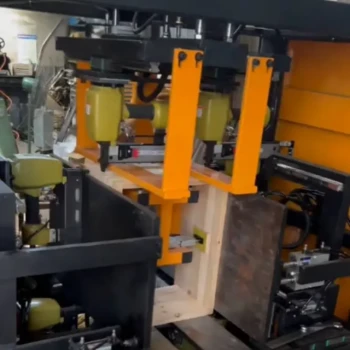
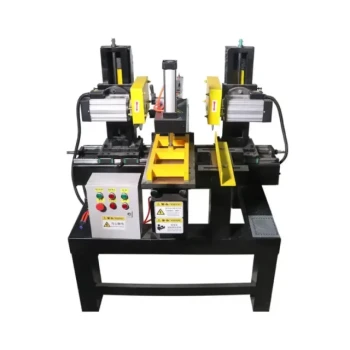
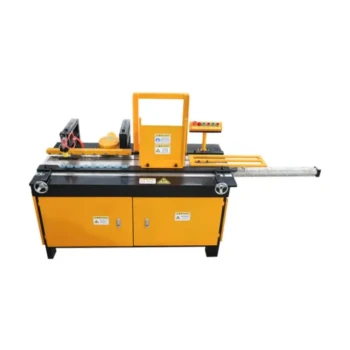
Industrial-grade beehive manufacturing machinery acts as the foundational control mechanism for establishing large-scale urban beekeeping infrastructure. By ensuring rigorous consistency in physical structure, ventilation performance, and thermal insulation, this technology transforms beehives from variable artisanal products into precision scientific instruments. This standardization is critical for valid urban ecology research, as it eliminates hardware discrepancies that would otherwise skew data regarding colony health and density.
The primary role of this machinery is to establish a scientific baseline for sustainable urban planning. By mass-producing hives with identical physical properties, it converts beekeeping hardware from a biological variable into a constant, enabling accurate quantitative assessments of urban carrying capacities.
The Science of Standardization in Urban Environments
Eliminating Hardware Variables
In urban beekeeping research, distinguishing between environmental stressors and equipment failure is difficult. Industrial machinery removes the "container" as a variable by using high-precision processing to ensure every hive performs exactly the same.
This consistency ensures that observed differences in colony growth or survival are attributable to the urban environment (such as forage availability or pollution), rather than irregular ventilation or insulation in the hive structure.
Quantifying Urban Carrying Capacity
To determine how many bee colonies a city can sustainably support, data must be comparable across different sites. Standardized processing allows for scientifically comparable assessments of colony density.
When infrastructure is uniform, researchers and planners can accurately measure "carrying capacity"—the maximum population size of bees an urban area can support without ecosystem collapse.
Ensuring Consistent Microclimates
Bees are highly sensitive to temperature and airflow. Industrial manufacturing ensures that thermal insulation and ventilation metrics are identical across thousands of units.
This uniform microclimate helps stabilize colony health, ensuring that large-scale infrastructure projects do not fail due to widespread thermal inefficiencies in the housing.
Operational and Commercial Implications
Precision and Interchangeability
Beyond research, high-precision machinery ensures that all components—frames, boxes, and covers—are strictly interchangeable. This adherence to biological parameters, such as "bee space," prevents burr comb buildup and facilitates management.
For large-scale operations, this means parts from one apiary can be used in another without modification, significantly reducing maintenance complexity and labor costs.
Biosecurity and Disease Control
A standardized physical environment is fundamental for maintaining biosecurity. Smooth, machine-finished surfaces and precise joinery leave fewer gaps for pests and make cleaning more effective.
This structural uniformity minimizes disease transmission vectors, a critical factor when managing high-density apiaries in populated urban centers.
Understanding the Trade-offs
The Cost of Rigid Standardization
While industrial machinery creates consistency, it also creates rigidity. Standardized hives may not be optimized for unique micro-climates within a diverse city landscape.
A "one-size-fits-all" approach, while good for data comparison, might result in a hive that is slightly suboptimal for specific extreme weather pockets, compared to a custom-modified solution.
Capital Intensity vs. Unit Cost
The primary benefit of this machinery is the reduction of unit cost through economies of scale. However, this shifts the barrier to entry from labor to capital.
Implementing this level of infrastructure requires significant upfront investment in machinery, making it accessible primarily to large-scale organizations or municipal programs rather than individual hobbyists.
Making the Right Choice for Your Goal
When evaluating the use of industrial manufacturing for urban beekeeping, consider your primary objective:
- If your primary focus is Research and Sustainability: Prioritize machinery that guarantees thermal and ventilation consistency to ensure your data on urban carrying capacity is scientifically valid.
- If your primary focus is Commercial Scaling: Focus on the machinery's ability to produce interchangeable parts and lower unit costs to maximize operational efficiency and ease of transport.
Ultimately, industrial-grade machinery is the prerequisite for moving urban beekeeping from a hobbyist pursuit to a measurable, reproducible science.
Summary Table:
| Key Feature | Impact on Urban Beekeeping Infrastructure |
|---|---|
| High-Precision Joinery | Eliminates hardware variables; ensures identical ventilation and insulation across all units. |
| Interchangeable Parts | Adheres to strict 'bee space' parameters; reduces labor costs and maintenance complexity. |
| Surface Finishing | Machine-finished smooth surfaces enhance biosecurity by minimizing pest and disease vectors. |
| Mass Production | Lowers unit costs through economies of scale, enabling large-scale municipal or commercial rollouts. |
Scale Your Apiary Operations with HONESTBEE
Transition from hobbyist methods to professional-grade efficiency. HONESTBEE specializes in supporting commercial apiaries and distributors by providing a comprehensive wholesale ecosystem. Whether you require hive-making machinery to standardize your infrastructure, honey-filling machines for high-volume production, or a reliable supply of beekeeping tools and consumables, we deliver the precision and durability your business demands.
Ready to optimize your urban or commercial beekeeping infrastructure? Contact HONESTBEE Today to discuss our volume discounts and specialized equipment solutions.
References
- Joan Casanelles‐Abella, Marco Moretti. Author Correction: Challenging the sustainability of urban beekeeping using evidence from Swiss cities. DOI: 10.1038/s42949-022-00059-9
This article is also based on technical information from HonestBee Knowledge Base .
Related Products
- High-Efficiency Pneumatic Bee Hive Making Machine for Rapid Box Assembly
- HONESTBEE Top Bar & Bottom Bar Forming Machine | Bee Frame Machine
- Automatic High-Speed Bee Hive Box Stapling Machine
- Mini Desktop Bee Hive Frame Forming Making Machine
- Beehive Machine Double End Saw for Precision Hive Component Manufacturing
People Also Ask
- How does the introduction of professional beehive-making machinery benefit sustainable beekeeping? Scale Your Apiary
- Why is specialized beehive-making machinery critical for low-defense breeding? Enhance Selection with Precision Tools
- How does the introduction of specialized beehive making machinery contribute to increasing the scale of regional beekeeping industries?
- What is the importance of specialized beehive making machinery in a circular bio-economy? Build Local Sustainability
- Why is specialized beehive-making machinery essential? Scale Your Apiary with Precision Industrial Standards