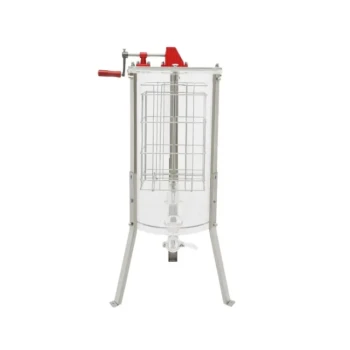
Specialized processing equipment turns a honey and beeswax collection center from a storage point into a reliable commercial-processing hub. Extraction, filtration, settling, filling, and wax-processing machinery enables hygienic handling, reduces post-harvest losses, standardizes product quality, and prepares bulk bee products for wholesale, export, and industrial buyers.
A well-equipped collection center protects product quality at every stage—from comb reception to final packaging—while creating the volume, consistency, and traceability required for commercial distribution.
Why Equipment Is Central to Collection-Center Performance
Collection centers must do more than aggregate raw products
Beekeepers typically deliver honeycombs, raw honey, uncapping debris, and beeswax in different physical conditions. Without controlled processing, impurities, moisture variation, contamination, and inconsistent packaging can reduce the value of the entire consolidated lot.
Specialized equipment allows a center to receive products from multiple producers and process them according to a consistent operating procedure. This is essential for cooperatives, distributors, wholesalers, and exporters that need predictable quality rather than mixed, unprocessed supply.
Equipment protects hygiene and reduces post-harvest loss
Food-grade stainless-steel contact surfaces, enclosed processing steps, and suitable filtration and settling systems help prevent contamination during handling. Mechanized operations also reduce unnecessary exposure to dust, debris, and unsuitable handling surfaces.
Efficient extraction and recovery equipment helps prevent valuable honey from remaining in combs or wax residues. Proper wax processing similarly recovers usable beeswax that might otherwise be discarded with uncapping debris.
The Processing Workflow a Collection Center Requires
Uncapping equipment prepares combs efficiently
Electric uncapping knives, heated knives, and automated uncapping machines remove the wax seals covering mature honey. This creates a controlled first step before extraction and improves throughput when a center handles large volumes.
The choice between manual and automated uncapping depends on incoming volume, labor availability, budget, and the desired processing speed. The equipment should remove cappings effectively without unnecessarily damaging the comb.
Honey extractors separate honey from combs
Centrifugal honey extractors use controlled physical force to remove honey while helping preserve the comb structure for potential reuse. Tangential extractors are generally suited to smaller or mixed-scale operations, while radial extractors can process more frames efficiently in larger facilities.
Extractor capacity should match the center’s expected intake, not just the output of a single beekeeper. Undersized machinery creates bottlenecks, while excessive capacity increases capital cost and may remain underused.
Filtration and settling improve consistency
After extraction, honey commonly passes through one or more stainless-steel strainers to remove wax particles, bee parts, and other visible impurities. Double-stage filtration can provide more consistent clarification than relying on a single coarse screen.
Settling tanks then allow finer particles and trapped air to separate from the honey before filling. These steps improve appearance and physical consistency without requiring aggressive processing that could unnecessarily alter the product.
Filling and packaging systems support commercial sale
Honey-filling machines provide more consistent container weights, cleaner filling, and faster order preparation than manual transfer alone. They are particularly valuable when a collection center supplies retailers, wholesalers, private-label customers, or export orders.
Packaging equipment should be selected around the intended market. Bulk drums, food-grade containers, retail jars, and other formats require different filling, sealing, labeling, and handling arrangements.
Wax melters and presses recover beeswax value
Solar or steam wax melters separate beeswax from uncapping residues and other debris. Wax presses can further improve recovery and produce cleaner, more compact wax blocks suitable for storage, resale, foundation molding, or other commercial uses.
A dedicated wax line prevents beeswax processing from disrupting the honey workflow. It also gives collection centers a second revenue stream from a by-product that would otherwise have limited value.
How Equipment Creates Commercial Advantages
Standardization strengthens buyer confidence
Professional filtration, settling, and filling systems help a center produce lots with more consistent clarity, physical condition, and packaging. Standardized processing makes it easier for buyers to evaluate, compare, and repeatedly purchase the product.
For distributors and wholesalers, consistency is often as important as the initial product quality. Reliable specifications reduce complaints, simplify inventory planning, and support long-term supply agreements.
Larger-scale handling can reduce logistics costs
Collection centers consolidate products from multiple beekeepers before processing and shipment. This creates more efficient use of transport, storage, packaging, and labor than moving many small, unprocessed lots separately.
The result is infrastructure for moving from fragmented small-scale production toward commercial distribution. However, consolidation only creates value when the center can maintain lot separation, hygiene, and clear quality records.
Processing increases market access and product value
Raw honey and mixed beeswax may not meet the presentation or handling requirements of professional buyers. Filtration, settling, controlled packaging, and wax purification make the products more suitable for food markets, manufacturing, resale, and export channels.
The equipment does not replace laboratory testing or regulatory compliance. Instead, it provides the controlled physical-processing foundation needed to achieve and maintain the relevant commercial standards.
Preserving product characteristics requires controlled processing
Centrifugal extraction and appropriate filtration can remove impurities while limiting unnecessary physical damage to the honey and comb. Temperature control is also important, because excessive heating may affect the product’s natural characteristics.
For specialized bee products such as pollen or royal jelly, additional equipment and low-temperature handling may be required. These products have different physical properties and should not automatically be processed using the same methods as honey or beeswax.
Understanding the Trade-offs
More automation requires more investment
Automated uncapping, extraction, filling, and wax-processing systems can increase throughput and reduce manual labor. They also require higher initial investment, operator training, maintenance, electrical infrastructure, and spare-parts support.
A practical center should scale equipment to actual collection volumes and realistic growth projections. Buying a complete industrial line before demand is established can create unnecessary financial pressure.
Processing equipment does not correct poor raw material
Filtration can remove visible impurities, but it cannot fully compensate for poor harvesting practices, excessive moisture, fermentation, pesticide exposure, or unsuitable storage. Quality control must begin when beekeepers harvest and deliver the product.
Collection centers should therefore combine machinery with supplier guidance, receiving inspections, clean containers, moisture checks where appropriate, and documented acceptance procedures.
Poor equipment selection can create bottlenecks
A high-capacity extractor is of limited value if uncapping, filtration, settling, filling, or packaging cannot keep pace. The entire workflow should be designed as a connected system rather than as a collection of isolated machines.
Equipment compatibility, cleanability, spare-parts availability, and local technical support are also critical. Fast delivery and responsive service matter because extended downtime can interrupt seasonal purchasing and customer fulfillment.
Hygiene depends on operating discipline
Food-grade equipment only delivers hygienic results when it is correctly installed, cleaned, maintained, and operated. Dead spaces, difficult-to-clean surfaces, damaged seals, or poor drainage can undermine an otherwise professional facility.
Training and standard operating procedures should cover cleaning, product changeover, equipment inspection, storage, and traceability. These practices protect both product quality and the center’s commercial reputation.
Making the Right Choice for Your Goal
A collection center should build its equipment plan around product volume, buyer requirements, available utilities, labor conditions, and future expansion.
- If your primary focus is hygienic bulk honey distribution: Prioritize food-grade extraction, staged filtration, settling tanks, clean storage, and consistent filling equipment.
- If your primary focus is beeswax recovery and resale: Add solar or steam wax melters and wax presses designed to produce clean, commercially usable wax.
- If your primary focus is higher throughput: Balance uncapping, extraction, filtration, settling, and packaging capacities so that one slow stage does not constrain the entire line.
- If your primary focus is serving wholesalers and exporters: Emphasize standardized processing, lot control, packaging flexibility, documentation, and equipment support.
- If your primary focus is controlling investment risk: Start with modular equipment matched to current supply and select machinery that can be expanded as collection volumes grow.
- If your primary focus is sourcing efficiency: Work with a supplier capable of providing the full equipment portfolio, technical guidance, responsive service, spare parts, and coordinated order fulfillment.
The right processing system enables a collection center to deliver cleaner products, stronger market consistency, and greater commercial value across the entire honey and beeswax supply chain.
Summary Table:
| Equipment Category | Purpose | Key Benefit |
|---|---|---|
| Uncapping Equipment | Removes wax seals from honeycombs | Improves efficiency and throughput |
| Honey Extractors | Separates honey from comb | Preserves comb structure and quality |
| Filtration & Settling Tanks | Removes impurities and air bubbles | Ensures consistent clarity and purity |
| Filling & Packaging Systems | Packages honey into containers | Maintains weight consistency and speed |
| Wax Melters & Presses | Recovers beeswax from debris | Adds revenue stream and reduces waste |
Maximize efficiency and profitability of your honey and beeswax collection center with HONESTBEE’s comprehensive equipment range. From extraction to packaging, we supply top-quality machinery and expert guidance. Contact us today to discuss your setup and discover fast, reliable solutions tailored for distributors and commercial beekeepers. Get a quote — ensure consistent quality and timely delivery for your buyers.
Related Products
- Honey Wax Separating Wax Press with Metal Screw Wax Separator Machine
- HONESTBEE 2 Frame Manual Acrylic Honey Extractor Beekeeping Equipment
- Food Grade Plastic Honey Bucket Pail for Beekeeping
- Stainless Steel Jack Type Honey Comb Press Machine Wax and Honey Separator
- Assembled Wooden Bee Frames with Beeswax Foundation Ready to Use by HONESTBEE
People Also Ask
- How do I separate honey from wax? A Two-Stage Process for Maximum Yield
- How do you separate honey from wax cappings? Choose the Best Method for Your Harvest
- How do you separate honey from wax at home? A Simple Guide to Zero-Waste Harvesting
- What is the importance of separating honey from wax? Master Product Purity & Processing Efficiency
- What temperature does wax separate from honey? Achieve Clean, Efficient Honey Rendering