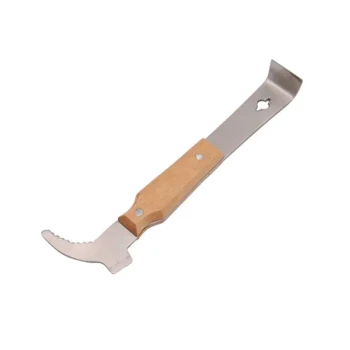
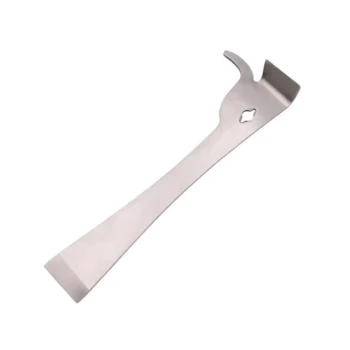
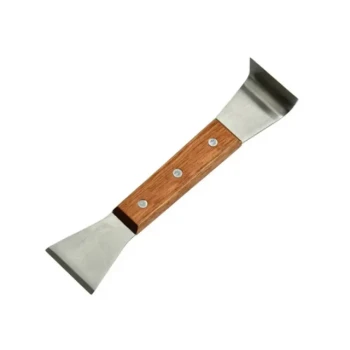
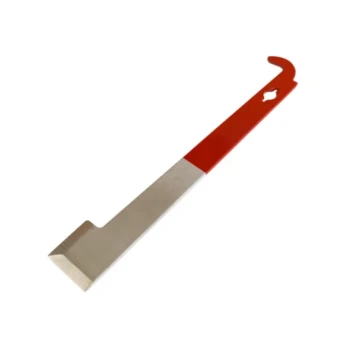
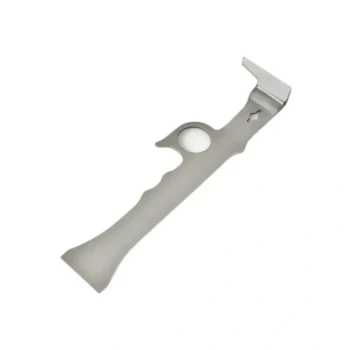
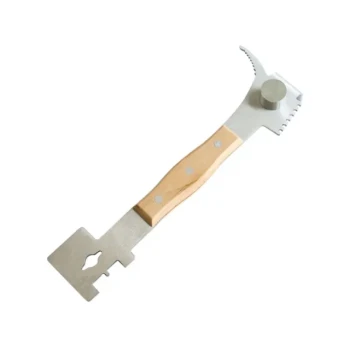
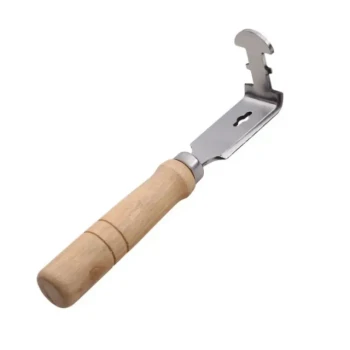
Specialized hive tools primarily address two critical maintenance issues: the mechanical separation of hive components bonded by propolis, and the removal of excess material to ensure proper equipment fit. By utilizing high-strength metal blades and engineered leverage points, these tools allow beekeepers to pry open stuck covers and frames that manual force cannot budge, while simultaneously serving as scrapers to maintain the internal structure of the hive.
Core Takeaway While generic prying instruments exist, specialized hive tools are specifically designed to counteract the adhesive strength of propolis without damaging wooden ware. They provide the necessary precision to maintain hive hygiene and structural integrity while minimizing the risk of crushing bees during routine inspections.
Overcoming the Propolis Seal
The most immediate maintenance challenge in beekeeping is accessing the hive itself. Bees instinctively seal crevices and glue components together with a resinous substance called propolis.
Breaking the Chemical Bond
Propolis is a highly adhesive "bee glue" that hardens over time, effectively fusing the hive cover to the body and the frames to their rests.
Without a specialized tool, these components are nearly impossible to separate by hand without causing significant disruption.
The Mechanics of Leverage
Hive tools are designed with specific fulcrum points and high-strength steel to generate substantial force.
This leverage allows the beekeeper to "crack" the propolis seal efficiently.
Unlike standard screwdrivers, the broad, flat blade spreads this force over a wider area, preventing the wood from splintering under pressure.
Managing Internal Hive Hygiene
Once the hive is open, the maintenance focus shifts to cleanliness and geometry. Bees often build wax in areas where it is not desired, which can impede hive function.
Removing Burr Comb and Excess Wax
Bees continuously produce wax and may build "burr comb" (bridge comb) between frames or hive bodies.
If left unchecked, this excess wax hardens and alters the internal dimensions of the hive, making future inspections difficult.
The sharp, flat edges of the hive tool are used to scrape away this buildup, restoring the hive interior to its correct specifications.
Maintaining Structural Integrity
Regular scraping maintains the "bee space"—the precise gap required between components.
By removing propolis and wax buildup from the frame ears and rails, the tool ensures that frames sit flush and boxes stack squarely.
This maintenance prevents gaps that could allow pests to enter or compromise the hive's climate control.
Facilitating Safe Inspections
Beyond simple prying and scraping, the design of the hive tool addresses the delicate nature of working with live insects.
Precise Frame Separation
Frames often become glued together side-by-side.
The tool allows for a vertical, precise separation of these tightly adhered frames.
This control is vital for preventing the accidental crushing of bees, which releases alarm pheromones and creates a defensive reaction in the colony.
Operational Continuity
Routine tasks, such as frame inspections and honey harvesting, rely on speed and smoothness to minimize stress on the colony.
The hive tool acts as a multitasking instrument—prying, lifting, and scraping—which streamlines the workflow.
This efficiency ensures that hive repairs and checks are completed quickly, reducing the time the hive is left open and vulnerable.
Common Pitfalls to Avoid
While indispensable, the hive tool is a sharp, steel instrument used on wooden boxes and soft wax; improper use leads to damage.
Gouging Wooden Components
A common mistake is applying leverage without ensuring the blade is fully inserted between components.
This can gouge the wood, creating new rough surfaces where propolis will accumulate even more heavily in the future.
Damaging the Wax Foundation
When scraping frames, it is easy to slip and slice into the drawn comb or the wax foundation.
This damages the bees' storage area and forces them to expend energy repairing the comb rather than producing honey or brood.
Making the Right Choice for Your Goal
When selecting or using a hive tool, your technique should adapt to your immediate objective.
- If your primary focus is Equipment Longevity: Prioritize the scraping function to remove propolis buildup regularly, ensuring wooden components remain square and undamaged.
- If your primary focus is Colony Health: Focus on using the tool's leverage for precise, slow movements to separate frames without crushing bees or rolling them during removal.
- If your primary focus is Efficiency: Utilize the tool as a multi-purpose extension of your hand to transition seamlessly between prying covers and cleaning burr comb.
By mastering the leverage and scraping functions of the hive tool, you transform a simple steel bar into the key for sustainable, low-impact hive management.
Summary Table:
| Maintenance Issue | Specific Problem | Hive Tool Solution |
|---|---|---|
| Propolis Seals | Components fused by "bee glue" | High-strength steel blades provide leverage to "crack" seals without splintering wood. |
| Burr Comb | Excess wax bridging frames/bodies | Sharp scraping edges remove buildup to maintain precise "bee space" and internal geometry. |
| Frame Sticking | Frames glued side-by-side | Vertical prying allows for precise separation, preventing bee crushing and alarm pheromones. |
| Structural Gaps | Debris preventing flush stacking | Cleaning frame rests and rails ensures boxes stack squarely to keep out pests. |
Maximize Your Apiary Productivity with HONESTBEE
Efficient hive maintenance is the backbone of a successful commercial operation. At HONESTBEE, we specialize in supporting commercial apiaries and distributors with premium, high-strength beekeeping tools and machinery.
Whether you need precision hive tools for daily maintenance, specialized hive-making and honey-filling machines, or essential industry consumables, our comprehensive wholesale offering is designed to scale with your business. Let us provide the hardware and expertise you need to ensure colony health and operational longevity.
Contact HONESTBEE today to discuss your wholesale needs!
References
- Emmanuel Bintaayi Jeil, Michael Adjaloo. Livelihood security along beekeeping value chain: lessons from Ghana’s beekeeping experience. DOI: 10.1007/s10708-019-09982-4
This article is also based on technical information from HonestBee Knowledge Base .
Related Products
- HONESTBEE Professional Long Handled Hive Tool with Precision Cutting Blade
- HONESTBEE Professional Multi-Functional Hive Tool with Ergonomic Wood Handle
- Professional Multi-Function Stainless Steel Hive Tool
- Professional Dual-End Stainless Steel Hive Tool for Beekeeping
- Professional Stainless Steel Pry-Bar Hive Tool
People Also Ask
- Why are professional hive tools considered indispensable? Master Beekeeping Maintenance with Precision Leverage
- What is the role of professional hive tools in routine apiary maintenance? Expert Tips for Hive Health and Longevity
- What is a bee hive tool? Discover Why It’s the Most Essential Hand Tool for Every Beekeeper
- How do hive tools and queen rearing equipment facilitate the bee colony splitting process? Restore Your Apiary Faster
- Why are professional hive tools & observation equipment necessary for queen rearing evaluation? Master Your Quality