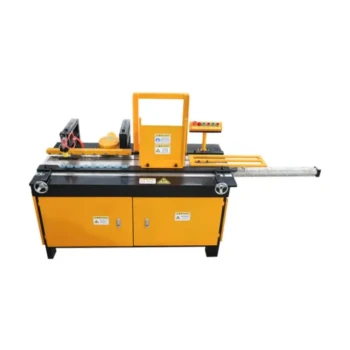
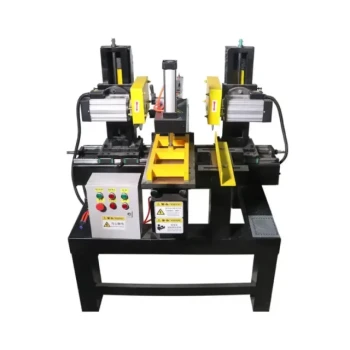
Industrial-grade hive-making machines provide the critical infrastructure for standardization and autonomous production. By manufacturing hive components like frames and boxes with exact dimensions, these systems ensure every part is interchangeable across different apiaries. This technical consistency drastically reduces maintenance complexity and lowers operational costs for the entire cooperative.
For large-scale cooperatives, the value lies in transforming hive hardware from a variable struggle into a consistent standard. Industrial automation ensures technical uniformity, allowing for streamlined management and significant cost control at the very beginning of the production chain.
Achieving Technical Consistency at Scale
Precision and Standardization
The primary value of industrial machinery is the ability to manufacture components with precise dimensions. Unlike manual production, which allows for variance, industrial machines ensure high levels of standardization.
The Power of Interchangeability
This precision creates fully interchangeable parts. A frame made today fits perfectly into a box made next year.
For a large cooperative, this means components can be moved seamlessly between different apiaries without compatibility issues.
Streamlined Maintenance
Standardization directly impacts maintenance. When parts are uniform, repairing or replacing damaged components becomes a simple, repeatable process rather than a custom carpentry job.
Economic Advantages for the Cooperative
Controlling Initial Costs
Local, industrial manufacturing allows the cooperative to control costs at the beginning of the production chain. By producing their own hardware, the cooperative removes the markup of third-party vendors.
Reducing Individual Investment
Centralized production reduces the burden on individual members. Instead of every beekeeper purchasing their own equipment or small-scale tools, the cooperative leverages industrial woodworking machinery to serve the whole group.
This lowers the fixed asset investment required for individual members, democratizing access to high-quality equipment.
Operational Autonomy
Industrial machines allow for large-scale, autonomous production. The cooperative is no longer dependent on external supply chains' timelines or fluctuating prices.
Understanding the Strategic Trade-offs
Capital Intensity vs. Operational Savings
While the long-term operational costs decrease, acquiring industrial-grade machinery requires a significant upfront capital expenditure. Cooperatives must weigh this initial "fixed asset investment" against the long-term savings in maintenance and per-unit production costs.
Centralized Failure Points
Shifting to centralized manufacturing consolidates risk. If the primary industrial machinery requires repair, it can bottleneck hardware availability for the entire cooperative, unlike distributed, manual production.
Making the Right Choice for Your Goal
To determine if industrial automation is the right step for your cooperative, consider your current operational bottlenecks.
- If your primary focus is Reducing Operational Friction: Prioritize machinery that guarantees 100% component interchangeability to eliminate maintenance downtime.
- If your primary focus is Member Economics: Focus on the system’s ability to lower individual fixed asset investments by centralizing the production burden.
By securing control over the manufacturing process, a cooperative moves from simply managing bees to mastering its own supply chain.
Summary Table:
| Key Value Driver | Industrial-Grade Benefit | Cooperative Impact |
|---|---|---|
| Technical Consistency | Precise dimensions & standardization | 100% interchangeability across apiaries |
| Cost Efficiency | Elimination of 3rd-party markups | Lower initial investment for individual members |
| Maintenance | Simplified, repeatable repairs | Drastic reduction in operational downtime |
| Supply Chain | Autonomous, large-scale production | Independence from external supplier timelines |
Transform Your Cooperative's Infrastructure with HONESTBEE
At HONESTBEE, we specialize in empowering commercial apiaries and distributors with the industrial-grade tools necessary for global competition. Our comprehensive wholesale offering includes everything from high-precision hive-making and honey-filling machines to a full spectrum of beekeeping hardware and essential consumables.
By partnering with us, you gain a strategic ally dedicated to lowering your operational friction and maximizing your production autonomy. Whether you need specialized woodworking machinery or honey-themed cultural merchandise, we provide the technical foundation your cooperative needs to scale effectively.
Ready to master your own supply chain? Contact us today to explore our wholesale solutions.
References
- Salimata Ouattara, Kouami Kokou. State of Knowledge on Beekeeping Practices in Côte d'Ivoire in the Face of Challenges and Opportunities in the Context of Climate Change. DOI: 10.19044/esj.2023.v19n30p46
This article is also based on technical information from HonestBee Knowledge Base .
Related Products
- High-Efficiency Pneumatic Bee Hive Making Machine for Rapid Box Assembly
- Beehive Handle and Frame Rest Cutting Machine: Your Specialized Hive Machine
- Beehive Machine Double End Saw for Precision Hive Component Manufacturing
- Mini Desktop Bee Hive Frame Forming Making Machine
- Automatic High-Speed Bee Hive Box Stapling Machine
People Also Ask
- How does the introduction of professional beehive-making machinery benefit sustainable beekeeping? Scale Your Apiary
- Why is specialized beehive-making machinery critical for low-defense breeding? Enhance Selection with Precision Tools
- How does the introduction of specialized beehive making machinery contribute to increasing the scale of regional beekeeping industries?
- What is the importance of specialized beehive making machinery in a circular bio-economy? Build Local Sustainability
- Why is specialized beehive-making machinery essential? Scale Your Apiary with Precision Industrial Standards