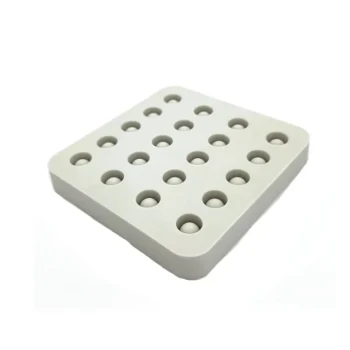
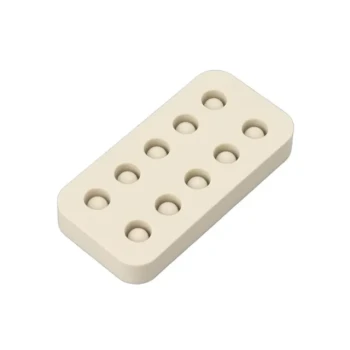
Factory-produced standard artificial cell bowls are recommended primarily for their precise geometric consistency, which maximizes biological efficiency. With a standardized 6mm base diameter and 10mm height, these bowls accurately mimic the physical structure of natural queen cells. This precise shaping significantly increases the acceptance rate of grafted larvae by worker bees while ensuring a uniform volume for royal jelly accumulation.
By replicating the exact physical environment of natural queen cells, these standardized components allow apiarists to transform queen rearing and royal jelly harvesting from a variable manual task into a systematic, high-yield production process.
The Mechanics of Acceptance and Yield
Mimicking Natural Geometry
The success of queen rearing hinges on triggering specific biological instincts in nurse bees. Factory bowls feature a 6mm base and 10mm height, dimensions that closely replicate a natural queen cell. This structural mimicry convinces worker bees to accept the grafted larvae and immediately begin the heavy secretion of royal jelly.
Standardizing Volume Control
In commercial operations, variable outputs create logical bottlenecks. Because factory-produced bowls are identical, the internal volume available for royal jelly storage is constant across every cell. This allows producers to predict yields accurately and maintain strict quality control standards for the harvested product.
Optimizing the "Doolittle" Method
These bowls are designed to function as seamless consumables in the modified Doolittle grafting method. By using standardized cups, technicians can focus entirely on the delicate transfer of larvae. The uniformity eliminates the need to adjust grafting techniques for irregular handmade cups.
Material Benefits and Sanitation
Ensuring Purity with Food-Grade Materials
Modern artificial bowls are typically manufactured from food-grade plastic or acrylic. Unlike traditional beeswax cups that might introduce contaminants or debris, these synthetic materials ensure the harvested royal jelly remains pure.
Improving Workflow and Hygiene
The use of durable plastics facilitates the systematic harvesting of jelly and the cleaning of larvae. The smooth, consistent surfaces of factory bowls are easier to clean and reuse (if applicable) compared to natural wax, reducing the risk of disease transmission between cycles.
Understanding the Trade-offs
Factory Precision vs. Natural Wax
While supplementary methods exist for dipping hardwood molds into molten beeswax to create cups, this approach is labor-intensive and prone to irregularities. Factory bowls require an upfront purchase but save significant labor hours.
Material Compatibility
While plastic offers durability and hygiene, it lacks the natural scent of beeswax. However, the high acceptance rates of modern standard bowls suggest that the geometric precision outweighs the lack of natural material, provided the larvae are transferred correctly.
Making the Right Choice for Your Goal
To select the best equipment for your apiary, consider your primary operational objective:
- If your primary focus is Royal Jelly Production: Prioritize factory bowls for their consistent volume, which simplifies systematic harvesting and quantity tracking.
- If your primary focus is Queen Rearing: Rely on the specific 6mm/10mm dimensions of these bowls to maximize larval acceptance and ensure stable genetic traits in the new generation.
Standardization is the key to scaling your operation; by removing physical variables from the hive, you allow the colony to focus entirely on biological output.
Summary Table:
| Feature | Factory-Produced Cell Bowls | Handmade Wax Cups |
|---|---|---|
| Dimensions | Standardized (6mm base / 10mm height) | Variable and irregular |
| Acceptance Rate | High due to precise biological mimicry | Inconsistent |
| Material | Food-grade plastic/acrylic | Natural beeswax |
| Hygiene | Easy to clean; reduced disease risk | High risk of debris/contamination |
| Efficiency | Supports high-yield systematic production | Labor-intensive and manual |
| Volume | Constant for predictable jelly yields | Fluctuates between cells |
Scaling Your Apiary Operations with HONESTBEE
Maximize your production efficiency and ensure the highest genetic stability in your colonies with HONESTBEE. As a dedicated partner to commercial apiaries and distributors, we provide a comprehensive wholesale range of high-precision beekeeping tools. From standardized artificial cell bowls and hive-making machinery to honey-filling systems and cultural merchandise, we offer the full spectrum of equipment needed to transform your beekeeping into a high-yield systematic process.
Ready to optimize your harvest? Contact us today to discover how our professional-grade solutions can streamline your workflow and boost your bottom line.
References
- Elisabeth Jeini Hermi Toar, Joice J.I. Rompas. Developing Pollinating Insects Bees Honey Apis cerana by applying the Doolittle Method (Queen Rearing). DOI: 10.36378/juatika.v7i1.4106
This article is also based on technical information from HonestBee Knowledge Base .
Related Products
- Brown Nicot Queen Cell Cups for Breeding Queen Bees Beekeeping
- JZBZ Push-In Queen Cell Cups for Beekeeping
- JZBZ Type Wide Base Plastic Queen Cell Cups for Base Mounting and Queen Rearing
- No Grafting Queen Rearing Kit: System for Royal Jelly Production and Queen Rearing
- Premium Nicot Style Cell Bar Holder and Queen Cell Cup Holder System
People Also Ask
- What role do specialized queen rearing tools play in developing mite-resistant honeybee stock? Master Genetic Selection
- What materials are used to make artificial queen cell cups for grafting? Beeswax vs. Plastic Guide
- What roles do specialized queen cell cups play in royal jelly production? Optimize Your Hive's Secretion and Yield
- How does the standardized depth of queen cell cups affect larval acceptance? Boost Success with 6mm Precision
- Why is a diluted royal jelly solution applied to queen cell cups? Boost Acceptance in Artificial Grafting