High-precision industrial scales are the mandatory standard for isolating genetic potential from environmental noise in bee breeding. They are required to measure the exact total annual honey yield—including the food reserves left inside the hive—to provide the rigorous data necessary for Best Linear Unbiased Prediction (BLUP) models. By capturing precise weight increments, these scales ensure that breeding decisions are based on objective scientific evidence rather than estimates.
The core value of high-precision weighing is the elimination of variables. By accounting for factors like winter feed consumption and comb structure weight, these scales transform raw harvest numbers into accurate "net yield" data, allowing breeders to identify lineages with true genetic superiority in production and health.
The Foundation of Genetic Evaluation
Powering BLUP Models
Modern bee breeding relies on Best Linear Unbiased Prediction (BLUP) models to estimate the breeding value of a colony.
These statistical models require data that is free from subjective error. High-precision scales provide the granular data points needed to feed these algorithms, ensuring the resulting genetic evaluations are mathematically sound.
Correlating Yield with Health
Honey production is a dual indicator: it measures economic value and serves as a proxy for the physical health of the colony.
A colony that produces a high yield is typically disease-free and robust. Precision weighing allows breeders to detect subtle variances in yield that correlate with superior health traits, which might be missed by rough estimates.
Isolating "Pure" Yield Data
Eliminating Comb and Impurity Variables
To assess true productivity, one must distinguish between the honey and the equipment.
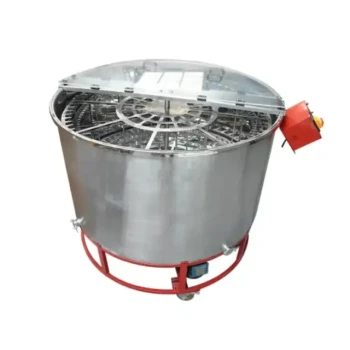
When used alongside industrial centrifugal extractors, high-precision scales record weights before and after harvesting. This process subtracts the weight of the comb structure and impurities, isolating the exact weight of the pure honey produced.
Removing Environmental Noise
Colony weight fluctuates due to environmental factors, not just honey production.
Industrial platform scales track weight changes specifically during honey flow periods. By focusing on these precise increments, breeders can filter out environmental weight fluctuations, ensuring the data reflects the colony's foraging capability rather than external anomalies.
Evaluating Efficiency and Reserves
Measuring Total Annual Yield
Yield assessment is not limited to the honey harvested by the beekeeper.
Accurate assessment requires measuring the total annual yield, which includes the food reserves remaining in the hive. High-precision scales capture this full picture, preventing breeders from selecting colonies that harvest well but starve due to poor reserve management.
Assessing Winter Feed Efficiency
Yield is also a function of resource consumption.
Scales are used to weigh colonies before and after they enter controlled winter environments. This data highlights feed efficiency and cold resistance, identifying colonies that maintain mass while consuming fewer resources during the winter months.
Understanding the Trade-offs
The Requirement for Protocol Consistency
Precision hardware is useless without precision methodology.
To gain valid data, measurements must be taken at specific intervals—specifically before and after key events like honey flow or extraction. Failing to record the "before" weight renders the "after" measurement scientifically useless for calculating genetic gain.
Data Complexity vs. Simple Selection
Using high-precision data increases the complexity of the breeding program.
Unlike simple "bucket weighing," this approach generates dense datasets involving increments, decrements, and net values. Breeders must be prepared to manage and analyze this data (via BLUP models) to derive value; the scales alone do not select the bees.
Making the Right Choice for Your Goal
To leverage high-precision scales effectively, align your data collection with your specific breeding objectives:
- If your primary focus is Genetic Gain: Prioritize the use of scales to feed BLUP models, ensuring every gram of total annual yield (harvest + reserves) is recorded.
- If your primary focus is Economic Efficiency: Focus on "net yield" calculations by weighing hives before and after extraction to eliminate comb weight and impurities from your data.
- If your primary focus is Winter Hardiness: Use platform scales to track weight loss during winter months to select for colonies with superior metabolic efficiency.
Precision measurement turns honey yield from a simple commodity into a definitive genetic map for future colony success.
Summary Table:
| Key Feature | Breeding Application | Benefit to Program |
|---|---|---|
| Precision Weighing | Data for BLUP Models | Mathematically sound genetic evaluations |
| Net Yield Isolation | Weighing before/after harvest | Removes comb & equipment weight variables |
| Incremental Tracking | Monitoring honey flow | Filters out environmental noise and anomalies |
| Efficiency Metrics | Winter mass monitoring | Identifies superior resource management & health |
| Total Annual Yield | Harvesting + Reserves | Full-picture assessment of colony productivity |
Scale Your Commercial Apiary with HONESTBEE Precision Solutions
To achieve genetic superiority in bee breeding, you need more than just tools—you need industrial-grade precision. HONESTBEE specializes in catering to commercial apiaries and distributors with a comprehensive wholesale offering designed for large-scale success.
Our extensive portfolio includes:
- Advanced Machinery: High-precision industrial scales, specialized hive-making equipment, and automated honey-filling machines.
- Commercial Tools: Durable centrifugal extractors and a full spectrum of professional beekeeping hardware.
- Essential Consumables: A wide array of industry-standard supplies and honey-themed cultural merchandise to diversify your brand.
Whether you are a distributor looking to stock high-quality equipment or a large-scale producer aiming for data-driven efficiency, HONESTBEE provides the reliability and technical support you need.
Contact us today to explore our wholesale catalogs and enhance your production!
References
- Andreas Hoppe, Kaspar Bienefeld. Substantial Genetic Progress in the International Apis mellifera carnica Population Since the Implementation of Genetic Evaluation. DOI: 10.3390/insects11110768
This article is also based on technical information from HonestBee Knowledge Base .
Related Products
- Precision Honey Refractometer Instrument for Quality Assessment
- Digital Honey Refractometer for Precision Measurement of Optimal Honey Quality
- Commercial Rotary Honey Filling Machine for Production
- HONESTBEE 72 Frame Industrial Electric Honey Extractor for Beekeeping
- Precision Durable Efficient HONESTBEE Rotary Honey Filling Machine
People Also Ask
- How do professional scientific instruments contribute to honey quality testing? Ensure Purity and Market Compliance
- How should a honey refractometer be stored? Ensure Long-Term Accuracy and Protect Your Investment
- How is honey applied to the refractometer? Ensure Accurate Moisture Content Measurement
- What substances can be used to calibrate a honey refractometer? Essential Solutions for Accurate Moisture Readings
- What are the two main types of honey refractometers? Comparing Manual vs. Digital for Quality Control