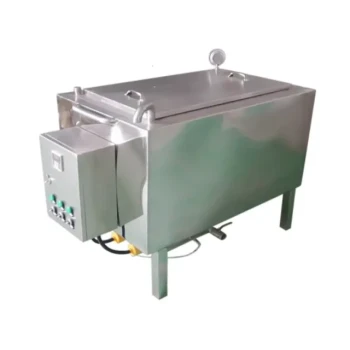
Incineration equipment and deep destruction processes are strictly necessary due to the extreme environmental resistance of American Foulbrood (AFB) spores. Because these pathogens cannot be reliably neutralized through conventional disinfection, professional beekeepers must utilize combustion to permanently destroy infected colonies and wooden hardware, ensuring the source of infection is completely severed.
While the total destruction of hive hardware represents a significant immediate asset loss, it is the only reliable physical method to neutralize Paenibacillus larvae spores, thereby preventing a wider epidemic and securing the long-term biosafety of the surrounding region.
The Biological Resilience of AFB
The Nature of the Pathogen
The driving force behind the need for incineration is the biology of the bacterium Paenibacillus larvae.
This pathogen produces bacterial endospores that are uniquely engineered for survival.
Extreme Environmental Resistance
These spores possess extreme environmental resistance, allowing them to withstand conditions that would kill most other bacteria.
Unlike standard vegetative bacteria, these spores do not degrade quickly outside a host.
Longevity of the Threat
Research indicates that these spores can survive on beehives, frames, and tools for decades.
If the equipment is not destroyed, it remains a latent reservoir for the disease, waiting to infect new colonies years later.
Why Conventional Methods Fail
Limitations of Disinfection
Standard chemical disinfection methods are often insufficient against AFB spores.
The protective outer shell of the spore renders many common sanitizers ineffective, meaning a hive that looks clean may still be biologically lethal.
The Necessity of Physical Destruction
Because the spores hide deep within the wood grain and comb, surface cleaning cannot guarantee safety.
Deep destruction via incineration is the only physical method capable of penetrating these materials to ensure 100% deactivation of the pathogen.
The Strategic Role of Incineration
Breaking the Chain of Transmission
The primary goal of using incineration equipment is to completely cut off the source of infection.
By reducing the infected material to ash, the beekeeper eliminates the possibility of spores transferring to healthy hives via drifting bees or shared tools.
Protecting Regional Biosafety
This process is not just about a single apiary; it is a matter of regional biosafety.
Because AFB is a highly contagious bacterial disease, failing to destroy one infection source puts every apiary in the surrounding flight range at risk of an epidemic.
Understanding the Trade-offs
The Cost of Total Loss
The most significant downside to this approach is the total loss of hive hardware.
Beekeepers must accept the financial hit of destroying expensive wooden frames and boxes, which cannot be salvaged once infected.
The Risk of Half-Measures
Attempts to save infected gear to avoid financial loss often result in a "false economy."
Retaining contaminated equipment almost invariably leads to re-infection, costing significantly more in lost honey production and colony collapse over time than the price of replacing the hardware.
Making the Right Choice for Biosafety
Deciding to incinerate assets is difficult, but it is a critical component of professional apiary management.
- If your primary focus is immediate containment: Prioritize the rapid identification and combustion of the infected colony to stop the spread immediately.
- If your primary focus is long-term viability: Accept the loss of hardware as an insurance premium that protects the health of your remaining stock and neighboring apiaries.
Ultimate control of American Foulbrood relies on the disciplined willingness to destroy the few to save the many.
Summary Table:
| Factor | Conventional Disinfection | Deep Incineration / Destruction |
|---|---|---|
| Pathogen Neutralization | Often ineffective against dormant spores | 100% deactivation of P. larvae spores |
| Transmission Risk | High (pathogens hide in wood grain) | Zero (source material reduced to ash) |
| Hardware Recovery | Possible but high risk of re-infection | Total loss of physical hardware |
| Long-term Security | Poor; spores can survive for decades | High; secures regional biosafety |
| Primary Use Case | Routine maintenance and mild sanitation | Severe American Foulbrood (AFB) outbreaks |
Protecting your apiary's long-term health requires the right tools and a commitment to biosafety. HONESTBEE supports commercial apiaries and distributors by providing the essential equipment needed to manage even the toughest industry challenges. From advanced hive-making and honey-filling machinery to a comprehensive range of wholesale beekeeping tools and consumables, we supply the hardware that keeps your business resilient. Don't let disease compromise your operation—contact us today to learn how our professional equipment solutions can safeguard your investment and optimize your production.
References
- Ziad Mezher, Giovanni Formato. Conducting an International, Exploratory Survey to Collect Data on Honey Bee Disease Management and Control. DOI: 10.3390/app11167311
This article is also based on technical information from HonestBee Knowledge Base .
Related Products
- 12V Bee Mite Removal Evaporator Oxalic Acid Vaporizer for Bee Fumigation Treatment 180W Atomization
- Stainless Steel Honey Bee Smoker Hive and Honeycomb Smoker for Beekeeping
- Stainless Steel Bee Hive Smoker Beekeeping Smoker for Wholesale
- Heavy Duty 12V Oxalic Acid Evaporator Vaporizer for Bee Varroa Mite Treatment Beekeeping Fumigator Atomizer
- Miniature Stainless Steel Bee Smoker for Beekeeping
People Also Ask
- What should be done after applying the vapor? A Step-by-Step Guide to Sealing Your Hive
- What are the main advantages of using oxalic acid vaporization for Varroa mite control? Achieve 90%+ Efficacy Safely
- How can oxalic acid vaporization be used effectively in a hive that contains brood? Master Multi-Stage Mite Control
- What is the process of using an oxalic acid vaporizer? A Step-by-Step Guide to Safe Varroa Control
- Why is it necessary to control varroa mite infestations? Protect Your Colony with Oxalic Acid Vaporizers