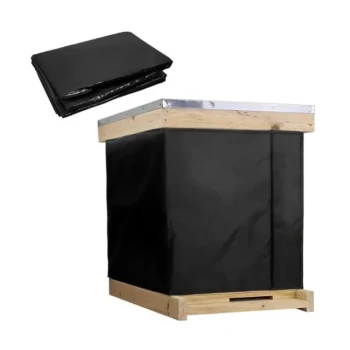
Plastic structures and voile fabric serve as essential protective barriers for in-hive temperature sensors. This combination physically isolates delicate electronic components to prevent honeybees from coating them in propolis (bee glue) or wax, while simultaneously permitting the necessary airflow to capture accurate ambient temperature readings.
The core objective of this design is to balance physical protection with environmental permeability. It stops bees from insulating the sensor with wax—which would skew data—without creating a sealed chamber that blocks the airflow required for real-time monitoring.
Protecting Electronics from Bee Behavior
The Propolis Instinct
Honeybees instinctively treat foreign objects inside the hive as potential threats or structural gaps. They utilize propolis and wax to coat these objects, effectively cementing them in place.
The Risk of Thermal Insulation
If a sensor is directly exposed to the bees, it will eventually be encased in this wax coating. An encased sensor measures the temperature of the heated wax rather than the air, rendering the data useless for tracking microclimate changes.
Physical Damage Prevention
Beyond coating, bees may physically attack foreign objects. The plastic enclosure prevents bees from biting sensitive wires or electronic components, protecting the hardware from immediate physical destruction.
Why This Specific Combination Works
The Role of Voile Fabric
Voile (or similar tulle mesh) is used because it is highly breathable yet effectively impenetrable to insects. It creates a "cage" that keeps the bees out but allows air and humidity to circulate freely around the sensor.
Ensuring Data Accuracy
Because the fabric does not obstruct airflow, the sensor can detect subtle environmental fluctuations. This is critical for monitoring the brood area, where larvae require a strict temperature range of 30°C to 34°C for proper development.
Structural Support via Plastic
The plastic structure acts as the skeleton for the enclosure. It keeps the voile fabric taut and prevents it from collapsing onto the sensor, ensuring a consistent air gap is maintained around the electronic components.
Common Pitfalls to Avoid
Mesh Clogging
While voile retards propolis accumulation, it is not immune to it forever. Over extended periods, bees may attempt to propolize the mesh itself, which can gradually restrict airflow and reduce sensor responsiveness.
Response Time Lag
Any enclosure introduces a slight delay in temperature registration compared to a bare sensor. However, in hive monitoring, this negligible lag is an acceptable trade-off for the massive increase in sensor longevity and data reliability.
Strategies for Reliable Hive Monitoring
To get the most out of your sensor deployment, consider your specific monitoring goals:
- If your primary focus is Colony Health and Disease Detection: Prioritize robust plastic enclosures with fine voile to ensure the sensor survives long enough to provide the continuous data needed for neural network analysis.
- If your primary focus is Swarm or Pest Detection: Ensure the voile mesh is kept clean and breathable so the sensors can detect the rapid temperature gradients that indicate a swarm event or ventilation issue.
By effectively isolating the sensor from the bees' natural defensive behaviors, you ensure the data reflects the true state of the colony, not the temperature of a ball of wax.
Summary Table:
| Component | Primary Function | Impact on Data Accuracy |
|---|---|---|
| Plastic Structure | Provides skeletal support and physical protection from bee attacks. | Maintains air gap to prevent direct heat transfer from wax. |
| Voile Fabric | Acts as a breathable barrier against bees while allowing airflow. | Ensures real-time monitoring of ambient hive microclimates. |
| Internal Sensor | Measures temperature/humidity within the brood area. | Captures critical 30°C to 34°C range for larvae health. |
| Air Gap | Prevents sensor insulation by wax or propolis. | Reduces thermal lag for faster response to hive events. |
Maximize Your Colony Insights with Professional Grade Equipment
At HONESTBEE, we understand that precision is the backbone of successful commercial beekeeping and distribution. Whether you are scaling a professional apiary or supplying the industry, our comprehensive wholesale portfolio offers the specialized tools you need to succeed.
From advanced hive-monitoring hardware and hive-making machinery to high-capacity honey-filling machines and essential consumables, we provide end-to-end solutions designed for durability and performance. Partner with us to access a full spectrum of beekeeping technology and honey-themed cultural merchandise tailored for global distributors.
Ready to upgrade your apiary operations? Contact us today to explore our wholesale offerings!
References
- Maria de Fátima Pereira de Souza, Eva Mônica Sarmento da Silva. Desenvolvimento de abelhas melíferas em colmeias com diferentes cores e materiais de cobertura no semiárido brasileiro. DOI: 10.33448/rsd-v9i12.10890
This article is also based on technical information from HonestBee Knowledge Base .
Related Products
- Professional In-Hive Frame Bee Feeder by HONESTBEE
- Professional In-Hive Bee Feeder HONESTBEE Frame for Beekeeping
- In-Hive Dual Compartment Frame Bee Feeder for Targeted Colony Nutrition
- Professional Insulated Winter Hive Wrap for Beekeeping
- Professional Insulated Plastic Bee Hives
People Also Ask
- What precautions should be taken when feeding bees inside the hive? Safeguard Your Colony from Robbing and Leaks
- Why should sugar syrup or dry sugar not be left out in the open when feeding bees? Avoid a Dangerous Feeding Frenzy
- What is a bee frame feeder and what are its disadvantages? Choose the Best Feeding Strategy for Your Apiary
- Why are professional bee feeders necessary for the stable development of bee colonies in commercial apiaries?
- How is sugary syrup fed to bees inside the hive? A Guide to Safe & Efficient In-Hive Feeders