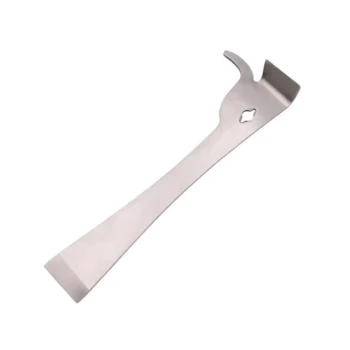
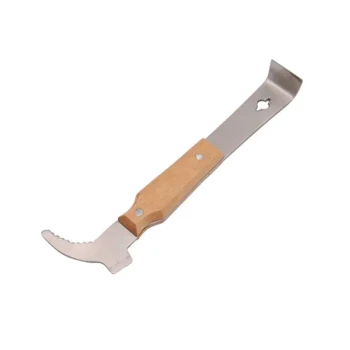
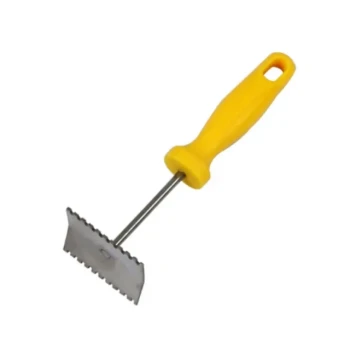
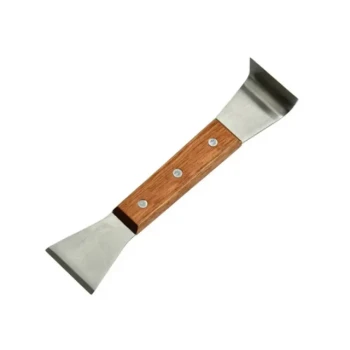
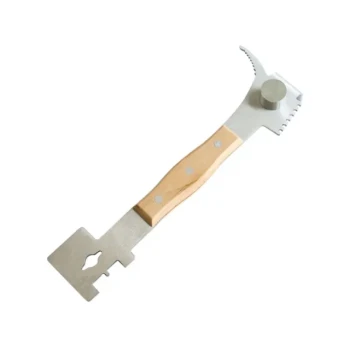
Professional hive tools and scrapers provide the leverage and precision required to conduct low-interference inspections during the most volatile phases of queen development. specifically, these tools are indispensable for performing critical manual interventions on the 9th and 16th days following colony splitting, allowing technicians to manage cell quality and verify emergence without compromising the colony structure.
These tools enable precise, non-destructive access to the colony during the final stages of the rearing cycle. They facilitate the manual culling of deformed cells on Day 9 and verify the safe emergence of the new queen on Day 16, ensuring the biological success of the operation.
Managing Critical Development Milestones
The Day 9 Intervention
On the 9th day after colony splitting, the colony reaches a pivotal stage in queen cell development. Professional hive tools are required to safely pry open hive covers and separate propolized frames.
Using proper tools minimizes vibration and shock, which is critical because the developing pupae are highly sensitive to physical disturbance.
Quality Control and Culling
Once access is established, the hive scraper becomes a precision instrument for quality control. Technicians must inspect the construction status of the queen cells to identify those that are underperforming.
The scraper is used to manually remove underdeveloped, deformed, or poorly capped cells. This "culling" process ensures that only the highest quality candidates remain, optimizing the colony's nutritional focus on viable queens.
The Day 16 Emergence Verification
On the 16th day, the rearing cycle concludes with the emergence of the new queen. Hive tools are necessary to reopen the hive to observe the final outcome.
Technicians use these tools to inspect the cells for signs of successful hatching (an open tip) or failure. This step confirms the closure of the rearing cycle and dictates the next steps for colony management.
The Mechanics of Low-Interference Management
Minimizing Colony Disruption
During the late stages of rearing, maintaining a stable microclimate is essential. Professional tools allow for low-interference inspections.
By allowing technicians to work quickly and cleanly, these tools reduce the amount of time the hive is open. This prevents significant fluctuations in temperature and humidity, which can be detrimental to the developing larvae and pupae.
Accurate Observation of Health
Beyond just the queen cells, scrapers and hive tools assist in assessing the overall health of the colony. Technicians can check the capping process and the health of surrounding larvae.
This broader view helps determine if the nutritional supplementation provided earlier in the process has been effective.
Common Pitfalls to Avoid
The Risk of Over-Manipulation
While professional tools make access easier, there is a risk of using them too frequently. Excessive opening of the hive, even with good tools, can stress the colony and lead to balling (killing) of the queen cells.
Hygiene and Disease Transmission
Scrapers accumulate wax and propolis, which can harbor pathogens. A common mistake is failing to sterilize tools between hives.
Using a dirty scraper during the sensitive Day 9 inspection can introduce pathogens directly to the area where vulnerable queen cells are developing.
Making the Right Choice for Your Goal
To maximize the effectiveness of your queen rearing operation, apply these principles based on your specific objectives:
- If your primary focus is genetic quality: Prioritize the use of the scraper on Day 9 to ruthlessly cull any cell that shows even minor deformities or delayed capping.
- If your primary focus is production volume: Focus on the efficient use of hive tools on Day 16 to quickly verify emergence and reset the equipment for the next cycle without delay.
Success in queen rearing is not just about the biology of the bee, but the precision of the hand that manages the hive.
Summary Table:
| Milestone | Tool Utility | Management Objective |
|---|---|---|
| Day 9 (Capping) | Precision Scraper | Culling deformed cells and minimizing pupae vibration. |
| Day 16 (Emergence) | J-Hook/Standard Tool | Verifying successful hatching and clearing empty cells. |
| Ongoing Management | Hive Scraper | Removing propolis and wax to maintain hive hygiene. |
| Health Checks | Professional Tools | Low-interference inspections to stabilize hive microclimate. |
Elevate Your Apiary's Productivity with HONESTBEE
At HONESTBEE, we understand that professional beekeeping requires more than just basic supplies; it requires precision-engineered equipment. Whether you are a commercial apiary focusing on genetic quality or a distributor supplying the industry, we provide the full spectrum of beekeeping tools, machinery, and essential consumables.
From specialized hive-making and honey-filling machines to ergonomic professional hive tools, our comprehensive wholesale offerings are designed to minimize colony disruption and maximize your yield.
Ready to scale your operation? Contact us today to discover how HONESTBEE can streamline your production and provide the high-quality hardware your business deserves.
References
- Tesfaye Bekele, Dadi Genet. On-farm participatory Evaluation of Splitting Queen Rearing Technique (SQRT) at Ginnir District, Bale Zone, South-eastern Ethiopia. DOI: 10.5897/jaerd2016.0790
This article is also based on technical information from HonestBee Knowledge Base .
Related Products
- HONESTBEE Classic Pry Bar Hive Tool with High Visibility Finish for Beekeeping
- Professional Multi-Function Stainless Steel Hive Tool
- Stainless Steel J Hook Hive Tool for Beekeeping
- HONESTBEE Professional Multi-Functional Hive Tool with Ergonomic Wood Handle
- Precision Stainless Steel Frame Cleaner for Hive Grooves and Corners
People Also Ask
- What specific challenges do beekeeping hive tools address during hive maintenance? Essential Solutions for Apiaries
- Why are specialized beekeeping tools essential for executing colony health monitoring processes? Enhance Hive Precision
- What are some essential tools for beekeepers? Start Your Apiary with the Right Gear
- What are the essential tools and gear for basic beekeeping? Equip Your Apiary for Success and Safety
- What is the purpose of adding crystalline soda when disinfecting beekeeping tools? Boost Sterilization Efficiency