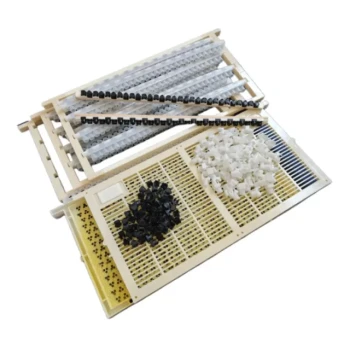
Scientific precision is the cornerstone of modern beekeeping sustainability. Specialized breeding facilities and laboratory equipment are necessary because they allow for the utilization of advanced technologies, such as artificial insemination, to create bee varieties adapted to specific climates. This infrastructure is essential for maintaining colony health, ensuring product safety, and mitigating environmental risks, which protects the long-term viability of the honey industry.
By shifting from reliance on natural variables to scientifically controlled environments, the industry ensures consistent productivity and resilience against disease. This infrastructure transforms beekeeping from a passive practice into a managed, scalable agricultural sector.
Securing Genetic Resilience
To ensure long-term sustainability, beekeepers must move beyond the randomness of natural mating.
Precision Through Artificial Insemination
Laboratory equipment allows for artificial insemination, removing the uncertainty of open-air mating. This technology enables the strict control of genetic lineages, ensuring that desirable traits are passed down reliably. It allows breeders to isolate and propagate specific genetic combinations that might not occur naturally.
Targeting Disease Resistance
Specialized queen rearing tools enable the selection of colonies with high disease resistance and superior production capabilities. By scientifically cultivating queens, breeders can develop stocks that naturally withstand local pathogens. This reduces the industry's reliance on chemical treatments and antibiotics.
Adaptation to Local Climates
Breeding facilities provide controlled environments to test and develop bee varieties suited to specific climatic conditions. A bee variety that thrives in a tropical climate may fail in a temperate one. Scientific breeding ensures colonies are genetically equipped to survive and produce in their designated local environments.
Standardization and Operational Efficiency
Sustainability is not just about biology; it is about the economic viability of operations.
The Necessity of Uniform Hardware
Specialized hive-making machines produce modern frame hives with uniform specifications. This standardization ensures that internal components, such as frames, are interchangeable across different hives and apiaries. This interchangeability lowers procurement costs and simplifies the logistics of managing large-scale operations.
Enabling Commercial Scale
Advanced transport equipment transforms beekeeping into a migratory industry. It allows professionals to move thousands of colonies rapidly to follow seasonal blooms, maximizing honey output and pollination services. This infrastructure supports an "out-apiary" model, enabling operations to scale from dozens to thousands of hives efficiently.
Economic Stability and Market Control
Long-term sustainability requires stabilizing the economic returns for beekeepers.
Regulating Market Supply
Standardized storage facilities provide controlled temperature and humidity to prevent honey from crystallizing or separating. This technology allows producers to hold inventory without quality loss. By avoiding forced sales during peak harvest seasons, beekeepers can regulate market supply and maintain stable prices year-round.
Understanding the Trade-offs
While specialized infrastructure is crucial for growth, it introduces specific challenges that must be managed.
High Capital Barriers
Implementing laboratory-grade equipment and specialized manufacturing machinery requires significant upfront capital investment. Small-scale or hobbyist beekeepers may find these costs prohibitive without cooperative models or subsidies.
Requirement for Technical Expertise
Moving from traditional methods to scientific breeding requires a higher level of technical training. Operators must be skilled in laboratory techniques, artificial insemination, and advanced logistics, creating a skills gap that must be addressed through education.
Making the Right Choice for Your Goal
The specific equipment you prioritize should align with your operational focus.
- If your primary focus is Colony Health: Prioritize investment in queen rearing tools and laboratory equipment to breed for disease resistance and climate adaptation.
- If your primary focus is Operational Efficiency: Invest in hive-making machinery to ensure hardware standardization and interchangeability across your apiaries.
- If your primary focus is Economic Stability: Focus on professional storage facilities to extend shelf life and control the timing of your sales.
Integrating these technologies is the definitive step toward immunizing the industry against environmental volatility and economic fluctuation.
Summary Table:
| Key Infrastructure | Primary Function | Sustainability Benefit |
|---|---|---|
| Laboratory Equipment | Artificial Insemination & Genetic Testing | Ensures disease resistance and climate adaptation |
| Breeding Facilities | Controlled Queen Rearing | Maintains pure lineages and colony health |
| Hive-Making Machines | Hardware Standardization | Lowers costs through interchangeable components |
| Advanced Storage | Controlled Temperature/Humidity | Regulates market supply and preserves honey quality |
| Transport Equipment | Migratory Logistics | Enables commercial scaling and pollination services |
Elevate Your Commercial Apiary with HONESTBEE
At HONESTBEE, we understand that long-term sustainability in beekeeping requires more than just traditional methods—it demands scientific precision and industrial-grade efficiency. We cater specifically to commercial apiaries and distributors, providing a comprehensive wholesale portfolio designed to scale your operations.
Our value to your business includes:
- Precision Breeding Tools: High-quality laboratory equipment and queen rearing tools to enhance genetic resilience.
- Industrial Machinery: Specialized hive-making and honey-filling machines to ensure standardization and operational speed.
- Full-Spectrum Supplies: From essential industry consumables to honey-themed cultural merchandise for market expansion.
Ready to transform your beekeeping operation into a resilient, scalable enterprise? Contact us today to explore our wholesale solutions and see how HONESTBEE can support your growth.
References
- Yusif Abulfat Humbatov, Bobur Sobirov. Current status of honey productıon ın Azerbaıjan. DOI: 10.1051/bioconf/20249302016
This article is also based on technical information from HonestBee Knowledge Base .
Related Products
- Queen Bee Artificial Insemination Instrument Equipment for Instrumental Insemination
- Retractable Chinese Queen Rearing Grafting Tools Equipment
- No Grafting Queen Rearing Kit: System for Royal Jelly Production and Queen Rearing
- Double Head Beekeeping Grafting Tools for Beekeepers
- Plastic Beekeeping Honey Bee Larvae Grafting Tools for Queen Rearing and Chinese Grafting
People Also Ask
- Why is maintaining sanitary conditions important during artificial insemination? Protect Your Queen from Fatal Infections
- Why are artificial insemination instruments critical in bee hybridization? Master Genetic Control & Pure Breeding
- What is the core value of bee artificial insemination instruments in breed improvement? Achieve Precise Genetic Control
- Why is professional bee artificial insemination equipment considered a core tool for genetic control in honeybee breeding? Ensure 100% Purity
- Why is high-purity CO2 used for queen bee artificial insemination? Unlock Precision Breeding & Faster Egg-Laying