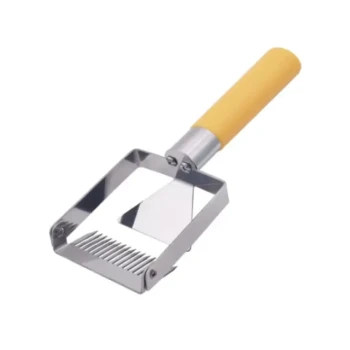
Standardized collection tools and specialized hygiene equipment are fundamental requirements for ensuring sanitary beekeeping and regulatory compliance. By utilizing professional-grade extraction devices, producers effectively seal the process against environmental impurities like ants and debris while actively preventing cross-contamination. This rigorous approach is the only way to guarantee that the final product meets strict food safety standards and protects the producer from the financial risks associated with product recalls or quality-related returns.
Quality control in honey production is not merely about extraction; it is about preservation. Specialized equipment bridges the gap between raw agricultural output and a high-value commercial product by protecting the biological integrity of the honey and the health of the hive.
Protecting Product Purity and Commercial Viability
Eliminating Contaminants
The primary function of specialized hygiene equipment is the exclusion of foreign matter. Professional-grade tools minimize the risk of introducing external debris, such as dust or insects (specifically ants), into the harvest.
Furthermore, these tools prevent internal contamination. By using precision equipment, producers can avoid mixing honey with bee bread, wax debris, or larvae, ensuring the final product remains pure and visually appealing.
Meeting Regulatory Standards
To sell honey commercially, adherence to food safety regulations is mandatory. Standardized tools are designed to meet these hygiene benchmarks, ensuring the product is safe for human consumption.
This compliance extends to financial security. By using equipment that ensures a clean product, producers drastically reduce the likelihood of financial losses caused by rejected shipments or returns due to poor quality control.
Enhancing Market Value
Beyond basic safety, specialized equipment allows for the production of premium-grade honey. Tools designed for filtration and sedimentation efficiently remove impurities while preserving the honey's nutritional and active biological components.
This preservation of enzymes and specific physicochemical properties is often a technical prerequisite for obtaining organic certifications or Geographical Indication (GI) labels. These designations significantly elevate the product from a basic commodity to a high-value specialty item.
Ensuring Scientific Accuracy
Standardization for Analysis
For producers involved in environmental monitoring or pesticide analysis, standardized tools are critical. Using specific items, such as sterile 50ml centrifuge tubes, ensures uniformity in sample volume.
This consistency prevents volatilization and cross-contamination during transport. It ensures that data derived from liquid chromatography or other analytical methods remains comparable across different regions and timeframes.
Preventing False Positives
Sterile sampling tools, such as sterilized spatulas, are necessary to prevent the human-mediated transmission of pathogens or chemicals between samples.
If tools are reused without sterilization, residue from one hive can contaminate samples from another. This distorts trace chemical residue analysis and leads to inaccurate data regarding the infection status or chemical exposure of a specific colony.
Preserving Colony Health and Efficiency
Non-Invasive Extraction
Specialized harvesting equipment is often precision-engineered to protect the bees. For example, suction-type extractors allow for the direct removal of honey from tiny pots (common in stingless beekeeping) without destroying the hive structure.
Reducing Physical Damage
Crude extraction methods often result in crushed bees or damaged larvae. Precision tools, including specific knives and bamboo sticks, allow for the manual separation of honey from starch and brood.
This prevents injury to the colony and ensures continuous productivity. By maintaining the hive's structural integrity, the colony can recover faster and resume production immediately after harvesting.
Understanding the Trade-offs
Operational Complexity vs. Quality Assurance
While specialized equipment ensures purity, it introduces a layer of operational complexity. Producers must adhere to strict sterilization protocols, which requires time and discipline compared to traditional, less sanitary methods.
Initial Investment vs. Long-Term Gain
Professional-grade gear represents a higher upfront cost than basic tools. However, this cost must be weighed against the risk of total product loss due to contamination. The investment is effectively an insurance policy against rejected batches and a gateway to higher-tier market pricing.
Making the Right Choice for Your Goal
Selecting the right equipment depends on the specific objectives of your operation.
- If your primary focus is Regulatory Compliance: Prioritize hygiene equipment that minimizes foreign debris and cross-contamination to meet food safety standards and prevent returns.
- If your primary focus is Scientific Monitoring: rigorous adherence to sterile, standardized sampling tools (like 50ml tubes) is required to ensure data repeatability and accuracy.
- If your primary focus is Premium/Organic Production: Invest in precision extraction and filtration tools that preserve the honey’s biological activity and enzyme levels for high-value certification.
In professional beekeeping, standardized equipment is not a luxury; it is the baseline requirement for producing a safe, valuable, and scientifically verifiable product.
Summary Table:
| Key Feature | Benefit | Importance in Production |
|---|---|---|
| Hygienic Extraction | Eliminates contaminants like dust, ants, and wax debris. | Ensures food safety and product purity. |
| Standardized Sampling | Provides consistent data for pesticide and chemical analysis. | Crucial for scientific monitoring and exports. |
| Non-Invasive Design | Protects hive structure and prevents bee/larvae injury. | Maintains colony health and productivity. |
| Regulatory Alignment | Meets international food safety and organic standards. | Prevents product recalls and financial loss. |
Elevate Your Honey Production with HONESTBEE
At HONESTBEE, we understand that professional-grade equipment is the backbone of a successful beekeeping enterprise. We cater specifically to commercial apiaries and distributors, offering a comprehensive wholesale range of beekeeping tools, specialized machinery, and essential consumables.
Whether you need precision honey-filling machines, durable hive-making hardware, or specialized extraction tools that preserve the biological integrity of your harvest, we have the expertise to scale your operations. Protect your commercial viability and enhance your market value with our industry-leading solutions.
Ready to upgrade your apiary’s efficiency? Contact us today to discuss our wholesale offerings and how we can support your growth!
References
- Alexsandra Batista Cândido Siqueira, Eulita de Souza Morais. Beekeeping developed by family farming in Rio Grande do Norte: an analysis of the interaction with markets. DOI: 10.1590/1806-9479.2025.285791
This article is also based on technical information from HonestBee Knowledge Base .
Related Products
- Stainless Steel Pivoting Honey Uncapping Fork with Plastic Handle
- Adjustable Stainless Steel Honey Uncapping Fork with Scraper Beekeeping Tool
- Professional Stainless Steel Pry-Bar Hive Tool
- All-Stainless Steel Pivoting Honey Uncapping Fork for Beekeeping
- Wide Adjustable Stainless Steel Honey Uncapping Fork with Scraper
People Also Ask
- What is the design purpose of honey uncapping forks and honey uncapping tanks? Maximize Your Harvest Efficiency
- How does a honey uncapping fork supplement the use of an uncapping knife? Boost Your Honey Yield and Extraction Efficiency
- What are the essential tools for uncapping honey frames? Choose the Right Tool for Your Apiary
- What other tools are available for honey uncapping besides knives? Find the Right Tool for Your Apiary's Scale
- What tools are used for honey uncapping? Choose the Right Knife for Your Harvest