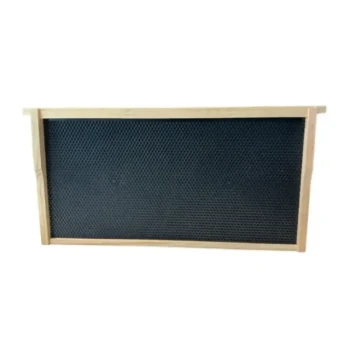
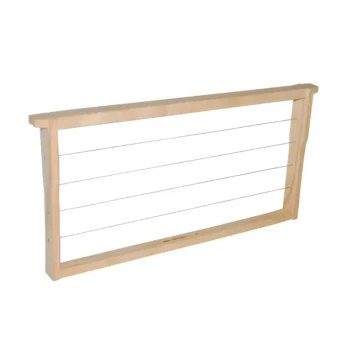
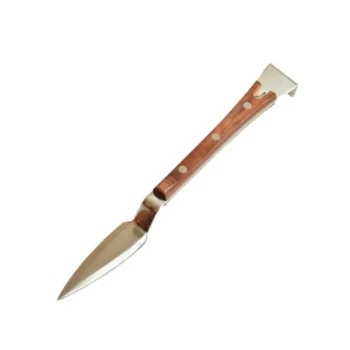
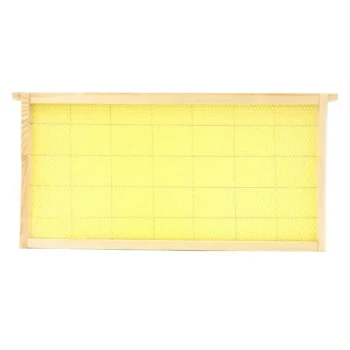
Wooden beehive components are preferred because they combine bee acceptance, thermal performance, serviceability, and environmental responsibility. Natural wood more closely resembles the tree cavities bees use, while regulating temperature and humidity inside the hive. It is also easier to repair, sterilize or safely dispose of during disease-control measures, and generally carries a lower environmental burden than plastic or polystyrene.
For most professional apiaries, quality woodenware offers the best balance of colony suitability, operational flexibility, and long-term sustainability. Synthetic equipment can be useful in specific situations, but it should be selected for a clear operational advantage rather than assumed to be a universal replacement for wood.
Why Bees Commonly Accept Wooden Equipment
Natural texture and scent
Wood provides a familiar surface, texture, and scent that bees generally accept readily. This makes wooden boxes, frames, floors, and covers a dependable standard for establishing and managing colonies.
Synthetic materials may also be accepted, particularly when properly prepared or coated, but they do not replicate the natural character of timber as closely.
A closer approximation of natural habitat
Wild colonies commonly occupy cavities in trees. Wooden hive components therefore provide a more natural-feeling enclosure than many smooth plastic or polystyrene alternatives.
This does not guarantee stronger colonies or higher honey yields by itself. However, suitable materials support a stable environment in which other management decisions can be effective.
How Wood Supports Hive Climate Control
Thermal insulation
Wood has useful thermal insulation properties, helping reduce the effect of external temperature fluctuations. This can support more stable conditions for brood development and colony activity.
Performance depends on the wood species, component thickness, construction quality, hive design, and local climate. Material choice should therefore be considered alongside ventilation and seasonal management.
Moisture regulation
Wood can moderate moisture within the hive by absorbing and releasing limited amounts of water vapor. This helps reduce abrupt humidity changes when the hive is correctly designed and ventilated.
Wood is not waterproof, however. Poor drainage, prolonged saturation, or inadequate protection can lead to swelling, cracking, rot, and shortened service life.
A stable internal environment
The practical advantage of wooden equipment is the combination of insulation, moisture buffering, and repairability. Together, these properties can help maintain a more consistent hive environment than poorly designed synthetic equipment.
Why Woodenware Works Well Operationally
Easier repair and customization
Wood can be cut, drilled, repaired, and adapted using widely available tools and skills. This gives beekeepers and distributors flexibility when supplying different hive dimensions or replacing damaged parts.
For commercial buyers, this also supports broader product compatibility and easier maintenance across multiple apiaries.
Interchangeable components
Precision-cut wooden boxes, frames, floors, and covers can be manufactured to consistent dimensions. When parts follow a recognized hive standard, they can be exchanged efficiently across colonies and locations.
This is particularly valuable for wholesalers, resellers, and professional beekeeping operations that need dependable replenishment rather than isolated one-off products.
Practical outdoor durability
High-quality timber, properly assembled and suitably protected, can withstand normal outdoor use and can be repaired rather than discarded when individual components are damaged.
Durability depends heavily on wood quality, joinery, moisture exposure, protective treatment, and storage. “Wooden” should not be treated as a guarantee of performance without specifying these factors.
Biosafety and Environmental Advantages
Manageable disease-control procedures
During a disease outbreak, wooden components can be subjected to approved cleaning and sterilization procedures or removed and safely disposed of when necessary. Damaged or contaminated parts can also be replaced without discarding an entire equipment system.
Plastic can be washable and durable, but its suitability for heat or chemical treatment varies by material and design. Polystyrene can be especially vulnerable to certain solvents and aggressive cleaning methods, so equipment-specific protocols remain essential.
Lower environmental burden
Wood is a renewable and biodegradable material when sourced responsibly. Its production and end-of-life handling can therefore offer a lower environmental impact than many petroleum-based synthetic materials.
The full impact still depends on forestry practices, manufacturing, transport, coatings, and disposal. Responsible sourcing and efficient delivery are important parts of the sustainability assessment.
Reduced dependence on specialized disposal
Wooden equipment can often be repaired, reused, or processed through established waste streams. Synthetic components may require more specific recycling or disposal arrangements, particularly when contaminated with apiary pathogens or coated with incompatible materials.
Understanding the Trade-offs
Wood requires maintenance
Wood can absorb water, warp, crack, or decay if it is poorly protected or stored. Regular inspection, appropriate surface protection, good hive placement, and replacement of compromised parts are necessary.
Plastic and polystyrene may resist some forms of moisture damage, so they can be advantageous in specific wet or high-volume operating conditions.
Synthetic equipment can be lighter
Plastic and polystyrene components may reduce weight and can offer consistent molded dimensions. This can simplify handling, transport, and certain high-throughput operations.
However, lower weight does not automatically mean better colony performance, easier biosafety management, or greater lifecycle value.
Cost must be assessed over the lifecycle
Wooden equipment may require an initial investment in quality materials and protective finishing. Its value is better assessed through service life, repairability, interchangeability, and replacement availability, not purchase price alone.
The least expensive component can become costly if it fails early, does not fit existing equipment, or creates supply and maintenance complications.
Honey yield should not be the only criterion
The choice between wood and synthetic materials does not reliably determine honey yield by itself. Colony genetics, forage, climate, seasonal management, hive design, and beekeeper practice are usually more important.
Material selection should instead focus on colony acceptance, climate stability, hygiene, handling, durability, and environmental performance.
What Professional Buyers Should Evaluate
Product consistency
Distributors and commercial beekeepers should verify timber quality, moisture condition, dimensions, joinery, and compatibility with the hive standard being supplied.
Consistent manufacturing reduces assembly problems, returns, field failures, and inventory complexity.
Supply continuity
A reliable supplier should support a full-spectrum product portfolio, including hive boxes, frames, floors, covers, and related accessories. Consistent availability matters because woodenware is most valuable when replacement parts remain compatible over time.
Service and fulfillment capability
For B2B purchasing, technical product quality is only part of the decision. Rapid response, dedicated customer service, accurate order handling, and fast delivery directly affect apiary schedules and reseller reliability.
A supplier that can consolidate multiple wooden hive components into one order may reduce sourcing effort and simplify inventory planning.
Responsible sourcing and finishing
Ask how timber is sourced, dried, manufactured, protected, packaged, and prepared for shipment. The finish should be suitable for beekeeping use and should not compromise bee acceptance or future maintenance.
Making the Right Choice for Your Goal
Wood is the strongest general-purpose choice, but the final decision should reflect the operating environment, hive standard, maintenance capacity, and service requirements.
- If your primary focus is colony health and bee acceptance: Choose well-made natural wooden components with appropriate dimensions, ventilation, and protective finishing.
- If your primary focus is long-term operational value: Prioritize durable, repairable woodenware with standardized and interchangeable parts.
- If your primary focus is disease management: Select components that can be cleaned, treated, replaced, or safely disposed of under your apiary’s approved biosecurity procedures.
- If your primary focus is sustainability: Favor responsibly sourced wood and suppliers that can consolidate orders, reduce replacement waste, and provide efficient fulfillment.
- If your primary focus is distribution and resale: Work with a supplier offering consistent specifications, a complete product range, rapid communication, and dependable delivery.
Choosing quality wooden equipment gives beekeepers and B2B suppliers a practical foundation for healthier colonies, simpler operations, and more sustainable apiary growth.
Summary Table:
| Advantage | Description |
|---|---|
| Bee Acceptance | Wood's natural texture and scent are readily accepted by bees. |
| Climate Control | Wood provides insulation and moisture regulation for a stable hive environment. |
| Serviceability | Easier to repair, customize, and replace components. |
| Biosafety | Can be sterilized or safely disposed of during disease control. |
| Sustainability | Renewable, biodegradable, and lower environmental impact. |
Upgrade your apiary with premium wooden beehive equipment from HONESTBEE. Our comprehensive wholesale offering includes everything from hive boxes and frames to full beekeeping machinery, all crafted for optimal colony health and operational efficiency. As a one-stop sourcing partner, we provide rapid response, dedicated service, and ultra-fast delivery to keep your operations buzzing. Contact us today to discuss your needs and experience the HONESTBEE advantage. Get in touch now!
Related Products
- Wooden Bee Hive Frames for Beekeeping and Wholesale
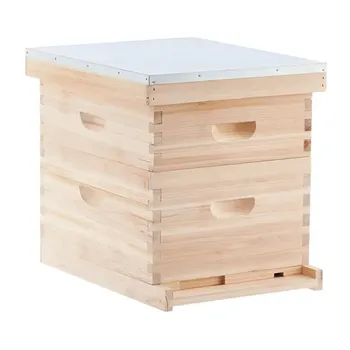
- Wholesales Dadant Size Wooden Bee Hives for Beekeeping
- Assembled Wooden Bee Frames with Plastic Foundation for Durability and Convenience by HONESTBEE
- HONESTBEE Wired and Assembled Wooden Bee Frames Foundation for a Thriving Hive
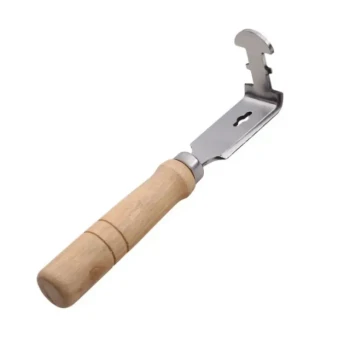
- HONESTBEE Premium Italian Style Hive Tool with Hardwood Handle
People Also Ask
- How does balancing the number of frames impact hive productivity? Optimize Your Apiary's Biological Output
- How do wooden and plastic hive frames compare in terms of durability? Wood vs. Plastic Longevity & Repairability
- What are the main considerations when choosing between wooden and plastic bee hive frames? Optimize Your Apiary's Efficiency
- How should beehive frames be maintained to prolong their lifespan? 5 Pro Tips for Durable Beekeeping Equipment
- What is the primary function of frames within a beehive system? Structural Foundation and Hive Management